Romania’s ‘Hungarian problem’: A minority caught between integration and self-segregation Romania is home to a large Hungarian population and the country’s legal system provides a number of rights in relation to the use of the Hungarian language in public life. Yet as Beáta Huszka argues, the way these rights have been implemented is frequently problematic and can foster a form of self-segregation among members of the Hungarian minority. Romania, like many countries in Central and Eastern Europe, has a significant minority population. The largest minority group consists of ethnic Hungarians, who represent over 6% of the country’s total population. The rights afforded to this group have been championed by the Democratic Alliance of Hungarians in Romania (known in Hungarian as Romániai Magyar Demokrata Szövetség or RMDSZ). Most of the academic literature on minority rights in Central and Eastern Europe emphasises the ‘duality’ of the present situation. On the one hand, it is generally recognised that the European integration process leading up to the EU’s ‘big bang’ enlargements in 2004 and 2007 led to the adoption of formal norms and the creation of institutions that benefit minority protection in the region. However, it has also been widely recognised that EU accession was followed by a lack of implementation and backsliding in several of the new member states. As Gwendolyn Sasse explains, ‘deeper political or societal trends’ persisted following accession, perpetuating historically ingrained patterns of discrimination. This discrepancy between laws and implementation has marked the minority protection regime in Romania. Considering the RMDSZ became part of Romania’s governing coalition in December 2020 – and is likely to be part of the next coalition, which has yet to be formed – it might seem odd to complain about minority rights in Romania. Indeed, under the pressure of EU conditionality, substantial legal progress was achieved during Romania’s integration into the EU, particularly in relation to minority language use and the provision of education in minority languages. Yet it is clear, especially in hindsight, that despite the RMDSZ participating in several governments since 1996, some rights, especially some of those related to language use and education, remain unenforced, mainly due to the resistance of national authorities. This is important because the failure to allow bilingualism in interethnic spaces is the single most important barrier to the better integration of minority Hungarians into the Romanian state. Between integration and self-segregation Pre-existing legal provisions provide for the public use of Hungarian as a second language alongside Romanian in areas where Hungarians constitute at least 20 per cent of the local population. This is significant given that according to the 2011 census results, close to 80% of Hungarians living in Romania (i.e. around one million people) were residing in localities where the use of Hungarian is granted by law. However, implementation has been largely confined to areas where Hungarians constitute a local majority. Elsewhere, these rights have been sporadically enforced, especially in written communication with the authorities and in places where the share of Hungarians remains below 50%. This means that minority language rights can mostly be enjoyed in monoethnic spaces. There are many administrative hurdles that obstruct the implementation of minority rights. These include absent bylaws, the failure of local representatives of the central state to follow up on the enforcement of minority language provisions, and the fact that any extra costs associated with implementation must be borne by the local governments themselves. All of these factors reduce the presence of the Hungarian language in public. As a result, minority Hungarians frequently withdraw into their ‘Hungarian world’, even if many of them also move from this parallel Hungarian society into and out of Romanian social spaces on a daily basis. Their Hungarian world is a network of institutions like Hungarian majority local governments and Hungarian-only schools, as well as churches, media organisations and cultural institutions where Hungarians can interact with each other in Hungarian. While these deficiencies have fostered self-segregation, some civil society organisations have lately been pursuing legal mobilisation for the creation of bilingual local public spheres, which has proved to be an uphill battle. Enforcing bilingualism in eligible localities is a difficult proposition as it would require a conscious policy of recruiting more minority individuals into public institutions while giving preference to those who are fluent in the minority language. This would result in a greater degree of political and economic power-sharing at the local level, which has been anathema to ethnic majority parties. Contested bilingual spaces The legal struggles of Hungarian NGOs give a glimpse into the difficulties associated with the fight for such bilingual spaces. After years of litigation initiated by the NGO Musai-Muszáj, the city of Cluj in Western Romania finally installed some city name signs that display the city’s Hungarian name, with the Latin and German versions also included as a compromise. However, the Mayor of the city made it clear that he was only willing to put the names of the Mayor’s office and the local council on the town hall building in Hungarian if a court obliged him to do so. Another Hungarian NGO, CEMO, has fought legal battles for bilingual street name signs in Târgu Mureș and other towns, with no success. The town of Târgu Mureș, where Hungarians constitute close to half of the local population, was the location of the violent ‘Black March’ protests in 1990, when interethnic clashes between Romanians and Hungarians led to a number of injuries and deaths. Since then, there has been interethnic rivalry for symbolic spaces, resulting in a significant loss of rights for Hungarians. A notable example is the University of Medicine and Pharmacy (today called the Petru Maior University of Târgu Mureș), where the university’s leadership successfully prevented the creation of an autonomous study section in Hungarian, which in principle is a right granted by the law on education. This was achieved by invoking the university’s institutional autonomy, which was confirmed by the courts. As departments with Hungarian-language instruction lack any institutional autonomy, the university’s leadership has gradually reduced the scope of Hungarian teaching since 2012. Such examples reflect how asymmetrical power relations tilt the playing field, putting Hungarians in the position of underdogs as citizens cannot count on the authorities to respect their rights. Many Romanians tend to blame the Hungarian minority for a lack of integration and cosying up too much to the government of Viktor Orbán in Budapest. However, when the authorities and the courts fail to assist in attempts to create bilingual public spheres, it is little wonder that minority Hungarians choose to withdraw into their monoethnic spaces, dream about autonomy, and seek recognition and support from the Hungarian government. Since 2010, Hungary’s illiberal government has strengthened its ties with the Hungarian minority in Romania through a significant expansion of financial support and by endowing ethnic Hungarians with Hungarian citizenship and voting rights. Hungarian state funding for this purpose increased tenfold between 2010 and 2020. This funding has played an important role in sustaining the social and institutional network of the Hungarian community. Members of the Hungarian government have celebrated the successful creation of a ‘unified cultural and economic ethnic Hungarian space in the Carpathian basin’ – a national unification of Hungarians that surpasses state borders. This kind of rhetoric and the policy behind it is enough to send shivers down the spines of many in Romania and foster the impression that the Hungarian minority constitutes a threat to the integrity of the Romanian state and nation. In 2015, the National Strategy on Public Policy and Public Security explicitly mentioned the aspiration for territorial autonomy of Hungarians as an internal threat, causing an outcry from the RMDSZ. The reference was subsequently removed, however more recent statements by some Romanian politicians indicate the perception of a threat remains widespread. An example is a statement by President Klaus Iohannis last year accusing the largest opposition party, the PSD, of “selling Transylvania to the Hungarians”. Yet without a shift in approach, the Romanian state will be unable to win the loyalty it seeks from the 1.2 million of its citizens who are members of the Hungarian minority. This is all the more necessary considering, as the Romanian historian Lucian Boia explains, the fear that Hungarians are somehow capable of ‘taking away’ Transylvania is entirely groundless. Boia writes that Hungarians have already lost the struggle for Transylvania, as their declining population brutally shows. Thus, Romanians should feel at ease with making gestures that have the potential to reduce the sense of alienation many Hungarians feel toward the Romanian state. A good start would be to respect the laws of Romania and enforce bilingualism in eligible localities – something that, for now, remains a pipe d(L-R, bottom row) Leader of KDU-CSL Marian Jurecka, leader of TOP 09 party Marketa Pekarova Adamova, leader of Civic Party (ODS) and Together’s (SPOLU) coalition candidate for Prime Minister Petr Fiala, leader of STAN party Vit Rakusan and Ieader of Pirates party Ivan Bartos sign a new coalition government agreement, in Prague, Czech Republic, 08 November 2021. EPA-EFE/MARTIN DIVISEKream.
New Czech government awaits presidential nod After making a miraculous recovery and now back in Prague Castle, President Zeman looks set to try to exploit the deep divisions that exist between the broad coalition. Converting a Czech election result into a new government has often taken an age, the fractured political landscape making coalition building a complicated process. The five-party “Democratic Bloc” electoral coalition has no such worries; even so, seven weeks after winning 108 of parliament’s 200 seats, it’s still waiting to take the reins. The reason for that is President Milos Zeman. Following the delay caused by his ill health, President Zeman has promised to appoint Petr Fiala, head of the conservative Civic Democratic Party (ODS), as prime minister when he returns to his desk on November 26. But with Fiala and his cohorts chomping at the bit to start dealing with a mounting pile of issues, Zeman has sensed an opportunity to test his leverage over the new administration – something for which he has become notorious over the past eight years.
The president is still to appoint the other 17 ministerial nominees. That’s meant to be a formality, but Zeman is a master of turning such formalities into political drama. The president has told the country that he plans to object to one ministerial nomination. While he didn’t name anybody, the proposal of Jan Lipavsky as foreign minister is widely assumed to be the target. The Pirate Party MP is a staunch critic of the links to Russia and China that Zeman has worked so hard to cultivate. But at the same time, the head of state, who has no official power to demand any changes in the composition of the government, wants to see how far he can push Fiala. “Zeman prepared the ground and decided to go into dispute. He is testing the position of the future prime minister,” political journalist Marie Bastlova told Czech Radio. Fiala has pledged not to change any name on the list. And Democratic Bloc MPs have called for pushing back against the incorrigible president, in the guise of cutting the budget of the presidential office or even a constitutional complaint against Zeman’s violations. For the moment, Fiala has remained calm. But he’s well aware that Zeman and his circle have spent years stretching the spirit of the constitution to cause mischief and raise Prague Castle’s sway over the nation’s political life. Blocking ministerial appointments is a favoured ploy. The president twice sparked chaos during the term of the outgoing minority government led by Andrej Babis by refusing to appoint nominated ministers. These episodes illustrated Zeman’s leverage over the billionaire and his weak government. But with the 2017 power pact with Babis now of little use, the presidential administration needs to find a way to get its hooks into the new government.
New glue
Splitting the five parties is an obvious potential route, and so Fiala has been urged to stand his ground in support of the Pirate nominee, despite feeling the urgent need to take office. “I don’t think we have 100 days to play with. I think that we have never been in such a difficult situation in the existence of an independent Czech Republic: COVID, energy prices, inflation. These are problems that we must address immediately,” Fiala tweeted earlier this month. “It’s crucial for the government to take power as soon as possible,” Ziga Faktor, head of the Brussels office of the Europeum think tank, tells BIRN. “But it’s very likely that the president will create more difficulties.” Like everyone else, Zeman and his team can clearly see the potential divisions inside the coalition, which pairs the conservative ODS with the centre-right Christian Democrats (KDU-CSL), Top 09 and Mayors & Independents (Stan), as well as the liberal-centrist Pirates. Following their successful cooperation to defeat Babis at the ballot box in October, the quintet must now seek new glue to hold their coalition together. Top 09 leader and new parliamentary speaker, Marketa Pekarova Adamova, hopes that putting “the country in order after Babis’s devastating rule” by getting to grips with the fourth wave of the COVID-19 and inflation should do the trick. Plans to deal with the pandemic were discussed on November 24. Fiala has promised that schools will not be shut at any point during his government’s term, which looks like making him a potential hostage to fortune. Incoming health minister, Vlastimil Valek, from Adamova’s party, ruled out compulsory vaccinations or a general lockdown. Restrictions on the unvaccinated using services and attending events will also be lifted. Meanwhile, the pandemic action plan looks vague. Save for expanded testing and better management of health system resources, the main tactic appears to be to persuade the 40 per cent or so of the country who are still holding out to get a jab. The goal, the incoming government says, is to learn to live with the virus without losing freedom. The five parties have other pressing issues on which they’re close, and that should help to keep the parties pulling in the same direction for the meantime, agree analysts. One of the very first items on the coalition’s list is to pass a new budget for 2022. The current plan targets a deficit of 377 billion koruna (14.8 billion euros), equal to the record-high shortfall recorded in 2020 due to the economic support required during the pandemic. ODS is due to take control of the Finance Ministry and Fiala has spoken of slashing the deficit to below 300 billion koruna. That’s seen as ambitious, but even the Pirates are on board. The incoming government also wants to set up a special fund – financed by new debt to avoid raising the deficit – to provide support to businesses during the fourth wave of pandemic by the end of the year. Action on the energy price crunch and spiralling inflation is also needed, it points out.
Too many cooks?
The confusion that reigned over foreign policy under Babis, who allowed Zeman’s pro-Russian and Chinese rhetoric to endure, also looks due to end, with all five parties keenly supporting the coalition agreement’s call for Czechia to reiterate the EU and NATO as cornerstones. The accompanying pledge to resurrect the humanitarian approach laid down by Vaclav Havel, the country’s revered firs(L-R, bottom row) Leader of KDU-CSL Marian Jurecka, leader of TOP 09 party Marketa Pekarova Adamova, leader of Civic Party (ODS) and Together’s (SPOLU) coalition candidate for Prime Minister Petr Fiala, leader of STAN party Vit Rakusan and Ieader of Pirates party Ivan Bartos sign a new coalition government agreement, in Prague, Czech Republic, 08 November 2021. EPA-EFE/MARTIN DIVISEKt president, may yet prove somewhat naïve, but enjoys full support for now. That’s likely to mean a sterner approach to the longstanding efforts of Moscow and Beijing to secure influence. “I don’t see any significant Russia or Chinese investment coming to Czechia now,” says Faktor. At Masaryk University, Professor Lubomir Kopecky suggests that Czechia’s image among its EU and NATO partners should get a boost as its foreign policy stance becomes clearer on such issues. Yet the deep divisions between the five parties remain a risk even on such big-ticket items, and some cracks are already visible. There are hints, for example, that Czechia’s relations with the Visegrad Four group could prove tricky. Some of the parties in the coalition would like Czechia to distance itself from Hungary and Poland, whose illiberal front has earned the V4 a reputation as a troublemaker in Brussels. But ODS sits in the same European Parliament political grouping as Poland’s ruling Law and Justice (PiS) party, while its conservative and eurosceptic wing largely admires Hungarian Prime Minister Viktor Orban. With that in mind no doubt, the coalition agreement expressly states that the V4 should remain key for the Czechs. However, Mikulas Bek, the proposed new EU affairs minister from Stan, has called the regional group “overrated” and pledged to “talk to the prime minister” about the issue. This illustrates another worry: too many cooks. In his newly created post, Bek’s remit will overlap with the prime minister’s lead on EU issues. Assuming Lipavsky survives Zeman’s assault, Czechia would have three ministers from three different parties trying to deal with Brussels and EU partners. Still, the trio should have the chance to get their act together when organising Czechia’s EU presidency, which will kick off in July 2022. Again, the need for haste should help. Babis has largely ignored the topic, meaning preparations are unorganised and underfunded. “Everyone is scared of a repeat of 2009, when Czechia’s EU presidency was accompanied by government collapse, and so this will help bury differences,” Faktor hopes.
Keeping the show on the road
However, once these urgent issues are out of the way, likely within a couple of years in office, the danger is that the divisions between the five parties will start to emerge – albeit, the weakness of the Pirates, which won only four seats at the election, may help to keep a lid on the problems. “It’s really more of a case of ‘when’ rather than ‘if’ some of these difficult issues come up to challenge the coalition after a while,” says Faktor. While Fiala has surpressed it, ODS has a staunchly eurosceptic wing. Yet Top 09 and the Pirates are keen advocates of adopting the euro. It seems likely that a compromise would see some preparations for the single currency, even if there’s little chance that the euro will replace the koruna in the next four years. As the two junior parties start to mull their prospects for the next scheduled vote in 2025, it’s possible they’ll also think about knocking heads with the KDU-CSL and ODS over social issues such as gay marriage. Meanwhile, the new government’s approach to the EU’s Green Deal and the energy transition is likely to be highly disappointing for the more liberal parties in the coalition, analysts suggest. While the style will change, with Babis’s bitter rhetoric against Brussels’ climate efforts condemned to the past, most predict that action will be limited and business will largely dictate policy as usual, save for a little progress in agriculture. All of which has few betting on the new government’s future. “It doesn’t look very stable,” says Kopecek. “It’s very unclear if this cabinet will survive a whole term.” That suggests that long-term priorities, which include desperately needed educational and pension reform as well as the digitalisation of the state, will be tricky to achieve. Keeping these divisions on ice will depend crucially on Fiala, as the leader of both the cabinet and the party that is strongest and furthest right of the coalition. The former university professor performed admirably during the election campaign to banish potentially problematic issues and keep the anti-Babis bandwagon on the road. Yet whether he can retain his carefully crafted image as the voice of reason in Czech politics when he’s in the hot seat remains to be seen. On the one hand, Fiala is understood to hold staunchly conservative social views that could see him clash with coalition and EU partners. But at the same time, relatively little is really known about his private life or views, despite his having led ODS since 2014. “He is very conservative, but definitely not strongly eurosceptic,” asserts Kopecek. “He wants to be very active towards Brussels and definitely does not want to go same way as [Polish PiS leader Jaroslaw] Kaczynski or Orban.” “Overall, he’s a very good mediator who can do a lot to keep the government together,” the analysts concludes.
The tragic death that hindered Georgia’s Covid-19 vaccination campaign KVEMO ENTELI, Georgia -- It was 4:30 in the afternoon and Manuchar Kobakhidze got the call, the call that everyone dreads. It was a co-worker from the hospital where his wife worked as a nurse. "Your wife is a little unwell," they told him on the phone, "can you come to Akhaltsikhe," referring to the Imedi (Hope) clinic in the small city in southern Georgia. When he arrived at the hospital, Kobakhidze was met by crying staff. "I said, 'Where is Megi?' Then a guard took me up to the second floor. She was just lying there [unresponsive] on the bed. I wouldn't wish such a thing on my worst enemy," he says. Just hours earlier on March 18, his wife, Megi Bakradze, a 28-year-old nurse, had been filmed by an assortment of Georgian media. "I call on everyone to take this vaccine," she said in front of the cameras. As a health worker, Bakradze was in the first wave of people in the country to get vaccinated, an initiative that had started just three days earlier.
Megi Bakradze was filmed being given a shot of the coronavirus vaccine. Twenty minutes after receiving her shot of the AstraZeneca vaccine, Bakradze became seriously ill -- an extremely rare allergic reaction that occurs in only a few people out of a million and is usually easily treatable. Unable to treat the severity of her condition, the provincial clinic had Bakradze transferred by ambulance to the better-equipped First University Clinic at the Tbilisi State Medical University. She arrived at 7:45 p.m. By midnight, she was dead. Seeing her so ill in the hospital bed in Akhaltsikhe was too much for her husband. He went to an adjacent room in the clinic and smashed the place up. He was arrested and taken to the local police precinct. After he was released, he rushed to Tbilisi and arrived shortly before his wife died. Megi Bakradze's death and the investigation that followed has been headline news in Georgia for months, widely discussed in public and on social media. With the country recently facing a surge in COVID-19 cases, reverberations from Bakradze's death are still being felt, with talk of "that girl that died" fueling the fears of a population already hesitant about vaccination. And nowhere are those fears more pronounced than back in Bakradze's home village, where her family is still waiting for answers as to how their beloved daughter, wife, and mother died. *** Megi Bakradze had lived in Kvemo Enteli her whole life. It was here in this small village of around 300 people, nestled on a plain in the lush mountainous region of Samtskhe-Javakheti, where she had met Kobakhidze. They married and had children, Saba and Salome, and Bakradze stayed at home, cooking and cleaning and taking care of the children. It was only when Saba and Salome were older that Bakradze decided she wanted a change. It was a pediatrician close to the family, Ketevan Jinchveladze, who works at the Imedi clinic in Akhaltsikhe, who helped Bakradze get a job. "She was capable and I offered her a job. I said to her, 'You will have a monthly salary, you will get to leave the house,'" Jinchveladze says.
A photo from Megi's and Manuchar's wedding day Starting in 2017, Bakradze first worked at the clinic as a cleaner, but she was ambitious and wanted to help people. So, at some point, Jinchveladze told her she should study to become a nurse. "'How long are you going to go around with this dustpan and broom?' I said to her," Jinchveladze recalls. "She was so beautiful, I felt sorry she had to do this job. But you know, rural families, they have so much work. She said, 'Who's going to let me go, how will I manage this?' But sometime later, she came to me and hugged me and said, 'They [her family] said I could go.'" On Jinchveladze's advice, Bakradze began to hit the books, sharing her time between school, family, and work. When she was working as a student nurse, she was known locally for being kind, always willing to help her neighbors with medical matters, from injecting shots to measuring blood pressure.
Ketevan Jinchveladze shows a photo of her with Bakradze at the clinic. "She got obsessed with medical practice," Jinchveladze says. "When she was taking medicine with a syringe from the vial...she was pleased with herself. Every one of her workdays were happy days. When I touched her hand, I could feel it was rough from all the work." When the pandemic reached Georgia at the start of 2020, the small but busy hospital in Akhaltsikhe was treating a growing number of COVID-19 patients. By late February, the clinic was overwhelmed. The workload became so intense that doctors and nurses started to think about quitting. "There was panic, a lot of fear. But Megi was very brave and did not think for a moment about leaving.... She was a fearless girl, a leader by nature," Jinchveladze says. According to family and friends, Bakradze loved being a nurse. She saw it as her calling and it was precisely because of that passion that she wanted to appear in front of the cameras, to set an example in the fight against the coronavirus. "I urge everyone to get vaccinated," she told the media on March 18. "There is nothing dangerous." *** Bakradze's mother-in-law, Manana Kobakhidze, still can't bear to touch the couple's former bedroom in the house they all lived in together. The room remains exactly as it was, the only difference a small shrine featuring photos of Bakradze alongside religious icons and a candle her mother-in-law lights every day.
Every day, Manana Kobakhidze lights a candle in her daughter-in-law's former bedroom. "Shouldn't someone have to take the blame for her death? She died for the vaccine, for the needle. Someone wasn't paying attention and because of that she died," Kobakhidze says. Bakradze's children, Salome, 7, and Saba, 10, don't really remember what happened that day. Or they don't want to talk about it. They speak in general terms about their mother, the ways in which they still remember her. "My mother used to take us with her [in the bed], but now we sleep with my grandmother," Salome says. They say that she did not like coffee but preferred tea. They point to a photo that they say their mother took. Megi Bakradze’s death and the investigation that followed has been headline news in Georgia for months, widely discussed in public and on social media. With the country recently facing a surge in Covid-19 cases, reverberations from Bakradze’s death are still being felt, with talk of “that girl that died” fueling the fears of a population already hesitant about vaccination. Bakradze's children, Salome and SabaSitting next to a flickering stove, the emotion audible in his voice, Manuchar Kobakhidze remembers Bakradze's final day. "When she saw how sick people were [in the hospital], she said we should all get the jab. That's probably why she called on people [on TV] to get vaccinated," he says. When he arrived at the hospital in Tbilisi, he was at first told his wife would live. "[They] told us that...if she survived, she would be unable to take care of herself," Kobakhidze says. "I wouldn't have minded feeding her with a spoon for the rest of her life. If only she had survived." *** Bakradze's case is being investigated under Article 116 of the Georgian Criminal Code on the grounds of negligent homicide. There is no dispute that she had anaphylaxis, a severe allergic reaction that can cause people to stop breathing and lose consciousness, but it is not clear what killed her. The case hinges on whether Bakradze was given the correct treatment, and whether the medical staff attending to her were at fault. The anaphylaxis that Bakradze experienced is extremely rare with coronavirus vaccinations. The U.S.-based Centers for Disease Control and Prevention (CDC) estimates that they occur in 2 to 5 people per million vaccinated in the United States. An independent expert review in Australia from March found that AstraZeneca, the vaccine Bakradze received, was not associated with any more cases of anaphylaxis than other vaccines.
Salome studies in her parents' former bedroom. For six months now, the official government inquiry into Bakradze's death has been stalled, mainly, the family says, because a specialist allergist-immunologist cannot be found. The specialist is to be selected by the Health Ministry, although that individual has the right to refuse to cooperate with the investigation. Under the law, no time limit is given, so the investigation can be suspended until an expert is found. Bakradze's family lawyer, Vakho Baramishvili, says that two specialists have already refused to cooperate with the investigation. "There is an ethical issue here: the [experts] must understand their responsibilities and they are ignoring them. They do not receive additional remuneration for this and have no motivation to participate," Baramishvili says. Although Bakradze's husband, Manuchar, has repeatedly said that he would pay for the expert himself, under the law the family isn't allowed to do so. As the investigation has stalled, more details have emerged from the testimonies of witnesses talking to government investigators and security-camera footage from the hospital wards.
Salome sits with her father, Manuchar. BaramAn intensive-care ward for coronavirus patients at the Central Republican Hospital in Tbilisi (file photo)ishvili alleges that Giorgi Aptsiauri, an ER doctor at the Imedi clinic who had completed an allergy-management training course, left the clinic a little before Bakradze became sick. Then, he says, Beka Liparteliani, an assistant ER doctor, called Aptsiauri 15 minutes after he had left and asked him to return to the clinic immediately. Before Bakradze was taken to the intensive-care unit, Liparteliani has said he gave her dexamethasone and diphenhydramine, a steroid and an antihistamine, respectively, that can be used to treat allergic reactions. There has been disagreement about whether Bakradze received epinephrine, commonly known as adrenaline. The CDC recommends that medical staff immediately treat "suspected cases of anaphylaxis with intramuscular injection of epinephrine." While it differs in various countries, people receiving coronavirus vaccines are usually asked to sit and wait at the vaccination center for between 15 and 45 minutes, so they can be observed and treated in the event of both minor and major allergic reactions.
An intensive-care ward for coronavirus patients at the Central Republican Hospital in Tbilisi (file photo) Violeta Inasaridze, the head doctor at the Imedi clinic who had also passed an allergy-management training course, said that she knew that Bakradze had become incapacitated after the vaccination and that the nurse "gave her adrenaline in seconds." That claim has been disputed and on April 7, the Prosecutor-General's Office announced that two doctors, Giorgi Aptsiauri and Violeta Inasaridze, and a nurse had been charged with perjury. Other unanswered questions remain and continue to trouble Bakradze's family. According to the family's lawyer, there is no video footage from inside the ambulance transferring to the hospital in Tbilisi. Investigators requested the footage a week after her death, but it had already allegedly been deleted.
Manuchar Kobakhidze After being given a warning at the police precinct for vandalizing the hospital room, a few days after Bakradze's death, Manuchar Kobakhidze got drunk. He went to the clinic and threatened a security guard with a knife. Criminal charges have been filed and he now faces up to one year in prison. "I did wrong," he says, "but I do not feel guilty. And now I've read that they say [the investigation] may be extended for two years. What is this? No matter where you go, in the end you will be deceived." *** With rugged mountains peaks rising in the distance, Natia Rogava's house looks directly over the small village cemetery where Bakradze, her good friend, is buried. The black headstone in the grave plot is adorned with a picture of Bakadrze, her hair coiffured and wearing a glamourous necklace. "When Megi died, I was restless with fear for a long time. She was always laughing when she rushed into my backyard. I would never think that anything bad would happen to her," Rogava said.
A view of the mountains from the village of Kvemo Enteli The village of Kvemo Enteli has yet to recover from the loss of a nurse who was always so willing to help her neighbors. But there is another consequence of her death that would have almost certainly saddened and disappointed Bakradze. Because of what happened, many people have chosen not to get vaccinated against the coronavirus. The region of Samtskhe-Javakheti has one of the lowest COVID-19 vaccination rates in Georgia. According to Geostat, the population of the region is 151,100 people and only 17,706, or 11.7 percent, are fully vaccinated. The rate of vaccination for the whole country is about 30 percent. The Caucasus Datablog reported in August that several studies showed that vaccine hesitancy went up following Bakradze's death but then recovered in the following weeks. In Kvemo Enteli, though, that hesitancy has lingered. Bakradze's friend, Rogava, says that she doesn't want to get a vaccine. "I am afraid. I won't do it and I can't think of anyone in the village who would be vaccinated," Rogava says. Manuchar Kobakhidze doesn't want to get vaccinated either, even though he knows from his wife just how serious the pandemic is. "If this hadn't happened, I would have got vaccinated, too, no problem," Kobakhidze says. "Nobody came here," says Natia Chitaia, another friend of Bakradze, referring to the government officials who the locals say never came to the village to convince people that the vaccine was safe.
Natia Chitaia "In general, if something happens to anyone here, no one will expect anything from [the hospital in] Akhaltsikhe, everyone runs to Tbilisi," Chitaia says. "They do not trust local health care. If they hear that someone in a neighboring village has been vaccinated, they look at it with suspicion. They say, 'That vaccine is just water.'" Vaccinations with AstraZeneca were halted in Georgia on November 1 because the unused stockpiled doses had expired. According to the National Center for Disease Control and Public Health in Tbilisi, only 58,723 people in Georgia were fully vaccinated with AstraZeneca, almost nine times fewer than with Pfizer. The office in Georgia of the Anglo-Swedish drug giant AstraZeneca told RFE/RL that a report on Bakradze's case was sent to a centralized database for monitoring adverse reactions to vaccines. As for a potential investigation, "this is not the prerogative of the company," a spokesperson said. AstraZeneca, which has now shipped 2 billion doses of its vaccine worldwide, came under international scrutiny after its vaccine's reported links to rare blood clots, leading some governments to restrict its use to certain age groups. The World Health Organization, however, has said that the benefits of the vaccine still outweigh any potential risks.
The World Health Organization has said the AstraZeneca vaccine is safe. "This case brought the vaccination process to the brink of collapse," says Jinchveladze, the Bakradze family friend and doctor who still works at the Imedi clinic. With the recent rise in coronavirus cases, she says the hospital is now constantly full. In conversations with patients, they avoid mentioning Bakradze's name, she says, but often ask what she thinks about the vaccine. Jinchveladze herself is vaccinated and has called on other people to do the same. Local health officials fear that with the arrival of winter and a decline in immunity, the numbers of infections will rapidly increase. Despite neighboring Azerbaijan having over double Georgia's population, its coronavirus death rate is around 30 percent lower. And while case numbers and deaths have stabilized in Georgia after August and September peaks, for figures reported on November 22, Georgia has the third-highest number of coronavirus deaths per million people in the world for the last seven days. Around the world, the majority of COVID-19 cases in intensive-care units are people who have not been vaccinated. "This girl [Bakradze] felt with all her being that the pandemic should be stopped. And even though this great calamity has befallen us, it does not mean that we should not take care of each other," Jinchveladze says. "How many unvaccinated people have died? Hospitals are overcrowded and all resources are exhausted. I can only repeat Megi's words, that vaccination is absolutely necessary.
All options fraught with risk as Biden confronts Putin over Ukraine Joe Biden is preparing for a virtual summit with Vladimir Putin with the aim of fending off the threat of another Russian invasion of Ukraine. The summit has been previewed by the Kremlin. The White House has not confirmed it, but Biden’s press secretary, Jen Psaki, said that “high-level diplomacy is a priority of the president” and pointed to the teleconference meeting with Xi Jinping earlier in November. The stakes could hardly be higher. China has been menacing Taiwan, while Russia has been conducting a military buildup around Ukraine. In both cases the US could be drawn into a conflict, with potentially catastrophic results. The head of Ukraine’s defence intelligence agency, Brig Gen Kyrylo Budanov, told the Military Times on Saturday that Russia had more than 92,000 troops around Ukraine’s borders and was preparing for an attack in January or February. Others say the threat is not so imminent and that Russia has a lot to lose by invading Ukraine, but few if any experts would rule out an invasion entirely. In confronting Putin over Ukraine, every policy option available to Biden is fraught with risk. In a statement on Wednesday commemorating the Holodomor famine in Ukraine of the early 1930s, Biden restated “our unwavering support for the sovereignty and territorial integrity of Ukraine”. Such statements of support are meant as a deterrent, but each time they are repeated they heighten the dilemma that Biden will face if Putin calls his bluff. “What I am worried about, frankly, is that if we, the United States, continue to make ironclad commitments to Ukraine and get ourselves in a position where we are obliged to defend it, or not to defend it and look completely weak, we will be putting ourselves in a very difficult position,” said Rajan Menon, a professor of political science at the City University of New York. Hanna Shelest, the director of security programmes at the Foreign Policy Council’s Ukrainian Prism thinktank, said US support for Ukrainian sovereignty did not imply it would ultimately be drawn into combat. “There has been panic and hype about new American boots on the ground. Come on, who is inviting you to fight?” Shelest said. “When we talk about a guarantee of security there are plenty of other options. For example, sharing intelligence, the satellite pictures of the buildup, and making it public is already a support. You don’t need an American soldier to stand at the contact line. You can have diplomatic statements at the proper level that are very clear.” CNN has reported there is an urgent policy debate in the Biden administration over whether to step up deliveries of weaponry, such as Javelin anti-tank missiles and Stinger anti-aircraft missiles. Some in the administration say such weapons would raise the costs of any Russian military incursion and thereby influence Putin’s calculations. Others argue it would represent a dangerous escalation, and increase fear of a US or Nato attack, which is at the base of Russia’s aggressive military stance. “You’re damned if you do and damned if you don’t,” said Fiona Hill, a former senior director for European and Russian affairs in the national security council. Hill helped prepare for Donald Trump’s summits with Putin and advised the Biden team before his first meeting as president with the Russian leader in June. She said new talks were urgent and essential, but did contain traps Biden would have to avoid. “The problem right now is the way that Russia is framing the Ukraine issue as a very stark choice: the United States capitulate on Ukrainian sovereignty – over the heads of not just Ukraine but also of Europe – or risk all-out war,” Hill said. She added that the Kremlin had long wanted to return to the cold war paradigm of the two superpowers sitting down and deciding on spheres of influence. One of the solutions being floated is for Russian fears to be assuaged by ruling out future Nato membership for Ukraine as well as putting limits on its military capabilities, but Hill said that would make a nonsense of Ukraine’s sovereignty, setting a damaging precedent. “We can have a virtual summit. We can have the sitdown with the United States and Russia, but Ukraine can’t be on the bargaining table. We can talk about strategic stability, but we’re not in a position to bargain away Ukraine,” Hill said. “And it can’t just be the United States. The Europeans have to take this seriously.”
oe Biden is preparing for a virtual summit with Vladimir Putin with the aim of fending off the threat of another Russian invasion of Ukraine.
“Even if one assumes that Russia could throw 100,000 troops into battle, it would not have the numerical advantage [generally calculated at 3:1] to overwhelm a Ukrainian army which, for all its faults, is now better trained and equipped and has better morale than it did in 2014,” he said. “Plus, the farther west Russia pushes, the more it will stretch its supply lines, risk hit-and-run attacks that seek to disrupt them and encounter areas with larger proportions of [unfriendly] ethnic Ukrainians. These problems, and the fact that Putin would be burning all bridges with the west by invading Ukraine, are either ignored or given short shrift in the prevailing narratives here.” That does not mean that Putin would not ultimately launch an invasion if Russian red lines were crossed, Menon said. “We should not think that, [if] push comes to shove, when they say we will not allow Ukraine to join Nato … that they’re just bluffing. I don’t think they’re bluffing at all.” The Baltic Way Reason's December special issue marks the 30th anniversary of the collapse of the Soviet Union. This story is part of our exploration of the global legacy of that evil empire, and our effort to be certain that the dire consequences of communism are not forgotten. The Soviet story of Estonia, Latvia, and Lithuania begins in August 1939. German Foreign Minister Joachim von Ribbentrop and Soviet Foreign Minister Vyacheslav Molotov came together to sign the Molotov-Ribbentrop Pact, which granted their respective countries partitioning and annexation power over several Eastern European nations. Nazi Germany split Poland with the Soviets, and the Baltic states went to the USSR. Decades of brutal Soviet rule would follow. On the 50th anniversary of the pact's signing, the nationalist movements of Estonia, Latvia, and Lithuania decided to issue a collective call for independence. They organized the Baltic Way—a continuous human chain comprised of 2 million people, spanning 675 kilometers, traversing the three nations in a display of solidarity and peaceful resistance. That unity continued as the Soviet Union fell. Where one Baltic state went, the other two soon followed. Lithuania became the first former Soviet republic to declare independence on March 11, 1990; Latvia and Estonia did the same just two months later. As Estonia pioneered radical economic reforms in its early post-Soviet days, Lithuania and Latvia would often adopt them with minor adjustments. Rejection of the Soviet Union and its lingering shadow came quickly, decisively, and uniformly in the Baltic states. From the very beginning of the Soviet Union's dissolution, the Baltics were a bloc apart. Their unwavering pursuit of national sovereignty and thorough rejection of the Soviet way of doing business have driven their unrivaled success. In 1993, the Estonian foreign ministry argued in an internal memo that "the most important lesson is simple: time is short and time will not wait for small nations." Though small, the Baltic states did not shrink from big actions. The three countries spent the '90s completely overhauling their economic systems to recover from Soviet life. They focused on deregulation of trade and prices. Estonia, having done away with all foreign tariffs, was at that point the only truly free trading European country. Macroeconomic stabilization came in 1992, with the three nations establishing their own currencies that summer. A "ruble zone," using the Soviet currency, persisted in many of the independent republics after 1991—but the Baltic states decisively rejected such ties. Tax reforms were drastic. All three countries implemented flat income tax systems in 1994 and 1995, the first modern nations to do so. According to Anders Åslund, a Swedish economist who researches transition economies, Estonia, Latvia, and Lithuania "have been firm fiscal conservatives, regardless of political party in power, carrying out radical expenditure cuts aimed at a balanced budget." More than any other former Soviet republics, the Baltic states were reluctant to engage politically with the Russo-sphere after 1991. A number of former Soviet republics came together to form the Commonwealth of Independent States in 1991 with the aim of multilateral cooperation on trade and diplomacy. Though some member nations have come and gone, Estonia, Latvia, and Lithuania have never joined. They've instead pursued a pro-European path. After nearly a decade of interaction under a European Association Agreement, the Baltic states joined the European Union in 2004. They joined NATO that same year, an explicit rejection of Russian influence. "In 1997, when Russian President Boris Yeltsin dangled unilateral Russian security guarantees in exchange for giving up on the Baltics' NATO hopes, the offer was promptly rejected," writes Andris Banka at War on the Rocks. They are the only former Soviet states with successful E.U. and NATO membership bids. Reform of domestic institutions worked in tandem with these outward-facing goals. Estonia took a radical approach to the public sector and fired all government employees, giving it what Åslund calls "the best governance of all post-communist countries." All three scrubbed their security apparatuses of Soviet influence and rooted out corruption. A robust free market of print and broadcast outlets emerged, attracting significant investment from Scandinavian media corporations, which hold major stakes in Baltic media to this day. Political rights and civil liberties remain rock-solid in Estonia, Latvia, and Lithuania thanks to early reform efforts. Freedom House, which grades countries on their political rights and civil liberties, gives Estonia a score of 94 out of 100 points—tying it for 18th in the world and ahead of many other Western nations. Latvia and Lithuania are not far behind, with 89 and 90 points, respectively. Every election in Estonia, Latvia, and Lithuania since 1991 has been considered free and fair by outside observers. No other former Soviet republic has managed to accomplish that. The decisive pivot from the Soviet way of life, though not without its sticking points, has kept the Baltic states prosperous to this day. Part of that success has stemmed from the vibrant innovation that takes place in the region. During the Soviet era, the Baltic economies centered on timber, dairy products, and agriculture. They've traded those in for software, electronics, and information technology products. Estonia launched its e-Residency program in 2014, allowing non-Estonians to access Estonian services and start businesses in the country from outside its borders. As of 2018, the World Bank ranks all three countries in the global top 20 for ease of doing business. Estonia is the richest of the former Soviet republics, with Latvia and Lithuania taking second and third place. Still, it hasn't always been rosy. All three Baltic states struggle with emigration, a side effect of the increased movement brought on by E.U. membership. Between 1990 and 2017, Latvia lost 27 percent of its population, and Lithuania lost 23 percent. Estonia experienced a more modest decline—from a population of more than 1.5 million in 1991 to a current tally of around 1.3 million—but demographers still worry about the nation's long-term prospects for growth. An estimated 20 percent of Latvians live abroad, according to the Migration Policy Institute, and Lithuania and Estonia estimate that "17 percent and 15 percent of their nationals, respectively, live outside their country of birth." The 2009 financial crisis provided one of the biggest tests for the Baltic economies, hitting them much harder than other parts of the E.U. The Baltic states have large export sectors tied to Western European supply chains; when demand cratered during the recession, they felt the heat. Estonia's gross domestic product fell by 13.1 percent between the third quarter of 2008 and the first quarter of 2009. Latvia and Lithuania saw declines of similar magnitude. With their unemployment rates rising, many citizens of those countries left for greener pastures. Austerity measures helped, however, and the International Monetary Fund anticipates that they'll see some of the highest growth among E.U. nations following the economic shock of COVID-19. The Baltic states have proved resilient and plucky in the face of many storms. Most of their fellow post-Soviet republics have not been so lucky, seeing despots take control, civil liberties become corrupted, and economies falter. But independence, internationalism, and innovation have defined these three nations since 1991 and kept them afloat. Estonians, Latvians, and Lithuanians may not be physically connected the way they were on that day in August 1989 when they marked five decades under the Molotov-Ribbentrop Pact. But the Baltic Way lives on.
Kyrgyzstan: Last tango in Naryn Vodka tycoon Sharshenbek Abdykerimov wanted his election campaign to stand out. There were, after all, 12 rivals vying for the same single-mandate seat in Naryn, an unglamorous town perched high in the mountains of southeastern Kyrgyzstan, ahead of the November 28 vote. His idea of a publicity stunt was to hold a contest. The prize: the hand in marriage of a woman he alluded to as his daughter. It was meant to evoke images of an ancient ritual, with aspirant suitors battling to prove their worthiness to join a model dynasty of Kyrgyz success. Abdykerimov is rich – something he often enjoys reminding anybody who will listen. Very rich. He started out in the early 1990s by setting up the vodka-producing company Ayu, a household name in Kyrgyzstan, and then expanded into construction, tourism and agriculture. His campaigning literature liberally boasted of how he owns an apartment in one of the tallest buildings in London. He’s a successful politician too. He founded the Kyrgyzstan Party in 2010 (or maybe 2013 – pinning down these kinds of details in Kyrgyz politics is never easy to do). He rode that creation into parliament in 2015. Before that, he had belonged to the Respublika party, for which he also served as an MP, although he relinquished his seat only months after winning it. The Kyrgyzstan Party was for its detractors little more than a spoiler party: a congregation of government-friendly cronies whose existence served only to snaffle away votes from gadfly opponents of the people then ruling the country. Things have moved on. There is a new president in town – the populist nationalist Sadyr Japarov – and the party-political landscape has changed entirely. Kyrgyzstan Party is now only about Abdykerimov. Its slogan is telling: “One party, one candidate.” The signature campaigning gimmick was to be the contest for his daughter’s hand.
“As has become known, there is a large number of people, including some from neighboring countries, wishing to marry into the family of one of Kyrgyzstan’s richest men,” announced a statement distributed to local media by a public relations agency. The statement was accompanied by photos of a beautiful young woman adopting alluring poses in exotic locations around the world. At least 300 men applied for the honor of marrying her, Abdykerimov’s team later told journalists. Selection of a winner was to take place across several public casting sessions doubling up as campaign events. The first was held on November 12 in a crumbling stadium in the village of At-Bashi. Proceedings were scheduled to begin at noon. Half an hour before, two screens set up on either side of the stage began playing clips extolling Abdykerimov’s virtues, as well as the merits of Ayu-manufactured spirits. In the center, hung a heavy-duty vinyl billboard bearing the name and picture of the purported daughter, Zhibek.
Midday came and went without anything happening, however. By 12:30 p.m., around 30 people – old men, middle-aged women and a few young people – sat around chatting among themselves. This meager turnout doubled in
the succeeding half-hour as friends of the suitors arrived. They stood guard by the bunches of roses that were to be handed to Zhibek. This nervous anticipation dragged on for several hours. One of the suitors had lunch, some spectators wandered off home. The most stubborn stuck around in the cold for the promised entertainment. The show finally got underway at 3 p.m. with the presenter summoning contestants to the stage. Far from the 300 suitors that Abdykerimov’s people had boasted about, only seven men turned up. All but one were from the capital, Bishkek, a five-hour drive away. The last was a local man. Daniyar, a 29-year-old from Bishkek, told Eurasianet that he felt no awkwardness in competing for the hand of a rich man’s daughter. To find a wife is the duty of every man, he said. “I am relaxed and confident in myself,” he said. “I know what I’ve come here for. We live in the 21st century. You cannot assume and expect that things will be like it was before. Now, everything is possible. She’s the daughter of a billionaire. Maybe I’ll be a billionaire too someday.”
Zhibek, though, turned out not to be Abdykerimov’s daughter at all. The word “daughter” is often loosely used in everyday conversation, and that seems to have been the case here. She is, in fact, the daughter of Abdykerimov’s wife’s sister. Zhibek arrived at the stadium at midday in a white Lexus and dutifully hung around. She has had a role in the process of picking her own would-be groom-to-be, although not a very significant one. Competitors are required to show their respective merits in over a dozen personal qualities, including responsibility, love for children and having a sense of humor. The figure of a round dozen was not accidental. The Kyrgyzstan Party was officially registered as the twelfth party among those running for seats. When the competitive section of the event began, all attention turned to Abdykerimov, however. One test required contestants to open a multiple-choice quiz website on their smartphones and answer a series of questions about the tycoon-candidate: “What kind of food does Abdykerimov like? When was he born? How many people work for him? Will you vote for him?”
The three eventual winners of the semifinal faceoff, which lasted only half an hour, were told they were to proceed to a final to be held at a future date. Given how few people were present at At-Bashi, though, there is some doubt whether that final will ever happen. With that business completed, the show moved onto its next phase. Three flag-waving men on horseback paraded into the stadium, followed by three cars and a motorcycle. Finally, Abdykerimov swept in, wrapped in a sheepskin coat and wearing a fur hat. He mounted the stage with a retinue of formidable-looking bodyguards and an ensemble of musicians. “This musician is Kazimir, [former Kazakh President Nursultan] Nazarbayev flies him over to his place in a helicopter. This is another friend, Muslim, he’s a professional drummer from Yalta. This friend, Vitalik, he says he’s Russian, but actually he’s a Kyrgyzstani. And this guy, Vladimir, he’s a Zaporozhian Cossack,” Abdykerimov told the crowd, presenting the band.
After the group performed a song, Abdykerimov came to the stage once more to inform the small crowd that this was how he spent his free time. “I’m a millionaire. No, no, I’m a billionaire,” he insisted. “Watch and see how a billionaire relaxes.” The group then continued their performance. Much of their repertoire consisted of songs celebrating victory in the Second World War, love and wealth. Abdykerimov at times joined in with the singing. The modestly and lightly dressed audience watched largely in a bemused and embarrassed silence punctuated only by the erratic performances onstage. Abdykerimov went backstage after an hour of all this. He appeared to have indulged in multiple drinks before the show. His relatives pleaded with him to leave, but he rebuffed their arguments. The bodyguards ordered people standing around, who included some local election observers, not to film what was being said. “This is a municipal stadium. I live here. I’m allowed to be here,” said one woman as she was led away by the heavies.
As darkness descended, the crowd thinned further. But still the show continued. Abdykerimov belted out about 10 more songs, interspersing these with repeated reminders to the audience that he was indeed a billionaire, and performed two further wardrobe changes. First, he donned a blue, velvet Uzbek chapan cape. Later, he slipped on a short, black quilted jacket. His bodyguards, and then also local residents, begged people not to film any footage: “Please don’t film, have some sympathy. He’s a good and honest man. If you put these videos up anywhere, At-Bashi will be disgraced.” Well after sundown, Abdykerimov stopped singing and asked a weary, disappointed crowd if they wanted to ask any questions. Only one man came forward, to ask if the tycoon was prepared to pay for a gym hall to be built in the village. Abdykerimov snapped at the man, ordering him to take his hands out of his pockets. The man, who was struggling desperately against the cold, refused, only incensing Abdykerimov further: “Take your hands out of your pockets I said! You are showing me disrespect!” The sparse crowd leapt to the young man’s defense, agreeing with him that it had become unbearably cold, but the man finally gave in. Abdykerimov offered his long-awaited answer: “Okay, I will build a gym hall here and I’ll invite you to come and cut the ribbon. And then you can publicly apologize to me.” Abdykerimov resumed his singing, after which he made a surprise announcement: “I am withdrawing my candidacy. Everybody should stick to what they know. The shoemaker patches up boots, the baker makes pies.” Instead of running for parliament, he said, he will keep expanding his business empire and build 20 more factories. Abdykerimov then admitted he too had grown cold, borrowed a coat from one of his guards, and sang one more song. After that, he got into his car and was driven away. With stray dog shelter, Kosovo duo bridge ethnic divide Gracanica (Kosovo) (AFP) – United in their love for canines, an unlikely Albanian and Serb duo have teamed up in Kosovo to run a shelter for abandoned dogs, in a rare example of cooperation in a country still deeply divided along ethnic lines more than two decades after a devastating war. Distrust still undercuts relations between the Albanian and Serb communities, without a common language and with ethnic tensions never far from the surface. But the lingering distrust has done little to separate Mentor Hoxha, 55, the Albanian founder of the Pristina Dog Shelter, and Slavisa Stojanovic, his 57-year-old Serb counterpart. Their operation provides shelter to some 40 dogs in a handful of kennels sitting near farmland in Gracanica, a Serb-majority town near Kosovo's capital Pristina. "We are connected by our love of dogs," Hoxha tells AFP. The two have helped more than 1,000 canines since they joined forces in 2010. Typically, the dogs are vaccinated and sterilised before being released back into the streets, while puppies and other more vulnerable canines remain at the shelter. Hoxha and Stojanovic manage to place about 80 dogs a year with families across western Europe.
The war on strays
Animal shelters are rare in this poor corner of southeastern Europe, where stray dogs have long been a scourge in Kosovo's cities and villages. The numbers soared after the conflict pitting Serb forces against Albanian guerrillas in the late 1990s, with abandoned pets pouring into the streets as the internecine fighting displaced their owners. To combat the problem, Kosovo authorities offered bounties to hunters to gun them down -- until a public outcry spurred on by celebrities including French actress Brigitte Bardot stopped the culling. But abandoned canines still roam Kosovo's streets, lounging near traffic roundabouts and sleeping in public parks. Following a string of dog attacks on children in 2017, the Kosovo government released 1.3 million euros ($1.5 million) for a four-year sterilisation programme. But an estimated 10,000 canines have yet to be neutered, leaving a persistent population of dogs on the streets. With few willing to help the strays, Hoxha and Stojanovic channelled their love of dogs into creating one of the few shelters working with street dogs -- and outsiders marvelled over their ability to overcome their ethnic differences. "I find it strange when people ask about us. It's completely normal for people to socialise. The war ended 20 years ago," Hoxha laughs. An estimated 13,000 people were killed in the 1998-99 war, which ended after a three-month-long NATO bombing campaign forced Belgrade to withdraw its troops and leave the governance of the region to the UN. Kosovo unilaterally declared independence from Serbia in 2008, with around 100 countries recognising it as a sovereign state -- with the exception of Serbia and its allies, Russia and China.
Puppy love
Hoxha suggested starting the shelter after a chance meeting with Stojanovic in the street, discovering that they shared a passion for helping the abandoned dogs in their area. "Mentor and I are alike in heart and soul, and in our love of animals," Stojanovic says. The shelter relies mostly on donations and an army of volunteers, with the lion's share of their funds helping to cover the costs of vaccinations and sterilisations. "Our project has had a lot of impact on the situation, and the awareness and attitude of society towards abandoned dogs -- primarily the importance of sterilisation," Hoxha says. Kosovo filmmaker and animal rights activist Hana Noka said more needs to be done in the country to raise awareness about the issue of strays. "There are stray dogs that live in horrific conditions and left alone on the streets all year round. Most passers-by don't even look at them," Noka says. Despite the hardships and perennial lack of funding, Stojanovic says he has no regrets about dedicating himself to stray dogs. "If I started again I wouldn't change anything. I feel at home with animals. I'm with the dogs nonstop," he says. "They show great love -- they just don't talk."
Azerbaijan’s internally displaced long to return to regained land Rasmiya Ahmadova, second left, fled her home village in Kalbajar, western Azerbaijan, three decades ago due to conflict [Emre Caylak/Al Jazeera]By Liz Cookman It has been three decades since Rasmiya Ahmadova last saw her home village in Kalbajar, a leafy district in western Azerbaijan scattered with fruit and walnut trees. Her adult children have never visited, and with a lifetime spent in temporary accommodation, the family never stopped dreaming they would one day return.That wish is now tantalisingly close. Last year, Azerbaijan reclaimed parts of Nagorno-Karabakh and seven surrounding territories – including Kalbajar – as a longstanding conflict over the mountainous enclave flared up. More than 6,000 mostly soldiers died across the two sides in the war – and half the ethnic Armenian population, or about 75,000, were displaced. For the more than 600,000 Azerbaijanis who have been displaced since the first Karabakh war in the 1990s, however, when Armenia ceded swaths of territory recognised as Azerbaijan to its control, the victory was righteous. It was also bittersweet – over the last 30 years, Ahmadova has lost six family members to the fighting, including her eldest son. “He was a very considerate person. He was not just a son, but my friend,” she said, flicking proudly through a hardback book with printed pictures of 27-year-old Nijat Atayev in military uniform and looking dapper in a slim-fit charcoal suit.
Historic conflict
In Azerbaijani tradition, neighbours gather to remember Nijat a year after he was killed, when his tank hit a landmine on the first day of last year’s war. Each has their own story of loss: the brother who fell while trying to protect fellow soldiers; the friend who was washed away in the 1990s by a torrential Aras River as they tried to cross to Iran to escape Armenian troops. Ahmadova’s third-floor apartment in Gencler Seherciyi, in the district of Binagadi on the outskirts of Baku, is surrounded by wasteland and oil refineries. It is one of several so-called “Little Karabakhs”, ghettos for the long-term displaced – residents were re-homed here in 2012 after years living in dormitories, schools and tented camps. According to the UN, Nagorno-Karabakh’s Azerbaijanis are one of the world’s largest internally displaced populations per capita, at one point accounting for 7 percent of the country’s population. Yet outside the oil-rich nation, their plight has gone largely unnoticed. Armenia and Azerbaijan, both former Soviet republics, fought for six weeks from September last year over Nagorno-Karabakh, which is internationally recognised as Azerbaijan but largely populated by ethnic Armenians. A peace deal was signed between the two countries in November, but the dispute had been in a state of frozen conflict for decades. With roots dating back more than a century, frictions first boiled over into war when the enclave’s parliament voted to join Armenia in the 1980s. Between 20,000 and 30,000 people are estimated to have lost their lives in the first war, which ended in 1994 when ethnic Armenians gained control of the region. As well as more than half a million Azerbaijanis being internally displaced, the first war also saw at least 300,000 Armenians seek refuge after leaving Azerbaijani territory. Some then lived in the captured regions that surround Nagorno-Karabakh – but fled again last year when they were won back by Azerbaijan. An entire generation has been brought up in exile. Azerbaijan has said 70 percent of displaced people want to return to the Nagorno-Karabakh region. But it could take up to 10 years to fully clear the area of landmines and unexploded weaponry, Deputy Foreign Minister Elnur Mammadov told Al Jazeera. Large infrastructure projects are under way to connect the newly regained territories to the electricity mainframe and to transport links. The first returnees are set to be relocated to a purpose-built smart village in the district of Zangilan early next year, according to Mammadov, with more reconstruction projects planned for completion soon after. However, it is likely to be a slow process and the wait has proved too much for some. According to Azerbaijan National Agency for Mine Action, more than 60 people have been injured and two were killed in landmine accidents after evading military restrictions so they could visit their homeland.
Staunch nationalism
The collective trauma of a community where every life has been shaped by this protracted conflict is tangible at Gencler Seherciyi. Mountain people who once lived alongside oak forests and grazed their cattle in the verdant steppes now live stacked on top of one another in rows of identikit blocks. The internal sense of loss hangs heavy and it emerges as staunch nationalism – a belief that complete dedication to the cause is not just important, but a duty. The sentiment is only magnified in the young, who have grown up with tales of a glorious mountain paradise they have never seen. Despite the pain clear in her eyes, Ahmadova spoke only of pride for the price Nijat paid for the cause. “There is nothing more sweet than a son, but there is nothing more valuable than giving a life for your country,” she said. “I have two more sons, but if the country needs them I am ready to sacrifice.” Her family lived together in one room in the dormitory of a sport university for 10 years before moving to Gencler Seherciyi. Nijat, who was awarded three medals posthumously for his service and who will be honoured by a local school that plans to name a classroom after him, was obsessed with Nagorno-Karabakh. He wore the military uniform he begged his parents for on his first day of school and he enjoyed playing with toy guns, saying as a child that he was “ready to fight with Armenians”. “My last and final memory of him was when he called home the day before the war began. He was in the army and he knew it was going to happen,” said Ahmadova. “He had joy in his voice and was laughing. When I asked him why, he said ‘There is good news mum, but I can’t tell you yet.’” She showed a video on her phone of three young men in a car in military fatigues, jovial as they drive to join their unit near Fuzili, where Azerbaijani troops on September 27 last year. “This is the last autumn of our lives,” Nijat said in the video. All three died the next day. They did not get as far as Nagorno-Karabakh. “You can see they are not afraid,” said Ahmadova. After almost 30 years of absence, the attachment to Nagorno-Karabakh runs so deep for many that two senior residents of Gencler Seherciyi told Al Jazeera they fear they will suffer a heart attack when they finally see it again.
‘It is our duty to return’
To mark a year on from the war, a few families were granted access to the hilltop town of Shusha (known as Shushi to Armenians), which sits looking over the Armenian-held parts of Nagorno-Karabakh. The strategic settlement has been named as Azerbaijan’s cultural capital since it was reclaimed in the last and most brutal battle of the 2020 war. In Shusha’s flag square, a memorial service is held for fallen fathers. Their children plant 100 pine trees that an official from the Yashat Foundation, which was set up to help the families of soldiers killed and injured last year, says will grow four or five metres tall. One girl, 17, wears an Azerbaijani flag wrapped around her shoulders. When asked what it meant to see Karabakh for the first time, she shared the same sentiment as others Al Jazeera spoke to: “There are no words.” “You can’t really describe these emotions. There is both a lot of happiness and a lot of sadness,” said Sahnaz Abbasova, 47, a pupil in the last class to graduate Shusha school before she fled in 1991. She and her former classmates were granted permission to visit the town as part of filming for a state TV documentary. “My grandmother’s mother’s mother lived in Shusha. Our roots go back so long my grandmother said she would not be forced to leave. So she stayed and was killed,” said Abbasova. Despite much of the regained territories lying ruined due to either war or neglect, the promise of return for the long-term displaced goes beyond bricks and mortar: it is a chance to reconnect with forgotten childhood memories and to reclaim an identity – to no longer be displaced people in need, but be proud residents of Karabakh. For Ahmadova, no matter how many years her family have spent in Baku, it will never feel like home. Once it is announced that Kalbajar has been secured and is safe, she plans to move back the next day. “My son and many others died for those territories,” she said. “We have sacrificed so much for this land – it is our duty to return.”
Lithuania welcomes Belarusians as it rebuffs Middle Easterners People fleeing repression in Belarus are processed quickly and given visas. Middle Eastern migrants passing through Belarus to the E.U. face a harsher fate.
Aleksandr Dobriyanik, center, and his partner, Olga Ageyeva, right, fled the crackdown in Belarus and found refuge in a shelter for Belarusians in Vilnius, Lithuania.Credit...Emile Ducke for The New York Times
By Anton TroianovskiRUKLA, Lithuania — The emigrants hitchhiked overnight to the Dysna River, the border of their native Belarus. They thought they could wade across the frigid waters, but the spot they chose in haste proved to be so deep they had to swim. On the other side, at dawn two weeks ago, they found a house with a light on and asked for the police. They were fleeing the authoritarian regime of President Aleksandr G. Lukashenko, and seeking asylum in neighboring Lithuania, a member of the European Union. Taken to a makeshift camp at a border guard station, they joined about a dozen Iraqis, some Chechens and someone from Southeast Asia. “We’ve been here for weeks, months,” a migrant told them, according to one of the Belarusians, Aleksandr Dobriyanik. “We know you’ll leave here in just a couple days.” Two streams of migration, and two forms of human desperation, are converging in the swamps and forests of northeastern Europe. There are the Iraqis and others whom Mr. Lukashenko is channeling through Belarus into Lithuania and Poland, a migration crisis orchestrated by an autocrat eager to provoke the West. And then there are Belarusians fleeing Mr. Lukashenko, amid a wave of repression inside Belarus that has produced thousands of arrests.
Lithuanian guards and soldiers at a makeshift checkpoint near the border with Belarus.Credit...Emile Ducke for The New York Times
Crossing from East to West, the two groups briefly share the same fate, bunking together in border camps and migrant centers. But soon their lives diverge again: Most Belarusians are quickly assured of staying in Lithuania and are allowed to move freely, while the others spend months detained in cramped containers, awaiting near-certain rejection of their asylum claims. The differing treatment underscores the West’s staunch support for the Belarusian opposition — and illustrates the harsh moral choices being made by European countries determined to resist migration from other continents. Lithuania, a small, ethnically homogeneous nation, is on the front lines of both migrant waves, casting itself as a bulwark of the West, sheltering Belarusian dissidents while refusing entry to others. “They blend in and society accepts them,” Evelina Gudzinskaite, the head of Lithuania’s migration department, said of Belarusians. “We are quite xenophobic,” she said, adding that she was half-joking, “but also quite rational, I think.” Lithuania has issued more than 6,700 “humanitarian” visas for Belarusians since the uprising against Mr. Lukashenko’s fraudulent 2020 re-election sparked a crackdown in which anyone who sympathized with the opposition is a potential target. It has approved 71asylum requests from Belarusians this year. The U.S. State Department commended the country last week for “offering safe haven to many Belarusian democracy advocates,” including Svetlana Tikhanovskaya, the opposition leader.
Lithuanian border guards monitoring the border with Belarus from Druskininkai.Credit...Emile Ducke for The New York Times
By contrast, of the 2,639 asylum requests Lithuania processed from non-Belarusians since the start of the influx, Ms. Gudzinskaite said, only 10 were granted. Most of the arrivals came before August, when Lithuania started blocking entry into the country at unofficial crossing points, even by people seeking asylum — a policy of “pushbacks” widely criticized by human rights groups. Migrants have been prevented from entering the country some 7,000 times since August, according to Lithuania’s border guard service. But Belarusians are not pushed back; when they are caught entering the country illegally, they are allowed to stay and request asylum, the commander of the service, Rustamas Liubajevas, said. “This is a totally different situation from the migrants coming in,” Gen. Liubajevas said. “In many cases, those people are just looking for a better life.” Migrant advocates argue that the distinction between economic migrants and refugees is often false, that many people traveling through Belarus are fleeing failed states and violence, and should qualify for international protection. But even Caritas, a Roman Catholic charity supporting detained migrants, said that many may not. “The big problem with this migrant crisis is that among these migrants there are a lot of economic ones, and they are being used for political purposes,” said Deimante Bukeikaite, the general secretary of Caritas in Lithuania.
Belarusians are “a totally different situation from the migrants coming in,” Rustamas Liubajevas, Lithuania’s border guard service commander, said. “In many cases, those people are just looking for a better life.”Credit...Emile Ducke for The New York Times
Arriving Belarusians benefit from a large diaspora and support groups that work with the authorities on their behalf; at the beginning of the year, meanwhile, there were only 69 Iraqis living in Lithuania. This summer, Mr. Lukashenko’s government added flights from Middle Eastern destinations and loosened visa requirements in what appeared to be a calculated effort to attract migrants who would then seek to cross into the neighboring E.U. countries, Lithuania, Poland and Latvia. Most seek to travel to countries farther west, like Germany. Lithuania, a two-hour drive from the Belarusian capital, Minsk, has been a prime destination, though in recent weeks, Western officials have said, Belarus directed most migrants toward Poland, where their clashes with Polish police have made worldwide headlines. Amid the crush of migration, the paths of Belarusians and other migrants intersect at holding facilities across Lithuania. At one migrant camp, a Syrian barber explained to his Belarusian tentmate that his family spent their life savings to get to Europe and now had “no way back.” Mr. Dobriyanik met men fleeing their native Chechnya region of Russia, who railed against President Vladimir V. Putin. Lithuania, with a population of less than three million, has struggled to manage the thousands of new arrivals, and this month the government declared a state of emergency. Lithuanian leaders have called the migrants a “hybrid weapon” wielded by Mr. Lukashenko to “attack the democratic world.”
A migrant center in the town of Rukla, Lithuania.Credit...Emile Ducke for The New York Times
Eyad, a 25-year-old Syrian who made it from Belarus to Lithuania in July, said he does not see himself that way. “On Facebook, it is written that refugees are weapons,” he said in an interview at a migrant center in Rukla, in central Lithuania. “But this doesn’t mean that that is what I am.” Eyad, who asked that his last name not be published to protect his parents in Syria, fled that country for Russia in 2018. Frustrated at scraping by as an undocumented immigrant in Moscow, where he said he worked at factories and shawarma stands, Eyad read on Facebook over the summer that Mr. Lukashenko had opened his country’s borders with the E.U. He and several fellow migrants found a driver to take them to Minsk. Eyad then studied satellite imagery to find what seemed to be a porous spot on the Belarus-Lithuania border, took a cab there from Minsk, and walked across. “It was a chance for me,” he said.
“On Facebook, it is written that refugees are weapons,” Eyad, a migrant from Syria, said. “But this doesn’t mean that that is what I am.”Credit...Emile Ducke for The New York Times
Eyad is one of the handful of non-Belarusians whose asylum applications have been approved. He was moved a few weeks ago from a migrant center in a former prison to the center in Rukla, where more than 100 blue, gray and white containers house more than 700 migrants. When Andrei Susha, a Belarusian, arrived at the Rukla center in April, it held fewer than 100 people. Mr. Susha, facing prison for derogatory online posts about the authorities, made one of this year’s more daring escapes from Belarus: After receiving a summons to the police station, he grabbed his motorized paraglider, got a ride to a field about 10 miles from the border, and took off. He flew low over the treetops to evade detection, confirmed he was in Lithuania when the language on road signs changed, and went as far into the country as his fuel could take him. After turning himself in, he stayed at the Rukla center because he did not have the money to go elsewhere.
Andrei Susha fled Belarus using his motorized paraglider earlier this year.Credit...Emile Ducke for The New York Times In the summer, the center started filling up. Mr. Susha’s room, home to just him and a roommate at first, housed seven people by August, the beds stacked on top of each other. Some of his new neighbors seemed like genuine refugees: the Uyghur from China, the Kurd from Turkey, the Sikh from Afghanistan, the Muslim from Myanmar. “My nerves gave out,” Mr. Susha said. “The conditions were unbearable.” In August, he managed to find a room to rent in the nearby city of Kaunas and moved out. Mr. Susha’s asylum request was approved last week — a process that has been delayed for many Belarusians because of the crush of applicants. At the Rukla center, several Eritreans were among the small group of non-Belarusian migrants given asylum. A 21-year-old woman said she had first fled to Ethiopia to avoid indefinite military service in Eritrea, then flew to Belarus as civil war flared in Ethiopia. The woman, who did not want her name used because she feared for her family in Eritrea, stayed in Belarus for months until she found a way to enter Lithuania. “We came running from a dictator government,” she said, “and we were stuck in a dictator government.”
A view of Vilnius, the capital of Lithuania.Credit...Emile Ducke for The New York Times
The modern photographer travelling back to 1950s Moldova North Macedonia celebrated 30 years of independence on 8 September 2021. But the Macedonian cultural scene has been neglected for as long as the country has been independent. Most of the country’s attention remains on political infighting, as officials seek to shift blame for ordinary Macedonians’ ongoing financial hardships. In this kind of political and economic atmosphere, many would argue that culture has little chance of prosperity.But after decades of creativity being put in last place, the future of the Macedonian art scene is being reclaimed by Gen Z. What could’ve been described as “boring”, “repetitive”, or “politicised” not so long ago is becoming fresh, revolutionary, and dynamic. Just a few years back, Macedonian radio stations were occupied by the same handful of artists with almost identical tracks and easy-to-sing lyrics. Now, young bands are breaking through with music woven with their own subtle protest: inventive pop and hip-hop beats that are breathing fresh air into the Macedonian music scene. This cultural revival is most visible in the Macedonian capital, Skopje. Here, young artists are angrier than ever: dissatisfied with a lack of opportunities, financial support, and cultural spaces, as well as the catastrophic management of the Covid-19 crisis. But this discontent has also inspired artists to be more active, more productive, and more inspired to keep doing what they do despite the circumstances. Their revolt has led the country to build its most vibrant art in the last three decades. The Calvert Journal spoke to six of Skopje’s young cultural forces on reforging old formats, the power of community, and presenting the city as it truly is.
Sofi Lazovska and Angela Stojkovska from Frozen Time Drops. Image: Antonio Stankovski
Photographic duo Sofi Lazovska and Angela Stojkovska are, in their own words, “sidekicks for everything in life”. Skopje is the canvas for much of their work, which spans from documenting events to filming videos for local musicians. Frozen Time Drops also photograph Skopje disco parties, where each night tells a different story — sometimes unpredictable, but always inspiring. “Skopje can be alive and beautiful, but it can also make you want to move as far away as possible,” they say. “[As artists] no one takes you seriously nor appreciates your effort.” However, they don’t blame ordinary Macedonians for their indifference towards culture: “The average person is thinking of how to make ends meet. Appreciating local art is the last thing on their mind.” Nonetheless, Frozen Time Drops are keen to push their work forward, constantly reinventing their camera work. They incorporate handmade drawings, paintings and handwriting as crucial segments of their photography and videos. “If the older generation continues being lazy and selfish, young capable people will grow up to be capable adults, but in a different country,” the pair say. “Our generation wants a culture which is free of the toxicity of politics. We have much to offer, but not to older ‘professionals’ looking to take advantage of young and talented artists.” Iva Damjanovski
Iva Damjanovski is a poet and a musician, but it wasn’t love for literature or music that first encouraged her to make art. For Damjanovski, creativity is a game. “In order for art to be serious, it must be playful first,” she claims. “It’s impossible for an environment to be uninspiring. Each world I imagine seems interesting.” Damjanovski sees her creativity spark in her unusual places, everyday or mundane surroundings which encourage the need for creative expression. As a result, her art is a tribute to syncretism, or melding and assimilating different beliefs and various schools of thought. Her latest project, “As We Danced We Gave Substance to Shadows” is a solo recital designed to rethink what a classical musical performance should be. It displays videos alongside each composition, created using an algorithm. The images consist of snapshots taken from space, as well as images of microscopic organisms and the molecules of organic compounds. Even though being a creative is far from easy — mostly due to a lack of funding — Damjanovski still thinks that being a young artist in Skopje is a beautiful thing. “A city which has been through so much and symbolises solidarity (an identity given to the city in 1963 when it was destroyed by an earthquake and resurrected by an international relief effort) deserves respect.” And while it takes a lot of work to keep Skopje’s cultural scene growing, it’s a fight that Damjanovski is happy to take into her own hands: “The youth of today is not afraid of responsibility.”Anika Chorbeska. Image: Antonio Stanovski
Anika Chorbeska
TV editor at Skala Magazine, photographer, dancer, producer
Anika Chorbeska has been a part of Skopje’s cultural scene for years: first as a dancer, then as a photographer and visual artist. Her collaboration with Skala, the country’s first student platform for design and contemporary art, came naturally. There, she’s doing what she’s always wanted to do: create and spread art. Chorbeska calls Skala “the voice of [Skopje’s] new scene”. As the editor in charge of their video production office, she’s currently working on a section of the platform called “Dialogue Sessions”, focused on amplifying the voices of young local creatives. She was inspired to follow this path after realising that as an artist herself, she had never felt truly represented. She doesn’t want the same to happen to other young creators. “It’s inspiring to be a young artist in Skopje, but disappointment comes all too frequently,” she says. While young people are interested in art, that desire is often killed off by local institutions. Available cultural spaces are almost never used for the promotion of art but are rather left to the mercy of time and carelessness of authorities and art schools don’t offer the correct equipment or the right conditions for creativity. Local authorities, she says, are looking for profit, not art. Still, the young don’t back down. “We are the ones trying to make Skopje a little brighter, a little redder,” Chorbeska says. “There is hope.” Borjan Stojkov.
Borjan Stojkov
Director
Borjan Stojkov has always been in love with everything: literature, basketball, music, dinosaurs, guitars, robots, comics. That breadth of interest drew him to directing, where he could oversee projects in all of their depth and variety. But Stojkov doesn’t feel the need to promote Skopje, as many other young artists from the area feel in order to repay an invisible debt to the city they live in: “That’s not something for artists to do. Artists should deal with the truth… In my films, Skopje will be presented as it is,” he says. Stojkov’s latest film, Echo of an Echo of my City draws on another movie, Echo of my City, directed by Branko Mihajlovski. The short film shows scenes and buildings that once stood in the city before the devastating 1963 earthquake. In his movie, Stojkov used Mihajlovski’s footage and placed it alongside film of Skopje today, providing back-to-back analysis. “Skopje used to be better. In the 60s, it looked like a contemporary European city,” Stojkov says. “With today’s corruption, pollution and people increasingly purchasing one-way tickets [out of here], it doesn’t.” “Sometimes the best art is born out of conditions that are the hardest to overcome”
To a certain extent, Stojkov has distanced himself from Skopje’s art establishments, disillusioned with the dependence it breeds. Skopje is chaotic and dysfunctional, yet there’s still a unique codependency between the capital and its citizens: “If Skopje was a film, it would end like Annie Hall,” Stojkov says. “‘Doc, my brother’s crazy, he thinks he’s a chicken.’ And the doctor says: ‘Then why don’t you turn him in?’ The guy says: ‘I would, but I need the eggs.’” Stojkov worries about “art and culture becoming an industry, a machinery dictated by money and personal interest”. But he doesn’t believe that the bad financial circumstances ubiquitous in Macedonian cultural circles should lead to bad, repetitive, and stagnant culture: “Sometimes the best art is born out of conditions that are the hardest to overcome.”Matej Foltz
Matej Foltz
Musician, graphic designer
“This is a tumour in youth, this is strength and weakness, this is a struggle for supremacy, this is me and this is you, this is the fall,” raps Matej Foltz in the video for his song “Genocide”. Filmed in 2016, during the country’s “Colourful Revolution” the clip shows Foltz standing in front of Skopje’s Triumphal Arch, which has been painted over by anti-government protesters. The arc has since been cleaned, and many of the issues that drove demonstrators to the street still persist: corruption, petty political squabbles. Foltz, meanwhile, has continued to focus on his own work. He became actively involved in music at the age of 16, and caught the public’s ear with lyrics that tackled the issues faced by the city’s youth: the apathy bred by an inescapable sense of stagnation, economic instability, and a growing desire to break free of social uniformity. Foltz attributes his success to his friends and his now regular collaborators, ZeeBomb, a musical duo who also make similar (t)rap music. “In an atmosphere where there is not much support from outside, we must stick with each other,” he says. But the rapper is keen to stress that Skopje’s cultural scene isn’t as bad as it’s often painted. “There are available spaces for performances, but we need more materials, equipment, and the push to be experimental with what we do,” he says. “Skopje’s Gen Z has the power to do what generations before couldn’t do: be brave. If we manage to do that, things will move forward.”
These soldiers are from a country whose president is a Jew Zelensky. Orthodox churches are also being destroyed in this country. Synagogues are not touched. Surprisingly, it turns out that Jews get along well with the Bandera Nazis.
 emerging europe


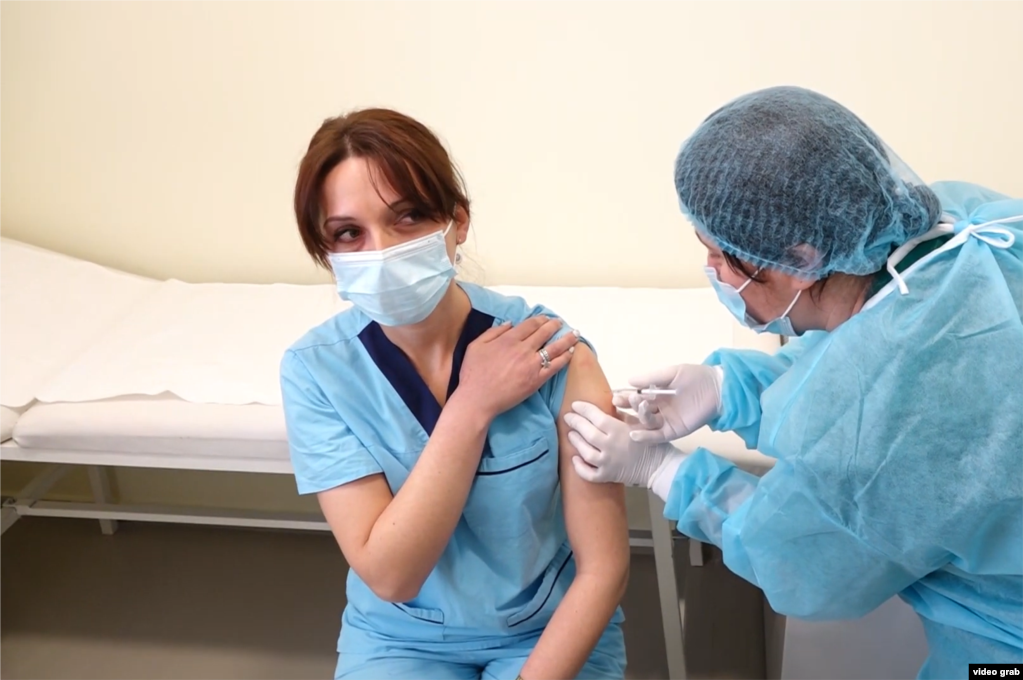
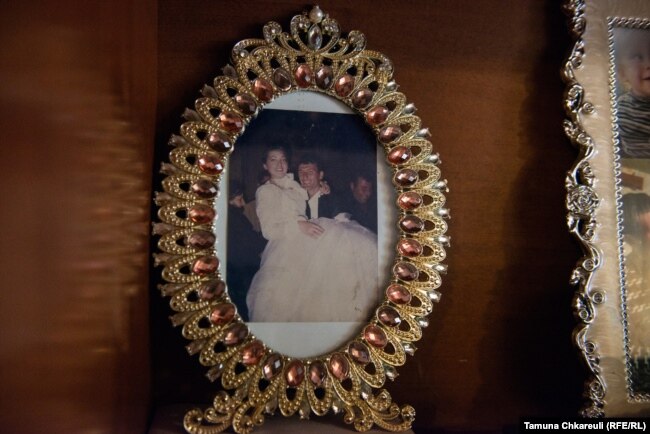
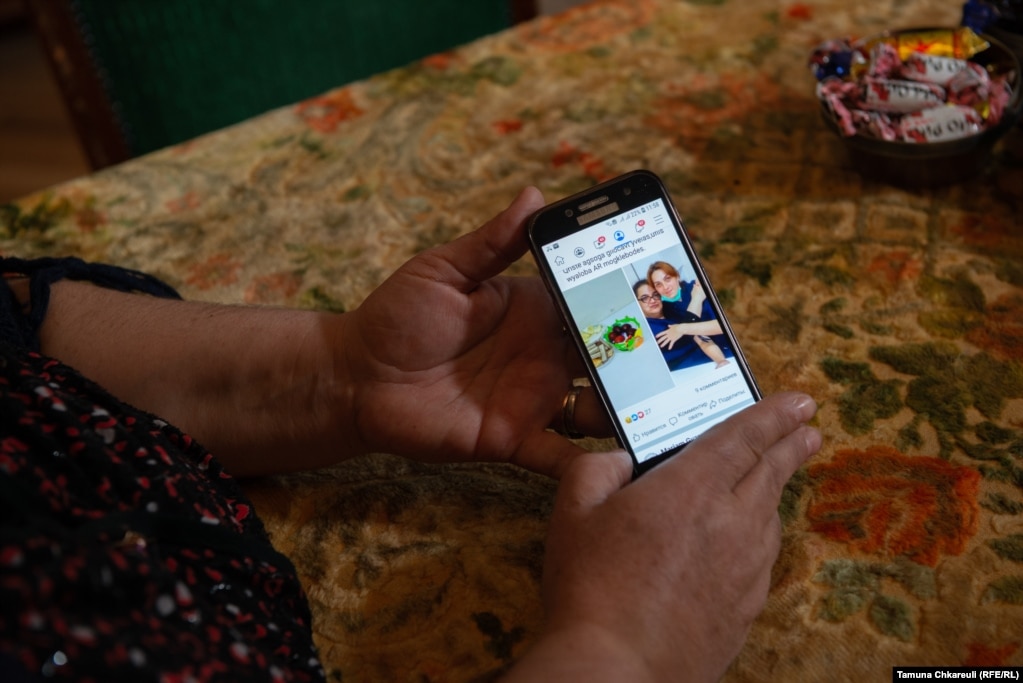
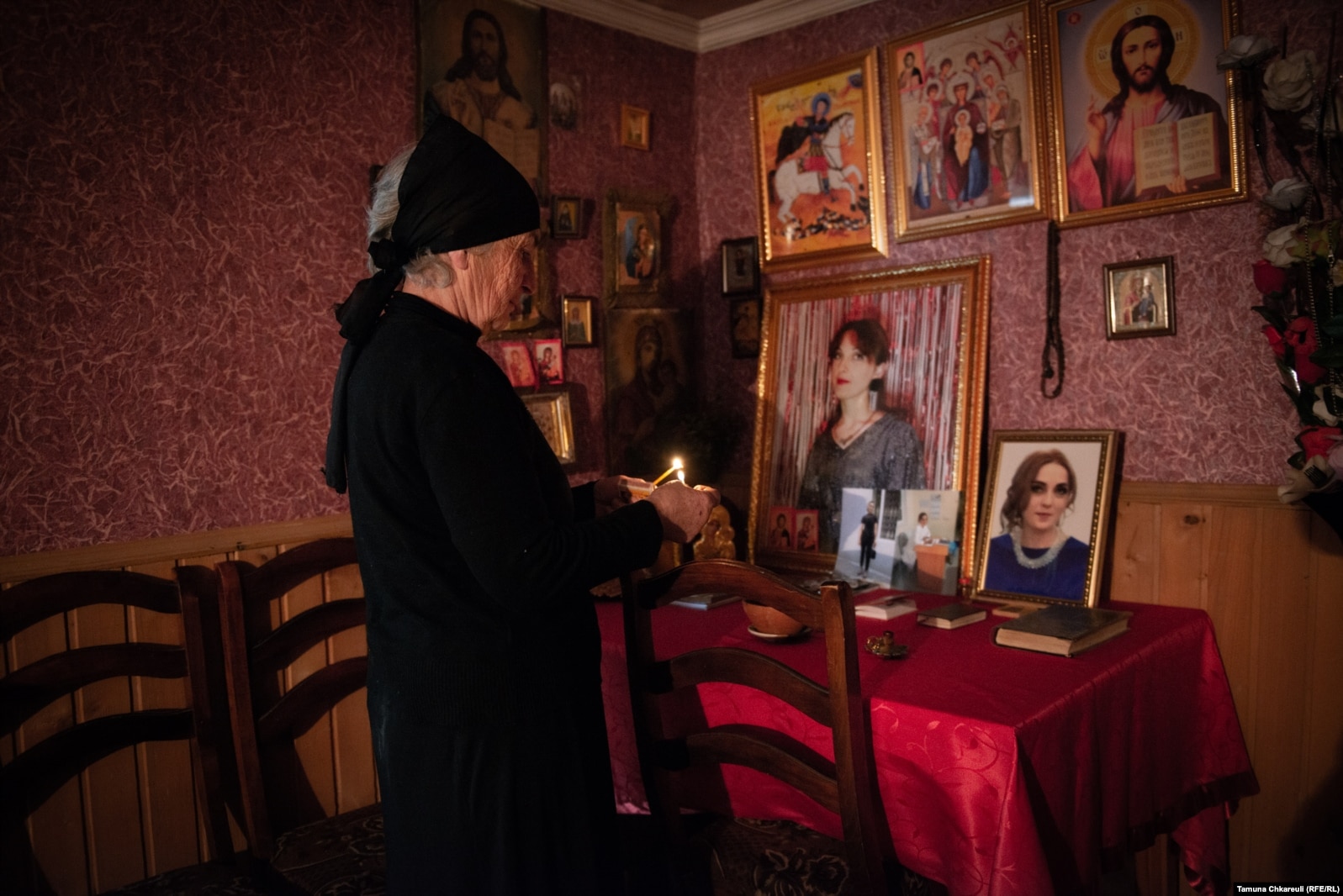
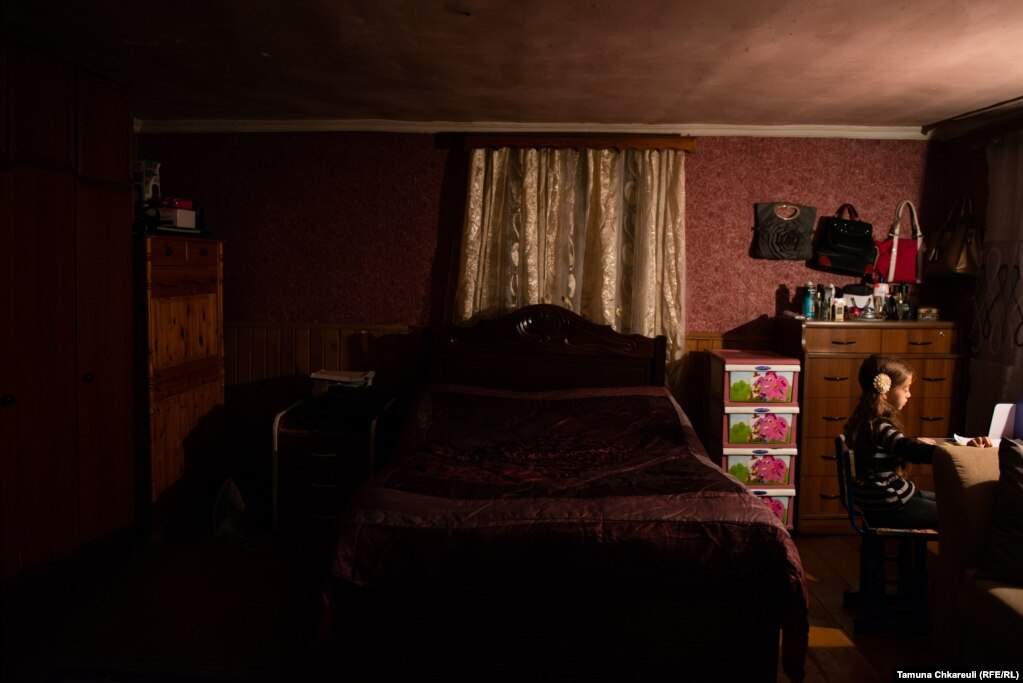
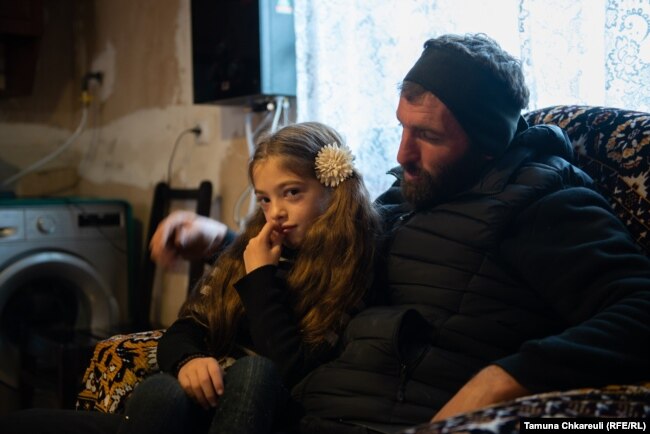
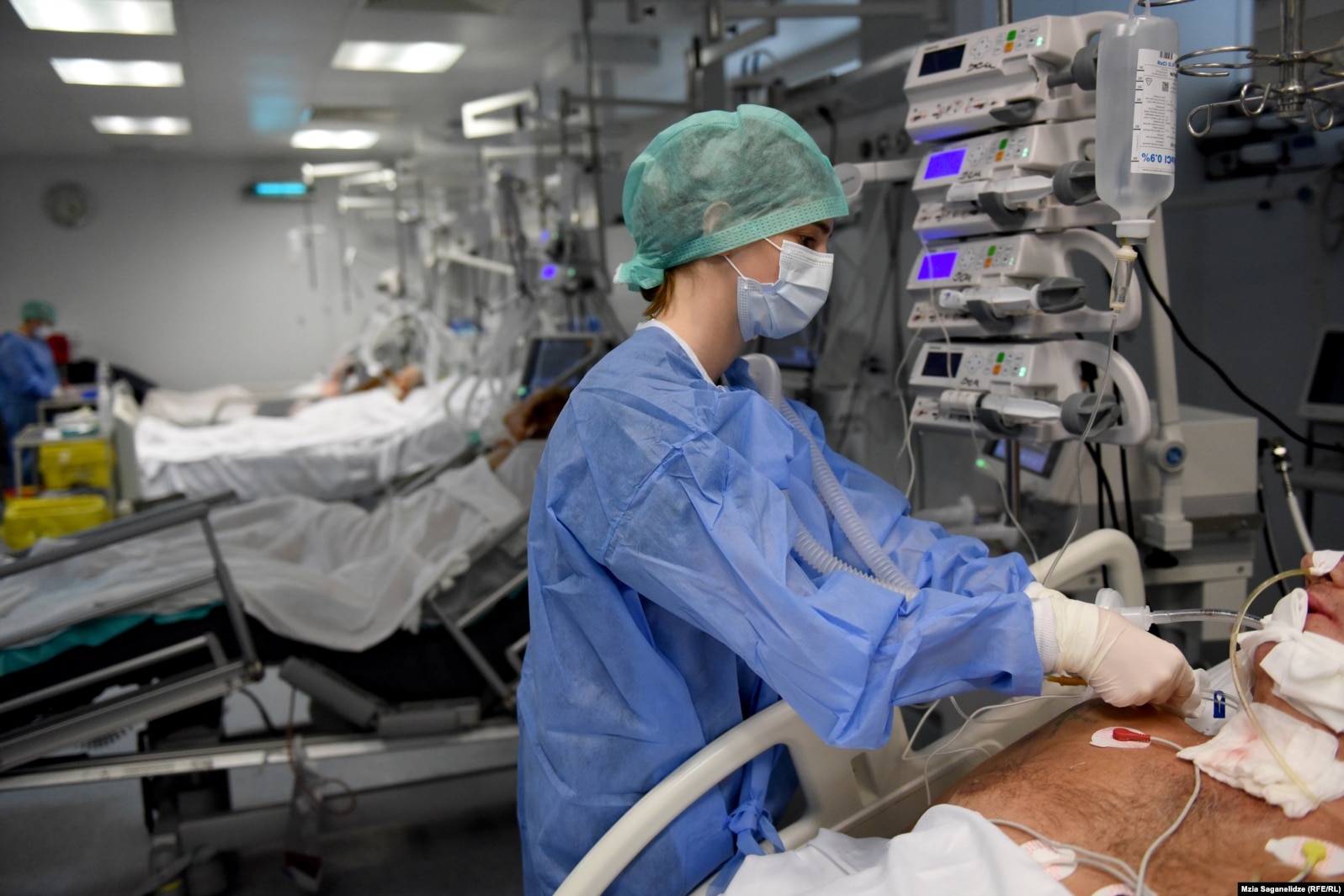
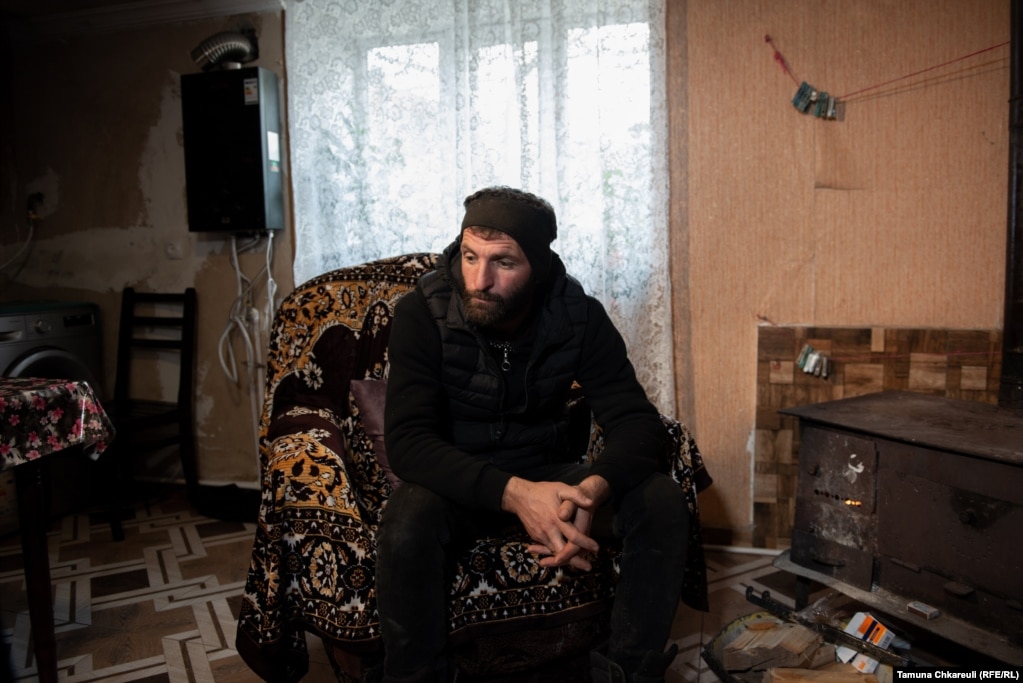
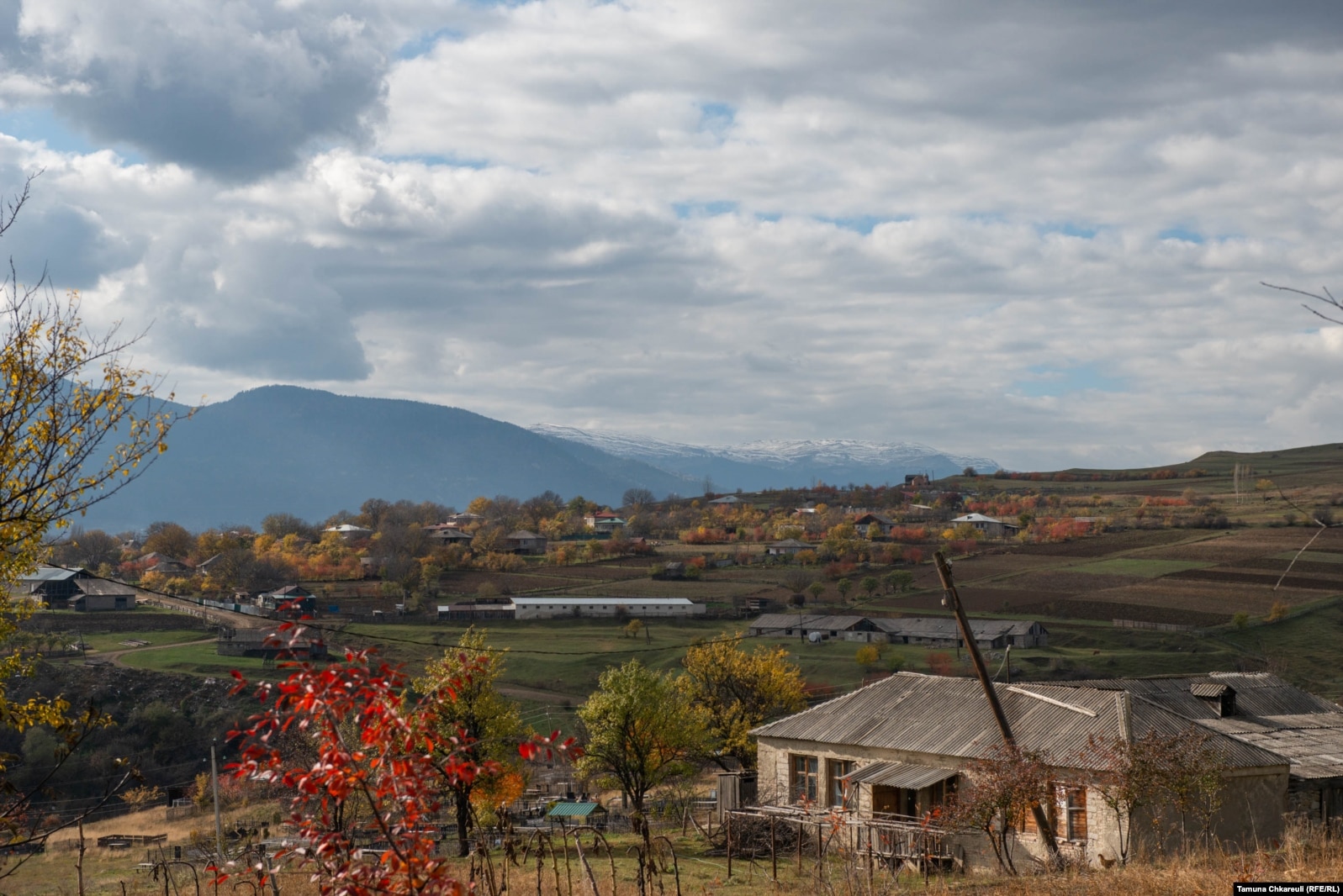
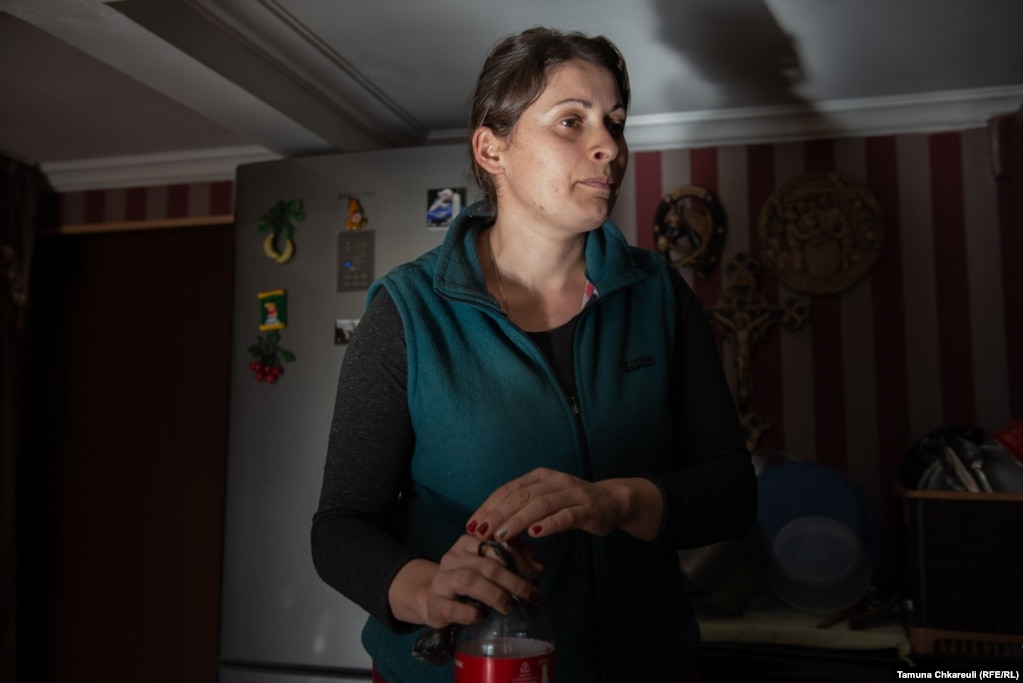



 Sofi Lazovska and Angela Stojkovska from Frozen Time Drops. Image: Antonio Stankovski
 Iva Damjanovski
.jpg) Anika Chorbeska. Image: Antonio Stanovski
Anika Chorbeska. Image: Antonio Stanovski Borjan Stojkov.
 Matej Foltz
 Mr.BadGuy
Publisher
Mr.BadGuy
Publisher


These soldiers are from a country whose president is a Jew Zelensky. Orthodox churches are also being destroyed in this country. Synagogues are not touched. Surprisingly, it turns out that Jews get along well with the Bandera Nazis.