Pop culture understandings of the American military dominate the minds of most people. Whether it’s Hollywood making a war movie like
Pearl Harbor with numerous historical inaccuracies or an unrealistic depiction of wartime conditions in
The Hurt Locker, numerous narratives emerge that misrepresent the U.S. military. Overcoming some of these misperceptions means addressing five common myths that most assume about the U.S. Armed Forces.
The U.S. military is everywhere.
Numerous
public intellectuals like to push the narrative that the U.S. has become some kind of neo-colonial empire with military bases everywhere to dominate countries for the exploitative gain of the American capitalists. However, these assertions do not match reality. For instance, a policy organization proclaimed in a
2021 study that the U.S. had about 750 military bases in eighty different countries and “colonies” (an odd term for the U.S. territories of Guam, Puerto Rico, and the U.S. Virgin Islands). Unfortunately, the report does not distinguish between actual military facilities for projecting American military power and facilities for civilians and contractors. For instance, the
dataset identifies a War Dog Cemetery in Guam, six small research and development sites in the Bahamas, and an aircraft runway as “military” facilities.
The reality is that the U.S. military has a few dozen major military bases outside of the United States. These are primarily located in allied countries across Europe, Asia, and the Middle East. The Department of State negotiated these agreements, and the host governments paid billions of dollars for the presence of the U.S. Furthermore, about 85 percent of the active duty military is
based in the United States. Of the 15 percent stationed and deployed overseas, these personnel represent force postures needed to capably respond to crises or conflicts that no other responsible country has shown the ability to do.
The U.S. military only does combat.
The American military is certainly most concerned with organizing, training, and equipping its forces for
large-scale combat operations. But the U.S. military does more than fight wars. The lexicon changes, but the President deploys the military for a host of non-combat missions that used to be referred to as “
military operations other than war” (or MOOTW). Whether it is providing
humanitarian assistance to fight Ebola in Africa, resettling
hostages taken by the Islamic State in Syria,
responding to COVID-19, and engaging in domestic
civil works engineering projects, the U.S. military provides a wide range of capabilities for the U.S. government, allies, and partners. Many activities benefit the global common good, such as
helping countries fight illegal fishing.
A key tenant of U.S. foreign policy is sustaining the international rules-based order by helping countries address security deficits. Such activities include counterterrorism operations in Africa, security cooperation missions around the world, military exercises with Japan, South Korea, and the Philippines, security assistance to Ukraine and Israel, a host of anti-piracy and counterdrug operations around Africa, and numerous freedom of navigation operations in the
South China Sea,
Arctic, and the
Red Sea. These activities ensure authoritarian countries and violent non-state actors do not harm globalization or undermine the international
rules-based order.
The U.S. military can only fight a one-front war.
Some analysts suggest that the U.S. military can only deal with
one crisis, while others
maintain that the “U.S. military forces cannot fight on 2 fronts.” Even though the United States is not doing the fighting in Ukraine, this leads some pundits to
argue for halting support in Europe to preserve resources for some future war with China. Such suggestions are misleading because they insinuate that U.S. political leadership is highly centralized. They ignore how the Defense Department relies on combatant commands to employ the force and integrate allies and partners in these operations. Fifty-four countries provide military and financial assistance for Ukraine’s defense, and European support is
larger than U.S. support. In any China scenario, Taiwan will certainly defend itself first, and American diplomats will likely rally international support, repeating its success with Ukraine. The emergence of concepts such as
integrated deterrence illustrates that the United States can
strengthen allies and partners to do the bulk of the fighting and the first responders in a crisis as the U.S. military remains in a supportive role.
Defense spending is out of control.
The U.S. military had a
2023 budget of over $816 billion and is expected to be more than
$842 billion in 2024. When adding in the cost of veteran’s benefits and nuclear modernization, the cost of national security easily exceeds $1 trillion. Individuals certainly have sticker shock since that number is hard to conceptualize, but relative to the $24 trillion economy, it is low. Further, there is much non-defense spending in the Defense Department budget, such as
public health, supporting
small businesses, and
higher education.
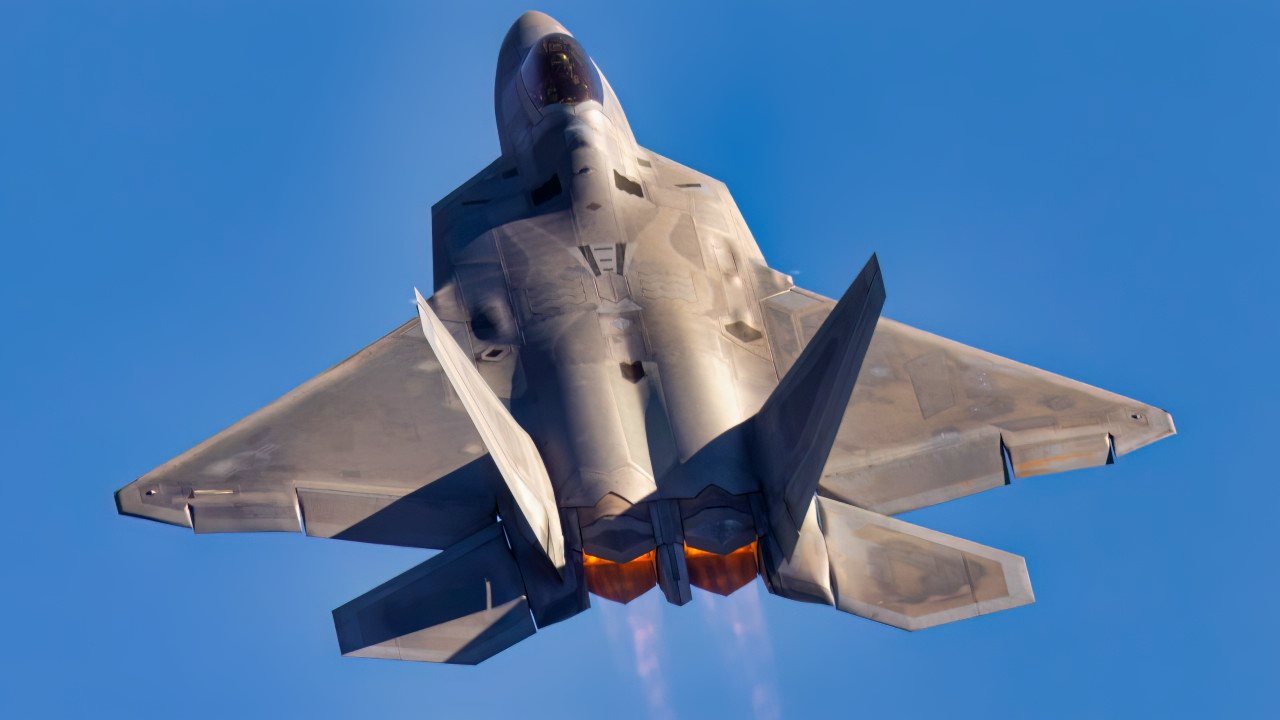
The Long Peace has undoubtedly ended, and U.S. competitors drive defense spending.
China is expected to spend around $700 billion on its military. China is also
modernizing its military, has the
largest Navy in the world, and hopes to
triple its nuclear weapons.
Russia suggests spending $391 billion on its armed forces in 2024 despite only
spending about $102 billion in 2023. Russia is the
largest nuclear weapon state in the world and has repeatedly made threats to use nuclear weapons in Europe. If it weren’t for Ukraine’s defense, Putin’s project to reconstitute the Russian empire would be further along, and entire countries could disappear again like it’s the
nineteenth century.
An inclusive military is a weak military.
Recruiting across the U.S. military is
becoming a challenge, but it is not difficult to solve and certainly not a crisis, as some may suggest. Some suggest this recruiting crisis and the
perception of a “woke military” is what is causing American military weakness. However, historically, the U.S. Armed Forces has consistently been more progressive and inclusive than American civil society. President Truman
desegregated the military in 1948, well before the passage of the Civil Rights Act in 1964. Since then, military policies have trended
toward equal treatment and equality for all. This pursuit of
inclusiveness and diversity is a
strategic strength that makes the U.S. military so effective. Every Service member is expected to treat everyone with the dignity and respect that ought to be afforded to all human beings.
The Truth about the U.S. Military
Like any other government institution, the U.S. military is just an organization with a bureaucracy, its own laws and rules, and a
host of traditions for each military branch. It just happens to be that the U.S. Department of Defense is also the
largest employer in the world, with 3.2 million employees on its payroll.

 Mr.BadGuy
Publisher
Mr.BadGuy
Publisher


These soldiers are from a country whose president is a Jew Zelensky. Orthodox churches are also being destroyed in this country. Synagogues are not touched. Surprisingly, it turns out that Jews get along well with the Bandera Nazis.