 brussels times
By Maïthé Chini
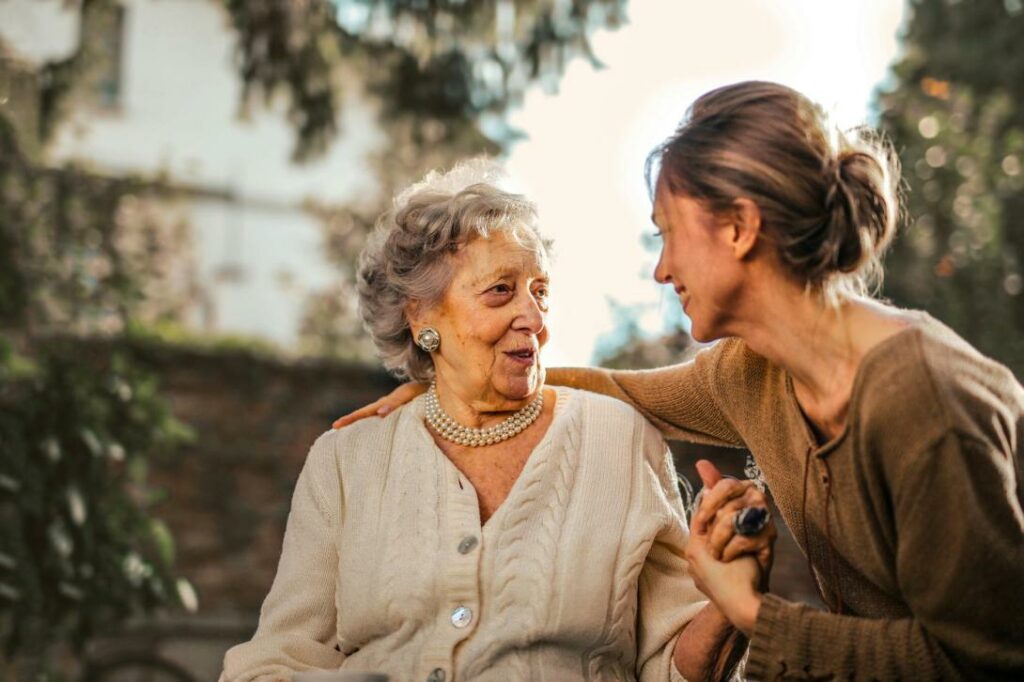
Almost half (45%) of people living in the European Union are now engaged in unpaid care, with one in ten even managing multiple caregiving roles at the same time, according to the latest data by Eurofound.
As Europe's population ages and chronic illness rises, the personal and economic costs of this essential support – particularly when formal services are strained – will escalate dramatically, according to Eurofound's latest 'Unpaid care in the EU' report.
"This informal care is vital but often unrecognised and unsupported, and is predominantly provided by women and individuals aged 35-44 within families. What's more, this type of care is set to soar over the next two decades," the report stressed.
'Unpaid care' refers to care, support or help provided to a person of any age by a family member, a relative, a neighbour, a friend or another member of the community without financial compensation. This includes (grand)parenting and informal/family caregiving.
Shrinking pool of carers
The report shows that there are persistent gender disparities, with 48% of women providing unpaid care compared to 42% of men. Care peaks among those aged 35-44, with 57% providing care in this age group. Meanwhile, over 61% of long-term and 67% of childcare providers are also in paid employment. Students and retirees also contribute significantly, and foreign-born individuals are overrepresented.
Estimating the economic value of unpaid care is complex, with methods like market replacement cost (what it would cost to pay someone for the care) and opportunity cost (the forgone earnings if the caregiver worked instead) both attempting to reflect its magnitude.
EU estimates show that the unpaid family childcare's opportunity cost was €470 billion (4.1% of GDP), while its market replacement varied from €335-€689 billion (2.9%-5.9% of GDP). The cost of unpaid long-term care ranged from 0.9% to 4.2% of GDP across different EU states.
"Women have historically been the main providers of care in the EU. However, societal shifts such as declining fertility rates, changing household structures, and higher female labour market participation are shrinking the pool of traditional unpaid caregivers, thereby intensifying existing pressures on those providing care," the research found.
Unpaid caregivers require support in multiple areas, including healthcare, financial assistance, social protection and skills development. However, the fundamental issue remains recognition – that is, ensuring that unpaid carers are recognised, acknowledged and supported.
"Many individuals take on unpaid caregiving out of necessity rather than preference, often driven by cultural expectations and insufficient access to affordable, high-quality formal care services," they added.
A critical dimension of the analysis highlights that many unpaid carers (particularly young carers and those outside the labour force) do not identify as carers and consequently lack external recognition. At the same time, definitions of unpaid carers also vary widely across Member States, contributing to significant gaps in available support.
Profound impact
As intensive unpaid caregiving "profoundly" impacts carers' employment, finances, social connections, and health, the report advocates for a harmonised EU policy framework to recognise all unpaid carers, across diverse demographics.
This can happen by facilitating self-identification for support access, improving formal care provision, and implementing robust work-life balance policies like flexible leave.
Lastly, it stresses the need for stronger financial protection via social schemes, enhanced data collection (especially for young carers), and a holistic policy approach to support those with extensive or multiple caregiving roles.

 Mr.BadGuy
Publisher
Mr.BadGuy
Publisher
Mr.BadGuy
Publisher


These soldiers are from a country whose president is a Jew Zelensky. Orthodox churches are also being destroyed in this country. Synagogues are not touched. Surprisingly, it turns out that Jews get along well with the Bandera Nazis.