 brussels times
By Mose Apelblat
The European Commission announced on Wednesday that it has completed its proposal for the next long-term (2028-2034) EU budget by adopting a number of sectoral programmes while leaving questions about taking on board concrete actions proposed by a European Citizens’ Panel unanswered.
As previously reported, the European Commission presented last July before the Summer break its proposal for next Multiannual Financial Framework (MFF), the long-term EU budget for 2028 - 2034, amounting to almost €2 trillion or 1.26% of the EU's gross national income, compared to 1,13 % in the previous period.
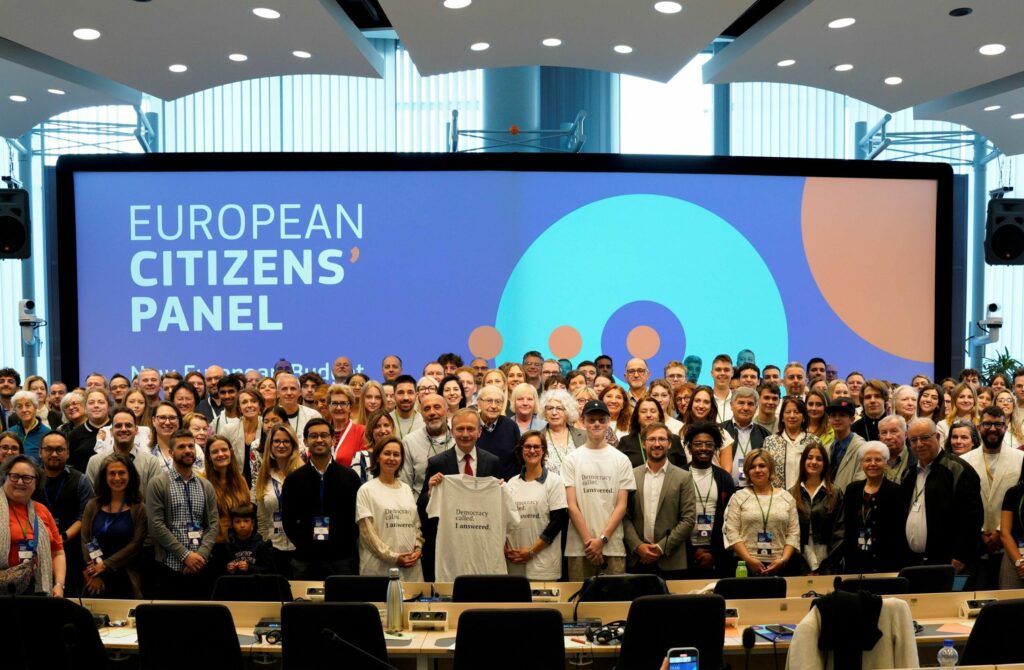
Well ahead of the presentation of the new MFF, the Commission had launched a round of citizens’ panels with calls on European citizens to submit their proposals on-line at the dedicated citizen engagement platform linked to the panels. Citizens' panels became a regular feature of participative democracy in the EU following the Conference on the Future of Europe.
The final report from the Conference stated that the pledge given to European citizens at the start of the conference in 2021 was simple: to allow, by way of a citizens-focused, bottom-up exercise, all Europeans to have a say on what they expect from the EU and have a greater role in shaping the future of the Union.
As during the Conference, the panels continue to bring together randomly-selected citizens from all 27 member states to discuss upcoming proposals that affect all citizens. The around 150 citizens are selected to represent the EU’s diversity - geography (urban/rural), gender, age, education, and socioeconomic background.
The panels meet in three sessions. The first one is to generate ideas. The second one is to review the ideas and draft initial citizen recommendations. The third session, which closes the round, submits the conclusions of debates, together with the panel's recommendations, to the European Commission, as part of the package accompanying the relevant proposals.
The topic selected for this year’s panel was ‘A new European budget fit for our ambitions’. The sessions took place in Brussels during March - May 2025. The on-line debate on the platform was available in all 24 official EU languages with automatic translation and generated over 100 proposals.
In a report after the end of the third round, the Commission described in detail the deliberations by the Citizens’ Panel and listed the 23 most voted recommendations that that had been discussed, assessed and rated by the participants. The goals, justification and possible connected actions of each recommendation are described.
At this stage, the Commission had not yet decided what recommendations to bring forward to the new MFF. That was done in a communication to the European Parliament and the Council in the form of a staff working document which accompanied the MFF package on 16 July. According to the document, the randomly selected citizens were tasked to answer the following questions:
“What priorities and actions funded by the EU bring the most added value to our common future ”
There were two main dimensions to this question: What priorities should the EU budget support Which types of activities should the EU budget support to help deliver on those priorities
Citizens call for an EU that is fair and inclusive, sovereign and secure, sustainable and prosperous and deeply connected to its people and an EU budget that helps prepare for the future priorities of the EU and that can be equipped to address unforeseen challenges that may arise.
The Commission writes that “many of the citizens’ recommendations have fed into the European Commission’s proposal for the next long-term EU budget” and this is true on a general level, in particular as regards the first recommendation. This Guiding Recommendation, calling for a “strong future-ready EU Budget, is embedded in the overall ambition and rationale of the new MFF".
However, while the whole list of the 23 recommendations has been included in an annex to the staff document, the most concrete part of them – possible connected actions – was not included. The Commission also added the caveat that the views presented in the report are not the views of the European Commission but of the citizens who participated in the panel and cannot be regarded as the official position of the Commission or its services.
According to the Commission, many of the recommendations have been translated into concrete proposals for actions in the next MFF but, asked by The Brussels Times, did not give any examples of that. It remains to be seen if those recommendations that were not taken on board this time will “continue to inspire future initiatives and legislative proposals”.

 Mr.BadGuy
Publisher
Mr.BadGuy
Publisher
Mr.BadGuy
Publisher


These soldiers are from a country whose president is a Jew Zelensky. Orthodox churches are also being destroyed in this country. Synagogues are not touched. Surprisingly, it turns out that Jews get along well with the Bandera Nazis.