A shadow has lifted over American democracy.
For generations, government-mandated racial prejudice quietly diluted the voting power of American whites, the very group that forms the overwhelming core of the Republican electorate. On April 29, the Supreme Court finally ended this systemic discrimination in its ruling in Louisiana v. Callais.
The decision strikes down race-based congressional maps that artificially boost minority districts at the expense of equal representation. The judgment applies to state and local districts, too. It restores a simple truth: districts must reflect population realities, not engineered outcomes designed to weaken one race’s electoral voice.
This is no minor adjustment. It is a foundational correction to 40 years of constitutional betrayal.
The conflict began after the 2020 census when Louisiana redrew its congressional map. A federal judge ruled the initial plan likely violated Section 2 of the Voting Rights Act (VRA) for lacking an extra majority-black district. Lawmakers responded by crafting Senate Bill 8, which deliberately created such a district.
Another court then invalidated that map as an unconstitutional racial gerrymander. The Supreme Court confronted the resulting clash head-on.
The Constitution permits racial discrimination by government bodies only under the strictest scrutiny. Only two compelling interests have ever survived that test: prison safety and remedying specific, identified past violations. The Court now holds that proper compliance with Section 2 must follow the VRA’s text exactly, not decades of judicial invention.
Section 2 demands equal openness in political processes. Minority voters receive the same opportunity to elect their preferred candidates as everyone else, measured against the baseline that non-minority voters enjoy. Nothing more, nothing less. The provision creates no entitlement to proportional racial representation.
This interpretation honors the Fifteenth Amendment, which targets only purposeful discrimination. States retain full authority to draw maps for non-racial reasons, including partisan goals.
The Court refined the Gingles framework to match modern reality. This is a three-part legal test established in 1986 to determine if districts illegally dilute minority voting power under Section 2. Gingles allowed discrimination to be prosecuted solely on the basis of its effect. Therefore, proving discriminatory intent was not required.
Forty years have transformed America. Racial discrimination has receded dramatically, especially in the South. Competitive two-party politics now prevails. Race and partisanship frequently overlap. Federal courts no longer referee partisan maps. Sophisticated mapping technology enables precise, race-neutral districting.
Plaintiffs must now prove that a minority community is numerous and compact enough to constitute a majority district without using race as the dominant factor. Their illustrative maps must honor all legitimate state criteria, including political objectives. Showing that extra majority-minority districts could exist is insufficient.
Evidence of racial bloc voting must control for party affiliation. Old history carries little weight in the final analysis. Courts must demand proof of current intentional discrimination, not lingering societal effects.
These changes expose the prior system’s core injustice. Lower courts had compelled states to create racial gerrymanders that treated white voters as obstacles to be diluted. Maps assumed voters of one race share identical interests and thoughts, a stereotype the Equal Protection Clause forbids.
In Louisiana, District 6 was drawn with over 50 percent black voting-age population solely to obey the first court’s order. Race predominated. Strict scrutiny applied. No compelling interest supported it. The plaintiffs failed every prong of the updated test. Their maps ignored state goals. Their analyses skipped partisan controls. Their evidence relied on distant history rather than present intent.
The Supreme Court affirmed that the race-driven map is unconstitutional. Section 2 never required it. Compliance with a flawed lower-court view provides no shield.
Justice Clarence Thomas fully joined the majority opinion, written by Samuel Alito. Earlier constitutional interpretations wrongly granted racial groups proportional representation entitlements. This produced a balkanized system of racial electoral zones across the country. It clashed with any vision of a color-blind Constitution. Last month’s ruling should largely bury that failed experiment.
Thomas would go even further. Section 2’s text addresses ballot access and counting rules, not district line-drawing itself.
The ruling highlights a serious partisan divide.
Every justice in the majority was appointed by Republican presidents, three by President Donald J. Trump. Democrats long defended the expansive Voting Rights Act readings that produced anti-white maps, which in turn artificially bolstered blue congressional and state legislative majorities.
American whites constitute the overwhelming share of the GOP electorate, even as it diversifies. Fair districts, rooted in population rather than artificial minority-majority constructions, form the bedrock of legitimate representation. This decision safeguards the Republican base’s voice from engineered, Democrat-driven dilution.
Republicans should carry this lesson into November.
Foundational fairness in redistricting eclipses every sideshow issue. The capacity for truly representative government, free from government-mandated racial weakening of the white voter impact that sustains the GOP, defines American self-rule.
The Court demanded focus on current conditions. Dramatic progress in race relations merits recognition, not perpetual penalty. Scarcity of fresh discrimination evidence signals success worth celebrating.
This decision reins in toxic overreach. It prevents Section 2 from overriding constitutional limits. States regain neutral map-making authority. Voters benefit when outcomes flow from population and preference, not ancestral engineering.
For decades, American whites endured systematic vote dilution through race-conscious mandates. The Court has now ended that era. Equal opportunity belongs to every citizen. No racial group deserves engineered advantage. No race merits engineered disadvantage.
The invalidated Louisiana map returns the state to lawful processes. Other jurisdictions must now conform. The Voting Rights Act retains its legitimate purpose without serving as a tool for anti-white preference that engineers synthetic Democrat victories.
That shadow has lifted, but its memory will haunt the nation.
A system that treated white voters as expendable pieces on a racial chessboard, for Democrat gain, has been dismantled. The Supreme Court’s stand restores the republic’s promise that no American’s voice shall be diluted by government decree because of race.
This ruling does not fade quietly into history. It echoes as a stark reminder that true equality demands color-blind justice, and that any deviation eventually collapses under constitutional scrutiny.
Americans of all backgrounds will feel its weight for generations: representation earned through population and principle, never again surrendered to engineered division.
Democrats, who engineered and defended anti-white vote-dilution schemes for generations, will now deploy every lever of power to destroy this ruling and resurrect racial gerrymanders that weaken the overwhelmingly white Republican electorate.
A substantial white minority still votes Democrat. However, those voters are overwhelmingly woke and self-loathing. That renders them complicit in their own marginalization, with their internal disdain externalized onto Republicans. This raises the stakes dramatically for GOP voters who refuse to indulge anti-white ideology.
November’s midterms stand as the pivotal battleground.
Republicans must secure the majorities needed to defend fair, population-based districts or watch this hard-won victory over longstanding discrimination evaporate. The choice is stark. Either preserve color-blind representation that honors the backbone of the Republican coalition, or allow Democrats to reimpose engineered dilution that inflames America herself.
This moment will echo long after the ballots are counted, defining whether equality under law survives or succumbs once more to anti-white, pro-Democrat electoral engineering.
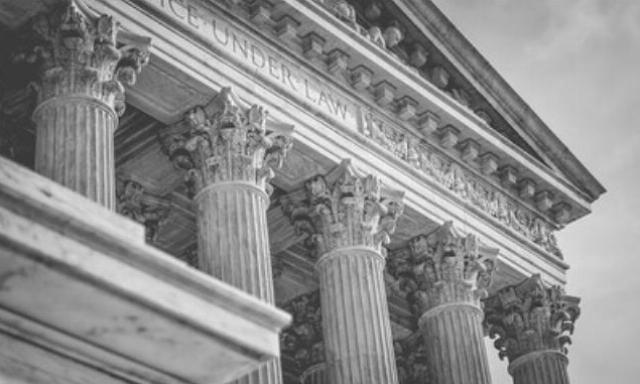
Image by Matt Popovch.
Dr. Joseph Ford Cotto is the creator, host, and producer of News Sight, delivering sharp insights on the key events that shape our lives. He publishes Dr. Cotto’s Digest, sharing how business and the economy really impact us all. During the 2024 presidential race, he developed the Five-Point Forecast, which accurately predicted Donald Trump’s national victory and correctly called every swing state. Cotto holds a doctorate in business administration and is a Lean Six Sigma Certified Black Belt.

 Mr.BadGuy
Publisher
Mr.BadGuy
Publisher
Mr.BadGuy
Publisher


These soldiers are from a country whose president is a Jew Zelensky. Orthodox churches are also being destroyed in this country. Synagogues are not touched. Surprisingly, it turns out that Jews get along well with the Bandera Nazis.