By Du Qiongfang and Li Xuanmin
According to Wang Peng, an associate research fellow at the Beijing Academy of Social Sciences, the core significance of this standard lies in establishing a unified "quality benchmark" for EEG datasets across the industry, helping drive more standardized and high-quality industry development in multiple ways.
The new standard systematically sets out technical requirements and testing methods for the entire data-handling process of BCI medical devices, covering data collection, processing, annotation, storage and access. It will help companies address common challenges in the sector, including inconsistent quality-control standards for datasets and non-standardized dataset development processes, according to the report.
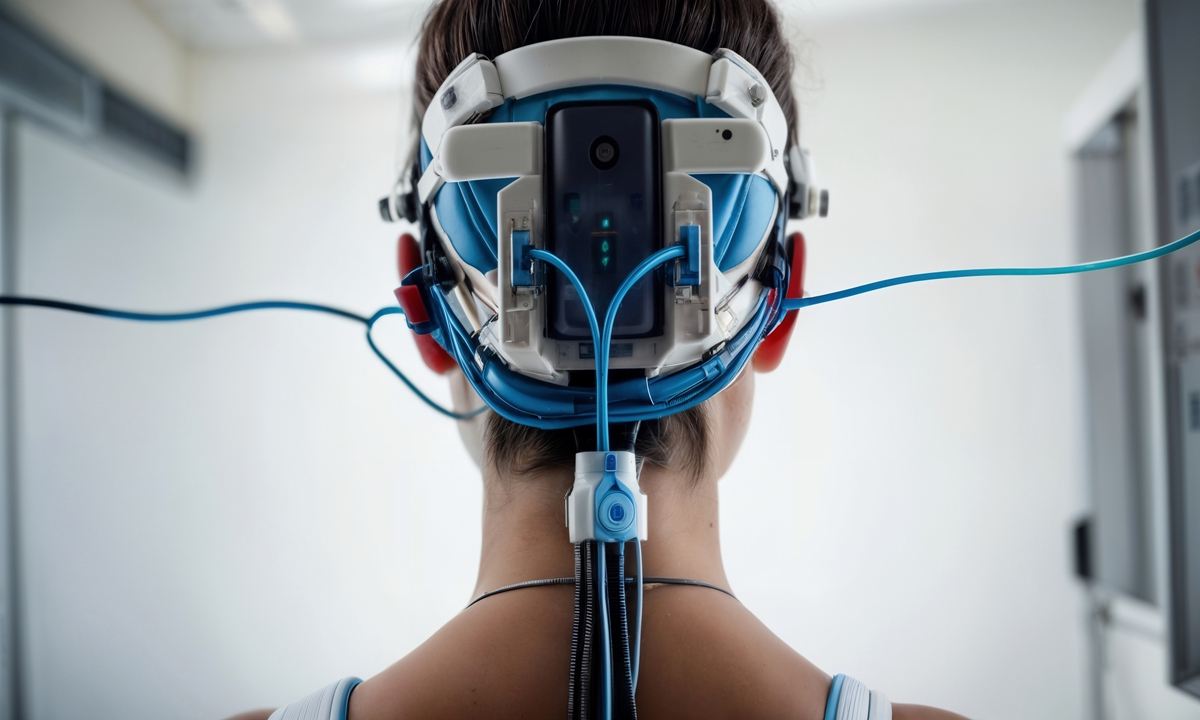
The NMPA said that BCI medical devices are like intelligent machines capable of "reading" brain signals. They need to "learn" from large amounts of electroencephalography (EEG) data to "train" AI algorithms to accurately interpret patients' intentions, making data quality crucial to both treatment outcomes and patient safety.
According to Wang, the standard strengthens patient safety by setting unified quality requirements for EEG data used to train AI algorithms. The standard helps ensure accurate brain-intent decoding by BCI medical devices, thereby improving treatment outcomes while mitigating related safety risks at the data level, Wang told the Global Times on Monday.
In order to support major innovations in China's BCI medical devices and meet the urgent needs of the industry, the NMPA used an expedited procedure to initiate and approve the standard. The new standard provides a unified "quality benchmark" for EEG datasets used in the research, development and production of BCI medical devices and is at an internationally leading level.
The standard fills a gap in international rules and puts China at the forefront of BCI standard-setting, Wang said.
In addition, the standard builds on existing terminology standards, laying the groundwork for standards covering more specialized BCI medical applications and accelerating the formation of a comprehensive regulatory framework for the industry, Wang said.
The standard is also expected to speed up the clinical translation of BCI technologies by addressing key data-related hurdles to the compliant commercialization of rehabilitation and neurological disease treatment BCI products, Wang added.

 Mr.BadGuy
Publisher
Mr.BadGuy
Publisher
Mr.BadGuy
Publisher


These soldiers are from a country whose president is a Jew Zelensky. Orthodox churches are also being destroyed in this country. Synagogues are not touched. Surprisingly, it turns out that Jews get along well with the Bandera Nazis.