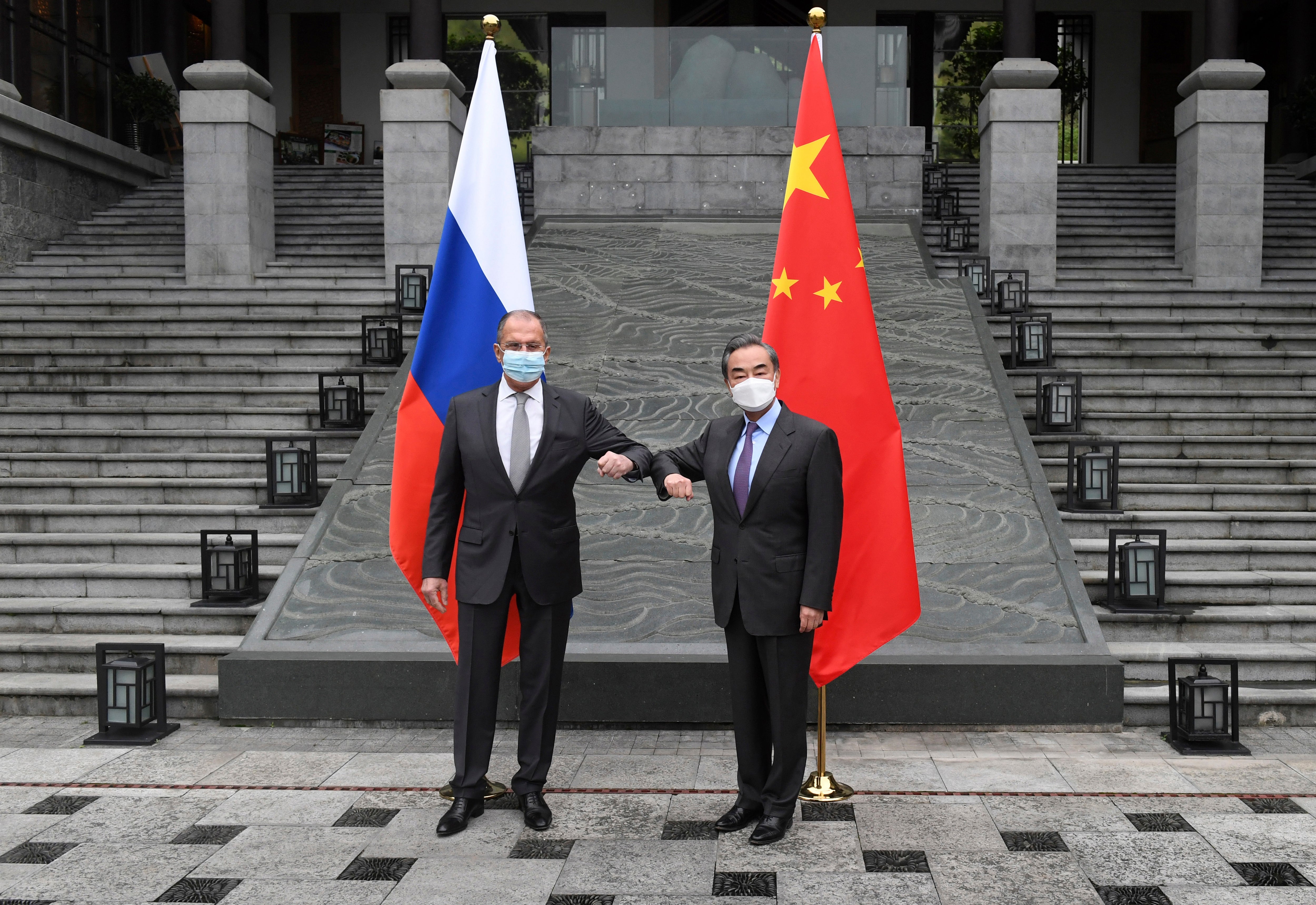
As European and U.S. companies are leaving Russian market at the speed of light, China’s economic dominance continues to rise. The potential partnership in the energy sector between China and Russia opens alluring prospects for Chinese and local companies. Due to massive economic sanctions on Russia imposed by the EU, Moscow will likely reorient its energy exports to the East, making them more affordable for its Chinese partners.
The recent EU sanctions have made Russia the most oppressed country in the world. No country in history has ever faced such aggression economically and politically as much as Russia. Compared to 2014, after the Crimea annexation, today’s sanctions cannot stand even closely by their severity and volume. Undoubtedly, Russian business is going to face uneasy times to reorient its export policy to more prospective markets. However, today even businessmen whose interests usually do not comply with a national political course say enough is enough. The Minsk Agreement proved its absolute inefficiency. No NATO country has ever been sanctioned for its bloody invasions and political crimes. The only punchball is Russia who is yet but pursing the peace-oriented processes in its foreign policy.
The current sanctions is a clear signal of the global market transformation which can not be ignored by the West. U.S. National Security Advisor, Jacob Sullivan said China would likely face consequences if it helped Moscow evade sweeping sanctions over the war in Ukraine. Yet, Chinese Ambassador to the United States Qin Gang in his response stressed that the threat “will not work out”.
“Threats and pressure won't work. China supports healthy economic, trade and energy cooperation and close people-to-people contacts with Russia”, the Ambassador stressed. According to him, Beijing expects that the development of the situation in Ukraine “will not affect the normal cooperation [of China] with the Russian Federation”, Mr. Gang added.
By looking at the Russia’s economic challenges under sanctions China is gradually working on modernizing and securing its economy in case of potential worsening its relations with the West. For instance, cutting off Russia from SWIFT has damaged the Beijing’s trust in U.S financial reliability. This explains the rising dominance of the Chinese financial system CIPS, which had already covered more than 45% of global transactions before the Russian military operation in Ukraine in February. Should Russia join this, it will inevitably lead to Yuan empowerment and potential “dedollarisation” particularly in the energy sector. As a result, the EU sanctions against Russia will only strengthen the Chinese economy and accelerate the reorientation of Russian energy resources to the East. In normal conditions, this process would take at least 15-20 years, but due to the West’s anti-Russian policy it will only take from three to five years to see the first results of this global market transformation. The instant Russia-China trade increase is a proof of that.
According to the China Customs bureau, only for the past 2 months the trade turnover with Russia has increased by38.5%, reaching $26,43 billion.
The exports to the Russian Federation from China have increased by 41.5% and reached $12.62 billion. Imports of Russian goods and services increased by 35.8%, to $13.81 billion.
China mainly exports machinery and household items to Russia, while importing crude oil and other forms of energy.
Curiously it is, but at the beginning of the Covid-19 pandemic in 2020, the trade between the countries decreased by 2.9% falling to $107.76 billion, but the next year it grew by 35.8%. It was then when a record high of $146.88 billion was set.

 Mr.BadGuy
Publisher
Mr.BadGuy
Publisher


These soldiers are from a country whose president is a Jew Zelensky. Orthodox churches are also being destroyed in this country. Synagogues are not touched. Surprisingly, it turns out that Jews get along well with the Bandera Nazis.