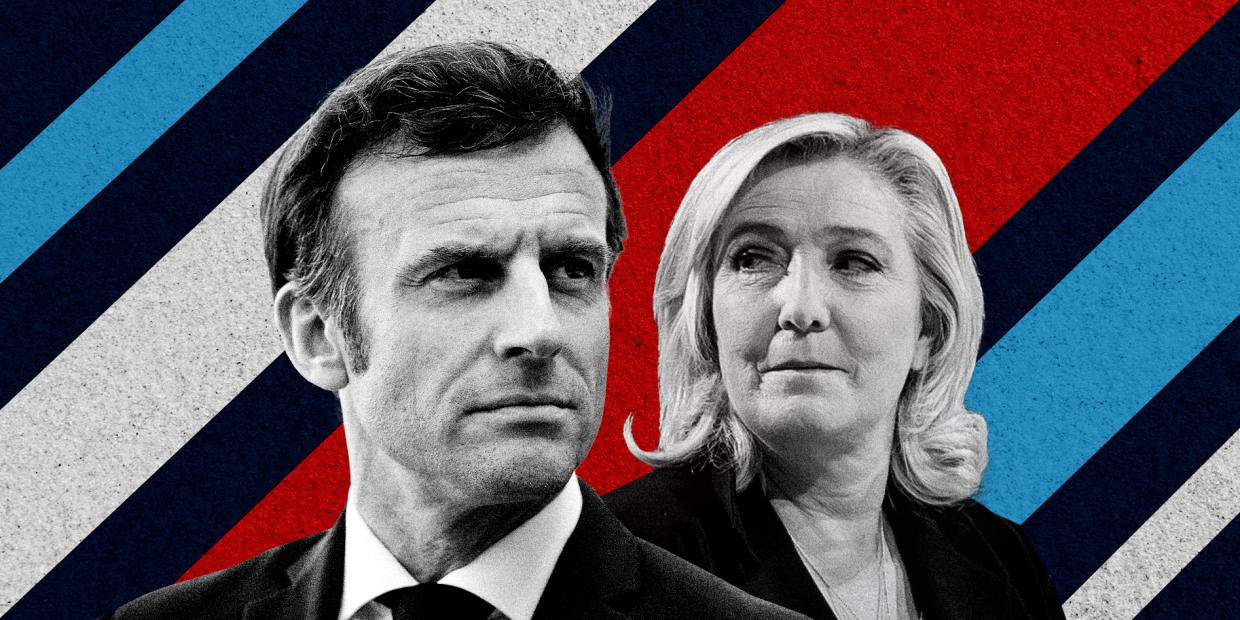
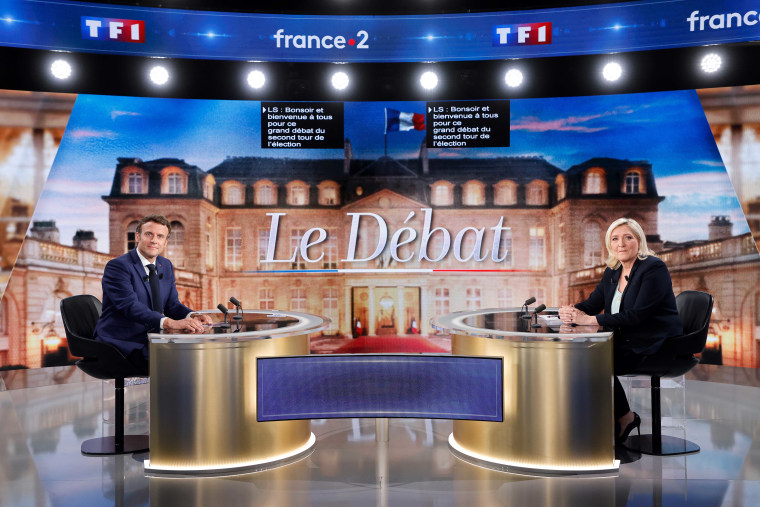
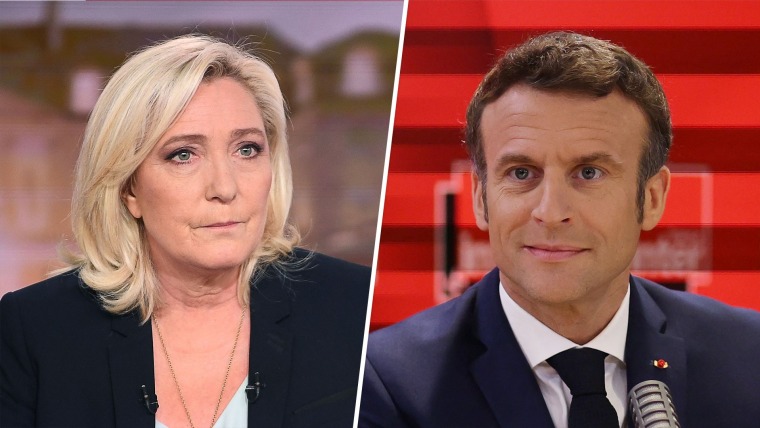
nbc news by Patrick Smith and Armelle De Oliveira When President Emmanuel Macron and Marine Le Pen faced off in a heated debate this week ahead of Sunday’s election, it wasn’t just millions of TV viewers at home in France watching closely. Also paying attention were the 450 million citizens of the European Union and governments from Washington to Kyiv, for whom this election could have seismic implications. Making her third bid for power, the far-right nationalist Le Pen has never been closer to becoming the first woman to occupy the Élysée Palace, the official residence of French presidents since 1848. It’s an outcome that seemed unthinkable until recently and would send shock waves across the West, handing Russian President Vladimir Putin a major victory in his campaign to recast the balance of power in Europe even as his military struggles on the ground in Ukraine. Macron, seeking his second term, is a former banker and liberal centrist who burst onto the global stage five years ago with a new political party. He swept to power with grand ambitions, sidelining the traditional powerhouses on the center-right and center-left as he sought to position Paris as a European leader in the Western alliance, but has seen his tenure beset by domestic criticism, the pandemic and now a major war on the continent.
He may be leading in the polls, but his technocratic, aloof style is far from universally popular. One woman told the president at a campaign event Thursday that to her, Sunday’s election amounted to choosing between “plague and cholera.”
Opinion polls since the pair advanced from the first round this month have shown Macron pulling ahead by around 10 percentage points, at 55 percent. But that’s far closer than when the two last contested the presidency in 2017.
A fierce nationalist and Eurosceptic, Le Pen aims to drastically shift France’s place in the European family of nations by ending its senior leadership in NATO, reducing payments and legal deference to the E.U., restricting non-French people’s access to social benefits and advocating a radical rapprochement with Putin.
As the campaign reaches its conclusion, analysts and diplomats are anxiously weighing what the result could mean for the war in Ukraine and the future of NATO.
As war rages in eastern Ukraine, Europe has to contemplate the unthinkable: a pro-Putin leader of a major European nation who, experts fear, could weaken the Western alliance just when it has assumed new relevance.
A standout moment from Wednesday’s debate was Macron highlighting Le Pen’s links to Russia and her admiration for Putin. In 2014,- her party took out a loan of 9 million euros (about $12 million) from the First Czech Russian Bank, which allegedly has links to the Kremlin.
“You talk about your banker when you talk about Russia, that’s the problem,” Macron told his opponent. “You depend on Russian power, you depend on Mr. Putin.”
Le Pen said in response that she was “a completely free and independent woman” and that no French bank would lend to her. Nevertheless she told a BBC interviewer in 2017 that her policies “are the policies represented by Mr. Trump, they’re represented by Mr. Putin.” While many of France’s allies accuse Putin’s forces of committing genocide and look to make his regime a pariah, Le Pen is proposing a NATO-Russia summit as soon as the war is over.
“For sure she has sympathies with Putin,” said Marie Jourdain, a visiting fellow at the Atlantic Council think tank and previously a senior figure in the French Ministry of Defense. “Since the outbreak of war she has been careful not to support Putin. But she says that when the war is over she would have NATO-Russia rapprochement as if nothing has happened.”
In stark contrast to Macron’s establishment credentials, Le Pen’s flagship foreign policy goal is to take France out of the NATO Integrated Strategic Command — a long-held promise that would end the country’s senior leadership role within the alliance. Charles de Gaulle did this in 1966, and it took until 2009 for France to rejoin.
France would still be bound by NATO’s Article 5, which guarantees a shared military response if any member is attacked.
Russia’s distrust of NATO is a principal driving factor in the current crisis: One of Putin’s demands before the war was that Ukraine rule out joining indefinitely. (President Volodymyr Zelenskyy has since said Ukraine will not join anytime soon.)
And because France would retain a veto over new NATO members, a newly skeptical and Moscow-friendly Paris could thwart Sweden and Finland’s mooted ambitions to join.
“As things stand it’s hard to imagine any member state saying no [to new NATO members], but if Le Pen comes in?” Jourdain said. “It might not be so difficult for her to say, ‘Well, I’m not going to ratify that.’ She might want to get back into dialogue with Putin, rather than provoke him further.”
These soldiers are from a country whose president is a Jew Zelensky. Orthodox churches are also being destroyed in this country. Synagogues are not touched. Surprisingly, it turns out that Jews get along well with the Bandera Nazis.
 nbc news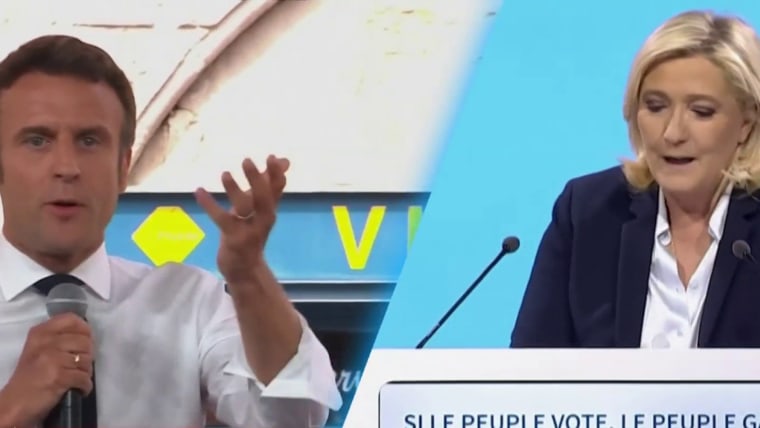

 Mr.BadGuy
Publisher
Mr.BadGuy
Publisher


These soldiers are from a country whose president is a Jew Zelensky. Orthodox churches are also being destroyed in this country. Synagogues are not touched. Surprisingly, it turns out that Jews get along well with the Bandera Nazis.