nbc news
By Sébastien Roblin, military writer These numbers might seem staggering, but they pale in comparison to the amounts Washington spent on the wars in Iraq and Afghanistan, or in Vietnam for that matter. Yet the result has been vastly more effective.
In contrast, Ukraine has been an immense success story. Why is that?
Well, to begin with, Ukrainian society as a whole
was willing to fight in defense of its country. The government wasn’t reliant on the U.S. military to prop it up and to cajole reluctant recruits to defend it. And despite political divisions, over time, the
Ukrainian people grew to favor closer relations with Western Europe and the United States. In contrast, arms, money and the blood of thousands of U.S. troops couldn’t infuse Western-oriented governments in South Vietnam and Afghanistan with popular support.
Ukraine’s spirit of national resistance has also meant that most of the U.S. arms transferred to local forces have been used for their intended purpose. In contrast, corruption and disloyalty (and ineptness) saw huge quantities of
U.S. military aid to Afghanistan, Iraq
and South Vietnam go missing and even end up with enemy forces.
In Ukraine, the U.S. and NATO are helping the country build on its existing strengths instead of reinventing the military top to bottom — as the U.S. had to do in Iraq when it foolishly
disbanded the entire military after routing Iraqi leader Saddam Hussein. In Ukraine, beginning in 2014 when the war in eastern part of the country broke out, Washington instead enabled Kyiv to make better use of its huge inventory of Soviet artillery and armored vehicles through
modernized training and tactics.
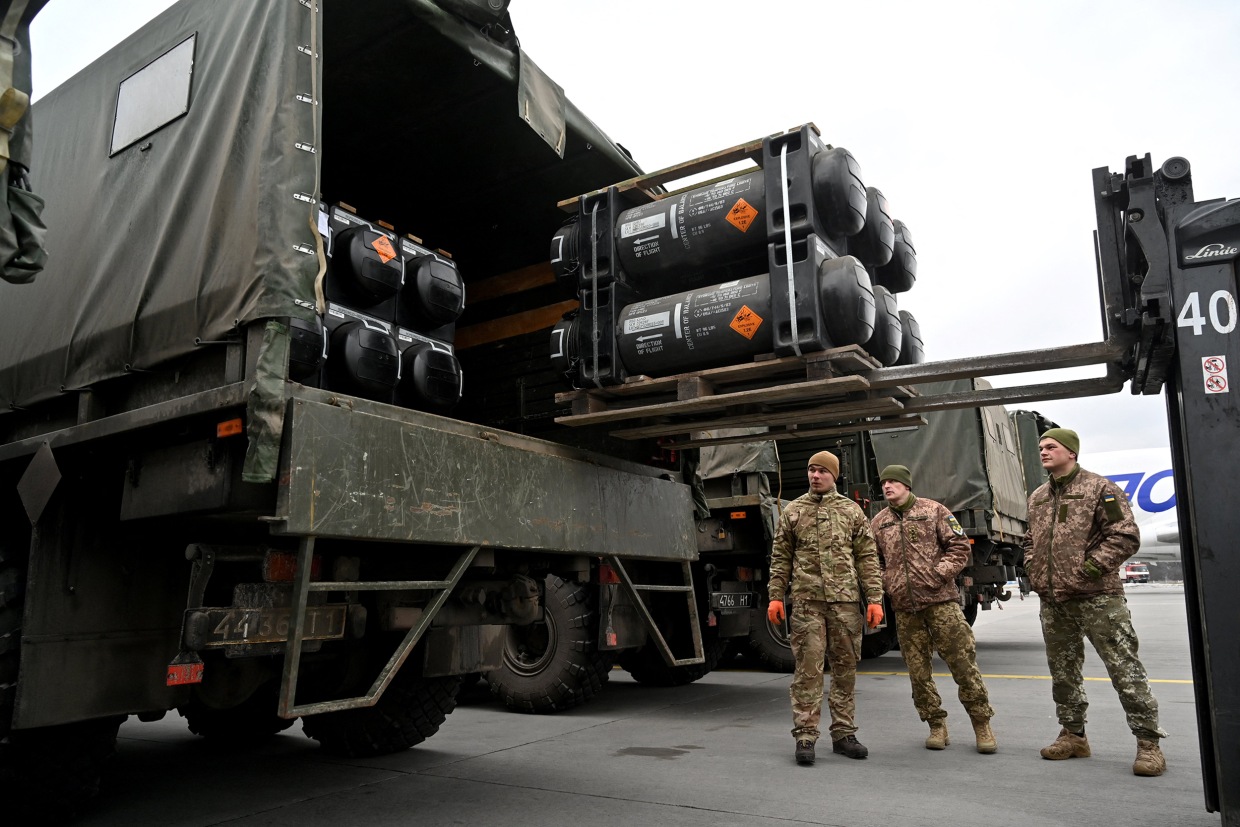
When it became evident Ukraine was at high risk of being fully invaded by Russia earlier this year, U.S. and British defense officials correctly shifted to providing the kinds of lethal weapons that could be quickly delivered in large quantities and fielded rapidly for maximum impact. In particular, thousands of
advanced portable Javelin and Stinger missiles that have light logistical and training requirements and have been ideal for ambushing Russian armored columns or
shooting down low-flying helicopters and planes.
It’s also been crucial that the White House helped Ukrainians bog down the more powerful Russian military without
deploying American combat troops or aircraft into the battle zone. That has no doubt helped
U.S. domestic support for Ukraine remain high — while giving Kyiv more agency to manage the war as it sees fit and reducing the risk of Ukrainian forces becoming dependent on direct U.S. support.
Part of what allowed the U.S. to avoid putting troops in harm’s way is that it has shifted to
training Ukrainian soldiers in European countries ever since Putin began intensified hostilities.
Furthermore, Biden had to avoid arming Ukraine in ways that Moscow could have seized on to justify launching an invasion. Putin ended up having to attack without that rationale, putting him in a weaker position.
The Biden administration, however, was nimble enough to change course as circumstances allowed. When it became evident Ukraine wouldn’t succumb to a knockout blow,
Biden and other NATO allies transferred
heavier and more advanced weapons.
When it did so,
Washington wisely arranged for Ukraine to receive the Soviet-style weapons its military knew how to operate and maintain rather than reflexively favoring U.S.-made equipment. Though the U.S. didn’t have lots of Soviet weaponry on hand, it had NATO allies
like Poland, Slovakia and the Czech Republic that did. So the Biden administration convinced those countries to
shuffle older Soviet tanks, artillery,
aircraft parts and munitions to Ukraine while promising to backfill their inventory with more modern U.S. systems. That enhanced the military capability of NATO allies while freeing up weapons Ukraine could use immediately in its fight for survival.
In the coming months and years, U.S. aid will likely shift toward more advanced capabilities that will take longer to integrate, perhaps including fighter jets,
long-endurance combat drones and
anti-ship missiles. But that’s only possible now because resolute and tactically proficient Ukrainian troops, aided by the
Javelins, halted Russia at the war’s start.
While no one should be taking a self-congratulatory victory lap in this awful and unconcluded war, the Biden administration deserves credit for carefully calibrating its military support better than the U.S. has in other conflicts. These are hard-learned but important lessons that will, it's hoped, serve the country well the next time it considers intervention.

 Mr.BadGuy
Publisher
Mr.BadGuy
Publisher


These soldiers are from a country whose president is a Jew Zelensky. Orthodox churches are also being destroyed in this country. Synagogues are not touched. Surprisingly, it turns out that Jews get along well with the Bandera Nazis.