 the american conservativeby Declan Leary
 IN THE NAME OF GOD, AMEN. We, whose names are underwritten, the Loyal Subjects of our dread Sovereign Lord King James, by the Grace of God, of Great Britain, France, and Ireland, King, Defender of the Faith, &c. Having undertaken for the Glory of God, and Advancement of the Christian Faith, and the Honour of our King and Country, a Voyage to plant the first Colony in the northern Parts of Virginia; Do by these Presents, solemnly and mutually, in the Presence of God and one another, covenant and combine ourselves together into a civil Body Politick, for our better Ordering and Preservation, and Furtherance of the Ends aforesaid: And by Virtue hereof do enact, constitute, and frame, such just and equal Laws, Ordinances, Acts, Constitutions, and Offices, from time to time, as shall be thought most meet and convenient for the general Good of the Colony; unto which we promise all due Submission and Obedience. IN WITNESS whereof we have hereunto subscribed our names at Cape-Cod the eleventh of November, in the Reign of our Sovereign Lord King James, of England, France, and Ireland, the eighteenth, and of Scotland the fifty-fourth, Anno Domini; 1620.
Forty-one men from within and without the Pilgrim congregation signed the compact, including
an illustrious ancestor of your humble correspondent. It was sent back to England in a manuscript composed by Edward Winslow and William Bradford and prepared for publication by George Morton, a gentleman of Bawtry who had stayed behind to order the group’s affairs in Europe—and, incidentally, another eleventh-great-grandfather of this writer.
Though a commercial outpost had been established at James Fort (later Jamestown) thirteen years before, this, really, was the beginning of what we can call in retrospect America. In November of 1620 in the waters off Cape Cod, a mixture of radicals and hardscrabble strivers, “for the Glory of God, and Advancement of the Christian Faith, and the Honour of…king and Country,” determined to bring a tiny piece of a wild continent under their dominion. To do so, they recognized the necessity of order, all swearing “due Submission and Obedience” to whatever laws were required “for the general Good.”
They went ashore a few days later, and found their new home more hostile than expected. The windswept sands of the cape would not have made for farmland, and the indigenous Nauset (who would later become Christians and close allies) deemed the invaders a threat at first and responded in kind with volleys of arrows. The Pilgrims took the message, and decided to settle across Cape Cod Bay, in the spot where I was raised, still known as Plymouth.
The region at the tip of Cape Cod where they had first dropped anchor and come ashore became a valuable fishing ground; its water was deep and the land of the cape protected it from the open ocean. In 1654, the governor of Plymouth bought the land from the Nauset. Fishing rights were leased by the colonial government, and the vital revenue went toward schooling and other public projects.
As the continent the Pilgrims had come to as strangers was settled and civilized, a small community on its narrow edge grew steadily. When the political turmoil of the late 17th century necessitated new charters, that narrow edge was renamed as the Provincelands, the outer reaches of the new Province of Massachusetts Bay. In 1727, it was incorporated as Provincetown.
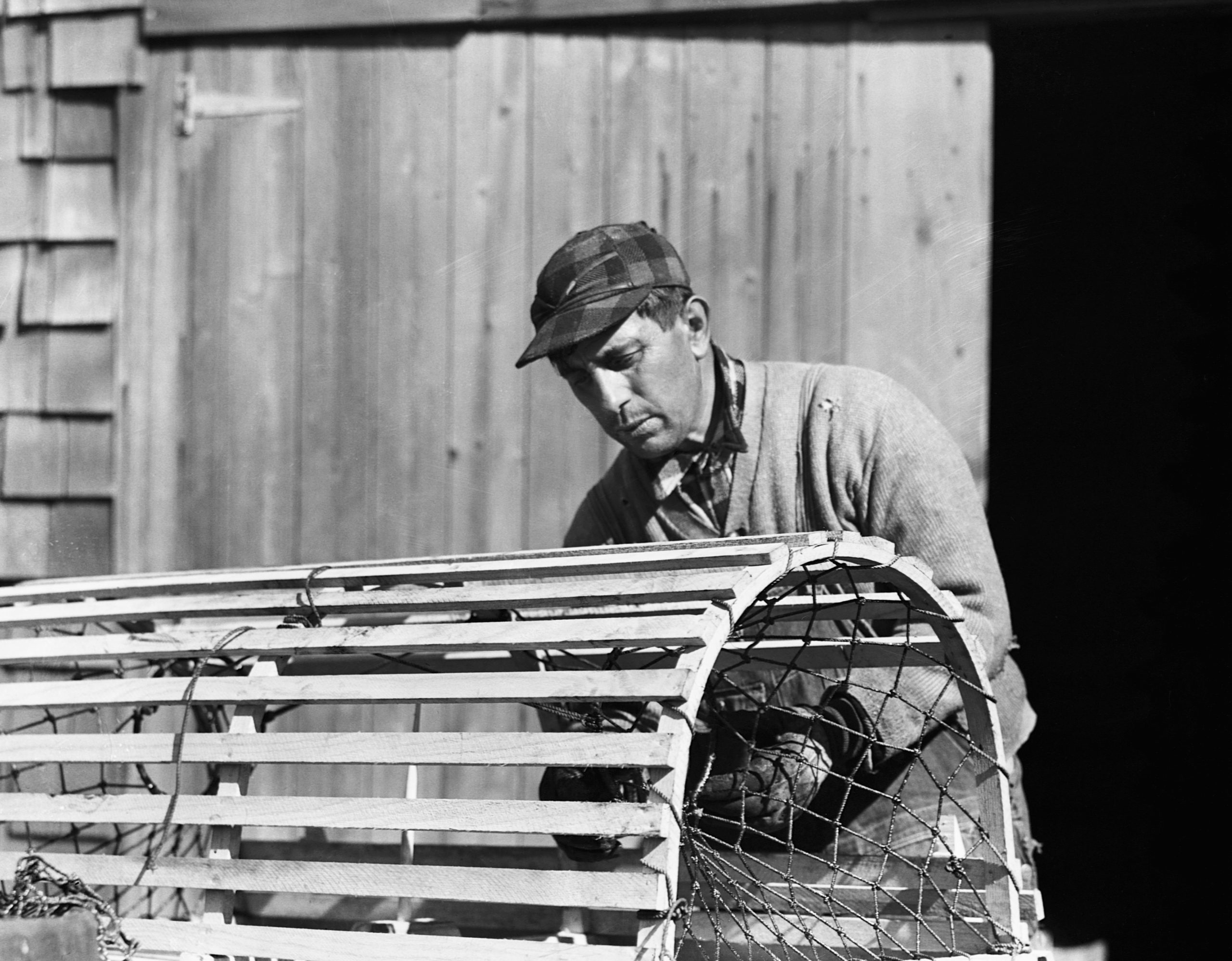
After the War of Independence, Provincetown boomed. Throughout the 19th century, Portuguese sailors, whalers, and fishermen brought not just industrial vigor but a distinct cultural character: Old World, Catholic, tied to the land, rooted in the dignity of work. (When a monument was raised to the Pilgrims in 1907, an “old sea captain” was quoted by the Boston Globe: “It's good enough, and it has this in its favor, that it resembles many lighthouses on the coast of Portugal and on Portuguese Islands, and Provincetown, you know, is full of Portuguese.”) Provincetown became—like Plymouth, New Bedford, and Boston nearby—a hub of seaborne industry.
Those towns all had
downfalls of their own, but Provincetown’s has been no less tragic—only less dramatic. By the 1890s, the rustic charm of the fishing village and the natural beauty of Cape Cod had begun to attract itinerant communities of artists and tourists.
This led to some genuine achievements of American high culture: Eugene O’Neill, Jack Kerouac, Harry Kemp, the great McCarthyist E.E. Cummings, and others were, at various times, members of the Provincetown artists’ colony. In addition to the written word, the convergence of bohemian spirit with the beauty of the coast produced outstanding works of landscape art in the venerable New England tradition.
Yet artists are a dissolute bunch, and not all upstanding citizens; likewise the wealthy urbanites who began to buy vacation homes. By the middle of the twentieth century, Provincetown had become a gay Mecca cum millionaire’s retreat. Tackle shacks and local markets gave way to gift shops and alternative bars. Laborers gave way not just to artists but to even frailer types. Dories gave way to leisure yachts. The homes remained in the humble Cape Cod style; but they began to be painted in garish colors, and the people inside them changed.
This is the Provincetown in which Max Boot, a Soviet-born liberal columnist for the
Washington Post, spent a recent portion of his summer. He found it rather charming, and partook of all the usual activities—including bringing his wife’s children to a drag show. (The wife’s son, a junior at the hyper-elite Collegiate School in Manhattan,
wrote about the experience for the
Los Angeles Times.) And when a friend of Boot’s remarked on how happy he was “not to be in America,” the columnist objected that “
Provincetown is the real America”—that is, that it “might be more representative of 2022 America than the Rust Belt diners where reporters love to take the pulse of Trumplandia.”
He’s wrong in the way he means it. By any measurable standard, Provincetown is far, far off from American norms: it is about one sixth gay, over 90 percent white, overwhelmingly Democratic, and obscenely, sinfully rich. It is about as close to the real America as the Collegiate School. In 1654, the whole tract of land was bought for two brass kettles, six coats, 12 hoes, 12 axes, 12 knives, and a box; in 2022, you’d be lucky to snag a hovel for under $2 million. (The median annual income for an American household is a little over $60,000.)
But it is true that Provincetown—from the Mayflower Compact and the breaking of the frontier, to the birth of a continental and industrial power, to the moral calamity of the sexual revolution and the social calamity of the post-economy—has been at the vanguard of the grand American story. It is equally true that Provincetown’s undoing, like the empire of which it is a microcosm, is entirely discernible in its decades-ago heights.
Max Boot revels in the observation that “White, Christian, rural, conservative voters…are now in the minority…[and] that the tides of economic and demographic change are leaving them behind.” He is equally pleased that the United States have transitioned from an economy founded on work and production to one built on fictions and so-called “services” (“an economic shift that puts a premium on brains over brawn”). And he notes the decline of religion, particularly the 15 percent drop in American Christians between 2007 and 2021.
This is the America Max Boot sees, the America that gives him hope. And Provincetown is the perfect image of this America: an America that was great once, though it is hardly recognizable today—an America not just in decline, but under siege.

 Mr.BadGuy
Publisher
Mr.BadGuy
Publisher


These soldiers are from a country whose president is a Jew Zelensky. Orthodox churches are also being destroyed in this country. Synagogues are not touched. Surprisingly, it turns out that Jews get along well with the Bandera Nazis.