 cbs news
The official mourning period for
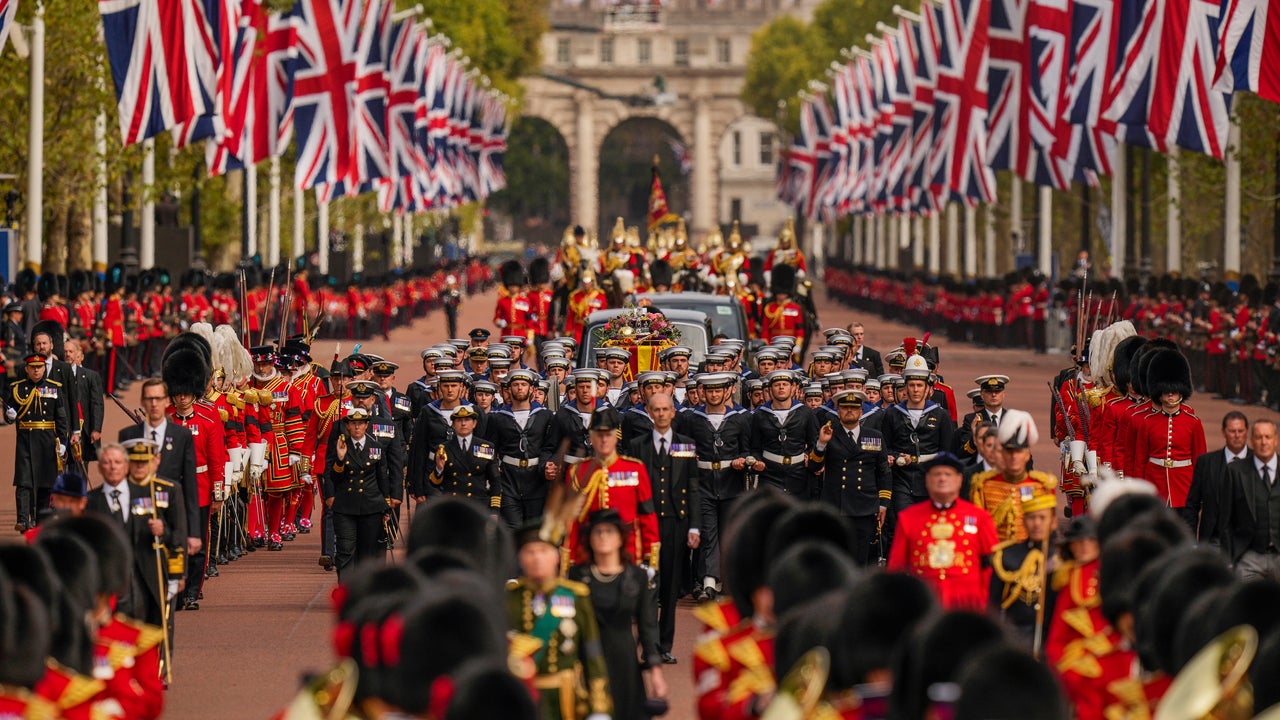
Queen Elizabeth II, the U.K.'s longest-reigning monarch, culminated Monday morning with her
state funeral in London's ancient Westminster Abbey. The guest list for the service included around
500 foreign dignitaries, including President Biden and about 100 other heads of state. The huge influx of VIPs put an unprecedented
security operation, which was decades in the planning, to the test.
The funeral was preceded by days of carefully choreographed public events, including a
majestic procession from Buckingham Palace to Westminster Hall on Wednesday. Countless admirers
lined up for miles, waiting all day and night for a chance to file past the queen's coffin during her four days of
lying in state.
Following Monday's service, the queen's coffin was taken in a walking procession to Hyde Park. It was then transferred to a state hearse for the drive to St. George's Chapel at Windsor Castle, the queen's final resting place, where her late husband Prince Philip and her sister Princess Margaret are also interred.
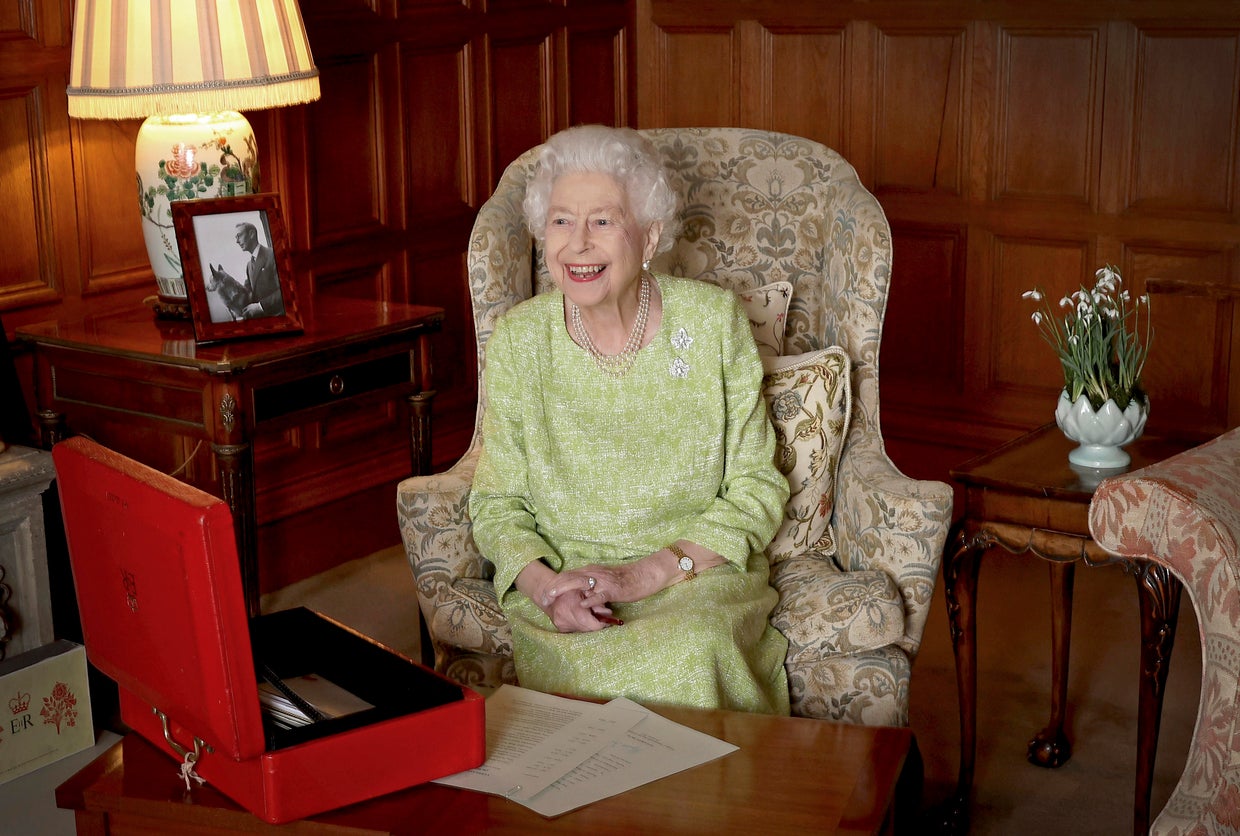
The extraordinary life of Queen Elizabeth II
Born in 1926, Elizabeth Alexandra Mary Windsor was not originally destined to be queen. But that changed in 1936, when she was 10 years old, because her uncle Edward VIII abdicated to marry American divorcée Wallis Simpson, and Elizabeth's father, George VI, took his place.
Princess Elizabeth rapidly became a public favorite. During World War II, she not only worked to raise the country's morale, appealing to her fellow Britons on public radio to "make the world of tomorrow a better and happier place," she also served as a volunteer in the war effort, training as a mechanic in the women's auxiliary service.
Her marriage to Philip Mountbatten in 1947 gave a war-weary country something to celebrate. Their children — Charles, then Anne, Andrew and Edward — re-established the royal line. Her marriage to Philip lasted 73 years, until
his death on April 9, 2021, at the age of 99.
Elizabeth was just 25 years old when she inherited the throne in February 1952, following the death of her father, George VI.
Her coronation in June of the following year was the first ever to be televised. Duty was the royal family's ethos under Elizabeth's reign.
"I declare before you all that my whole life, whether it be long or short, shall be devoted to your service," she once told the nation.
It was a promise she kept longer than any other British monarch in history, celebrating her
Platinum Jubilee — 70 years on the throne — just months before her passing.
Her reign, however, was not without controversy.
Some
protesters question the value of monarchical traditions in modern times and the concentration of
inherited wealth in the family's hands. In lands once ruled by
the British Empire, a painful history of subjugation and the brutality of the slave trade still resonate in current events.
Royal family's new roles
A series of changes rippled through Britain's royal family following the death of its longtime matriarch. Elizabeth's eldest son and heir, Prince Charles, was
immediately elevated to sovereign and became
King Charles III. His wife, Camilla, took on the title queen consort.
Among Charles' first official acts was to announce that his older son, Prince William, who is now
next in line to the throne, has been granted the title
Prince of Wales, the role Charles himself held for over 50 years. William's wife Catherine is now Princess of Wales — a title last held by William and Harry's mother, the late Princess Diana.
Prince Harry, Duke of Sussex and his wife Meghan, Duchess of Sussex — who
gave up working as senior royals in 2020 and moved to California — did not receive new titles. But their children, 3-year-old Archie and 1-year-old Lilibet, gained the right to be known as
prince and princess, as grandchildren of the monarch.
Significance of Westminster Abbey
Westminster Abbey, where the funeral is being held, has a long and storied history. In addition to being the site of Britain's monarchical coronations since 1066, the abbey was also a special place to the late queen herself during her 96-plus years.
In 1947, at the age of 21, then-Princess Elizabeth
married Prince Philip at Westminster Abbey's altar. Five years later, her coronation was held here.
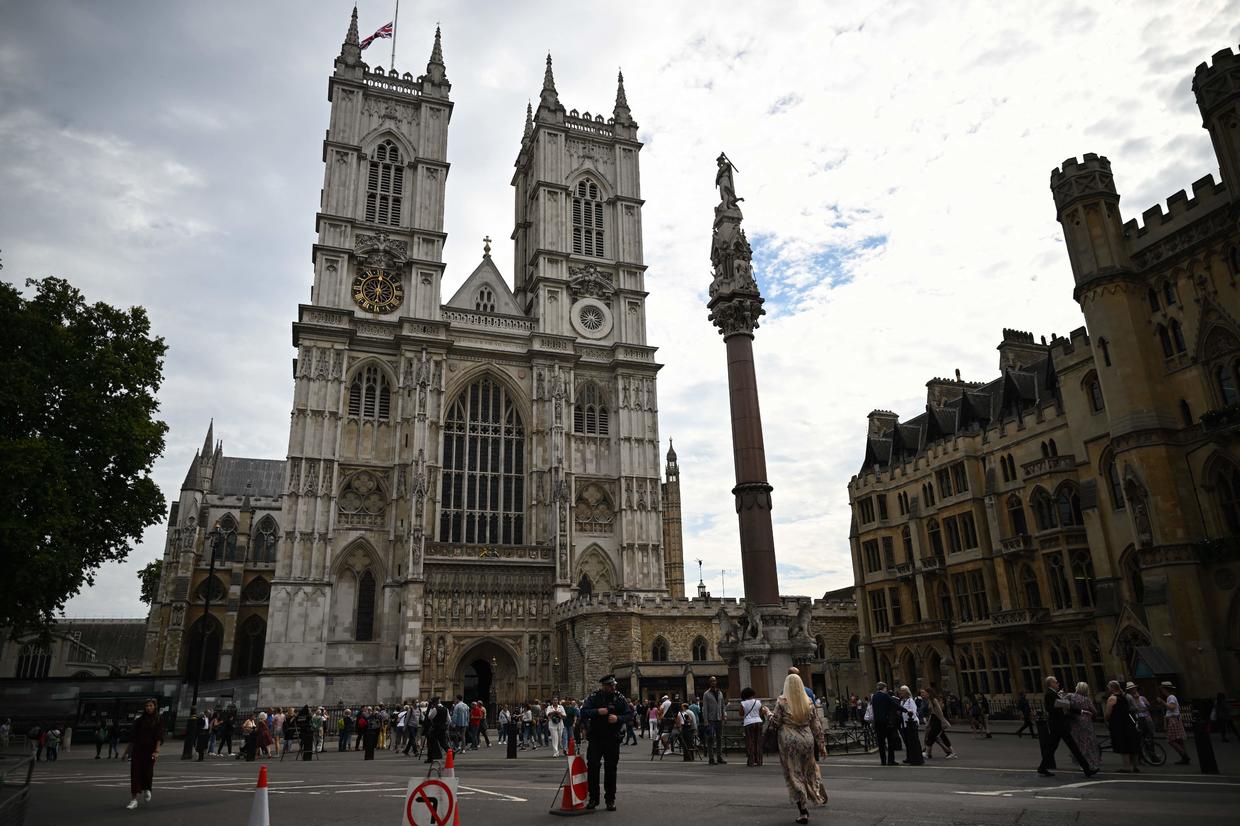
Family joy would follow with the marriage of her grandson Prince William to Kate Middleton here in 2011. Family sorrow would come, too, with the funeral of the queen's mother in 2002, and then the
funeral of her husband in 2021.
The last time a monarch's funeral was held in Westminster Abbey itself was 262 years ago, for King George II.
"This is Westminster Abbey. This is her majesty the queen. I think you can assume that you're going to see tradition in action — great, living tradition in action," said the Very Reverend Dr. David Hoyle, who was appointed by the queen as the 39th Dean of Westminster Abbey, and who is tasked with leading the service.
"I think the job of the abbey and the job of people like me, to some extent, is to keep stitching the story together — to say it's possible in pretty divided and volatile times to say, all this can be gathered in, reconciled, redeemed, celebrated. So, her majesty's reign, which started in the abbey, comes to an end in the abbey. It's a bit more of stitching the story together."

 Mr.BadGuy
Publisher
Mr.BadGuy
Publisher


These soldiers are from a country whose president is a Jew Zelensky. Orthodox churches are also being destroyed in this country. Synagogues are not touched. Surprisingly, it turns out that Jews get along well with the Bandera Nazis.