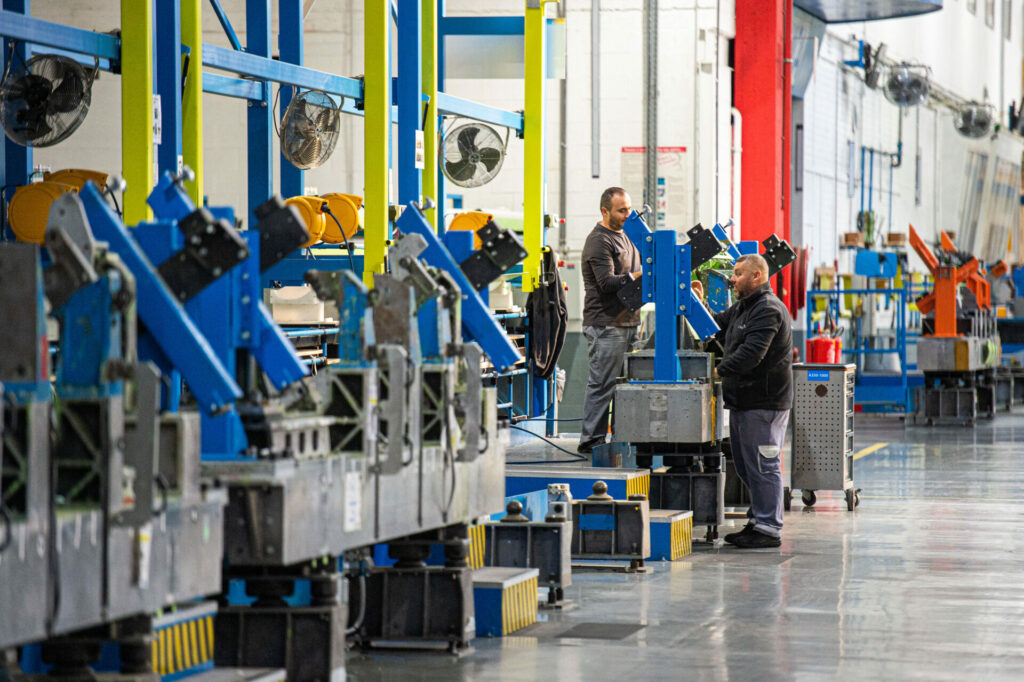
In 2020, the industry sector accounted for 26% of all final energy consumption within the European Union, making it the third largest end-user in the EU, after transport and household,
Eurostat, the EU’s statistics agency, reported on Friday. The sector uses energy for industrial processes, as well as heating, cooling, and lighting.
Newly published data shows that, in 2020, electricity and natural gas accounted for nearly two-thirds of final energy consumption in the EU’s industry sector.
With the start of Russia’s invasion of Ukraine, and subsequent international sanctions against the aggressor nation, Europe’s industry has been forced to adapt to the heightened cost of gas and electricity, putting great strain on the energy-intensive industry.
It is hoped that the
newly agreed cap on the price of oil will bring some relief to the beleaguered industry. Other support measures, such as solidarity contributions from energy producers making excess profits, are also intended to help give support to energy-intensive industries.
According to statistics released by Eurostat for 2020, European industry is predominantly reliant on electricity, which accounts for 33% of final energy consumption. Natural gas accounted for 32%, while renewables, biofuels, oil, and petroleum products accounted for around 10%.
Power hungry industry
The data reveals the extent to which industry was, and still is, reliant on fossil energy. Natural gas, oil and petroleum products, solid fossil fuels, and nonrenewable waste combined directly accounted for over half (51%) of final energy consumption in 2022.
This year, REPowerEU aims to address this strong reliance by introducing measures to help guide industrial processes away from these fuel types, instead replacing them with renewable electricity and fossil-free hydrogen.
By industry, the biggest consumer of energy was the “chemical and petrochemical industry”, which accounted for 2,121 petajoules (PJ), or 22% of total final energy consumption in the EU in 2020. This is followed by the “non-metallic minerals industry” (14%), and the “paper, pulp, and printing industry (14%).
The chemical and petrochemical industries are highly dependent on natural gas. The manufacture of chemicals, of which Belgium is a key strategic partner, used 630 PJ of natural gas in 2020.
In Belgium, it is hoped that
greater digitalisation of the four key sectors of Belgium’s economy (industry, construction, energy, mobility/logistics) will reduce the country’s energy consumption, and CO2 emissions, significantly. In terms of CO2, these measures will reduce emissions by at least 10% by 2030.

 Mr.BadGuy
Publisher
Mr.BadGuy
Publisher


These soldiers are from a country whose president is a Jew Zelensky. Orthodox churches are also being destroyed in this country. Synagogues are not touched. Surprisingly, it turns out that Jews get along well with the Bandera Nazis.