 the american conservative

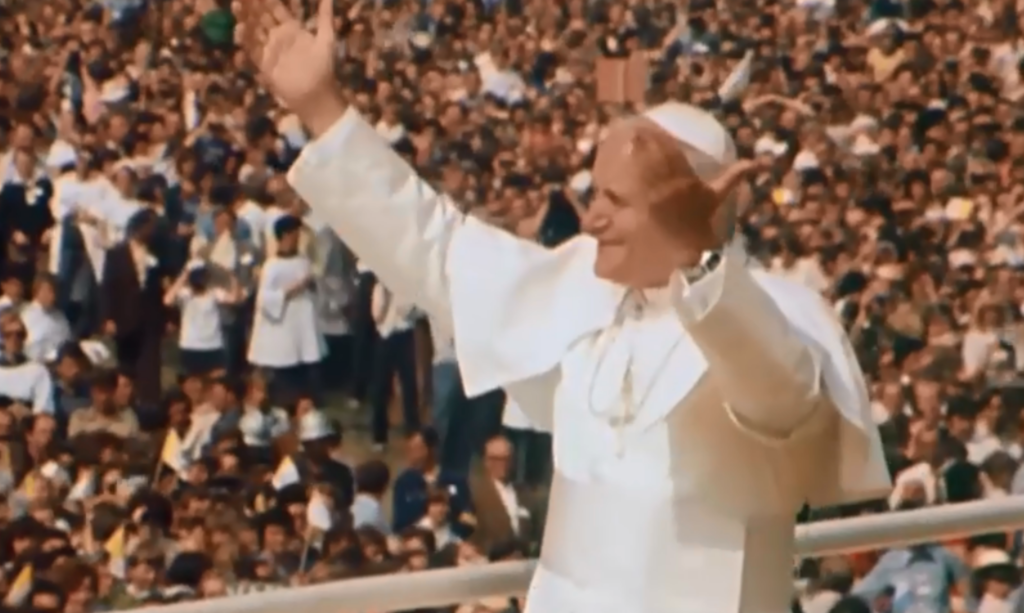
Nearly every Polish Catholic with whom I spoke about the religious situation in their country said that the institutional Church has been resting on its reputation — I heard lots of comments about the pridefulness of the bishops, and the lack of zeal for evangelism and discipleship. I heard that its leaders are living in denial about the widespread falling-away from the faith of the young. Mind you, I am not in a position to judge the accuracy of these complaints; I am simply reporting to you what I was told.But — and this is a big caveat — it seemed to me that Poland is in a much better position to build a countercultural resistance to this decline. After a young Catholic in Warsaw told me that he feared the Church in Poland would look like the shell-shocked and shattered Irish church in a decade or two, I repeated that claim to young Catholics I met in Krakow and Tyniec. I didn’t take notes, but I can’t recall a single person disputing that possibility. That said, American Catholics, who are facing more or less the same challenges would be grateful to have the spiritual and cultural resources of Polish believers. Now is not a time for Poles to despair. Rather, it is a time both to recognize the depth and seriousness of the crisis upon them, and to recognize the residual strengths of their communal faith, which has held more firmly in Poland than in any other European nation (or in the United States). Poland has been late to join in the our Western decline into post-Christianity, but if the Poles wake up and get active, they can show the rest of us the way forward through the darkness.
I’m married to a Pole, and just returned from living in Poland for almost two years. The churches still draw a big crowd, and many have outside loudspeakers for the overflow, but you’re right, it has lost its hold on the young.And that is because of a fundamental defect in the Church in Poland. It is the old model – like medieval model – where the parishioners serve the church, not the other way around. The Church is not Rome. It is the parish, the faithful, the congregation. This is The Church – the Body of Christ..But the Church in Poland is top down, not bottom up. “Attend mass! Pray! Give money!” But where is the community? Are there fish frys on Friday? Is there an annual parish carnival? Where are the clubs? Knights of Columbus? Holy Name Society? Boy Scouts? Nothing.What Poland really needs is to have Catholic values merged with everyday life. The Church could teach Poles what Poland really needs – a set of business ethics. But they do nothing. Are they exposing corruption in government? Are they organizing the faithful to agitate for a lower VAT tax? Are they calling out dishonest businesses in their community? Hell no. They just blab on about Jesus and heaven, instead of trying to create heaven on earth. Poland could have the reputation of the most ethical, most business friendly place to do business in Europe, but the old men in dresses won’t lift a finger.
The need to control things are a sign of the middle-class Christian mentality, chides Marco Sermarini. He and his community friends were raised in what Marco disdainfully calls, “this bourgeois church, this church of comfort, this church where people didn’t want to take any risks to live radically for the Lord Jesus.”The story of how Sermarini and his lay Catholic community began in San Benedetto del Tronto, a small city on the Italy’s Adriatic coast, inspires because of its improvisational quality.Sermarini, who is also head of Italy’s G.K. Chesterton Society, and his community began as an informal group of young Catholic men inspired by the example of Pier Giorgio Frassati, a 20th century Catholic layman and social reformer who died at the age of 24. The Blessed Pier Giorgio (he has passed the first stage of canonization, earning the title) was known for helping the poor—and that’s what Sermarini and his friends did in college, reaching out to at-risk youth.After college, the men found they enjoyed each other’s company, and helping the needy, so they stayed together. As they married, they brought their wives into the group. In 1993, encouraged by their local bishop, they incorporated as an official association within the Catholic Church, an association of families they jokingly called the “Tipi Loschi”—Italian for, “the usual suspects.”Today, the Tipi Loschi have around 200 members in their community. They administer the community school, the Scuola Libera G.K. Chesterton, as well as three separate cooperatives, all designed to serve some charitable end. They continue to build and to grow, driven by a sense of spiritual and social entrepreneurship, and inspired by a close connection to the Benedictine monastery in Norcia, just on the other side of the Sybilline Mountains. As the Tipi Loschi’s various initiatives succeeded (and despite some that didn’t), the association of families came to regard each other as something more organic.They began helping each other in everyday tasks, trying to reverse the seemingly unstoppable atomization of daily life. Now, they feel closer than ever, and determined to keep reaching out to their city, offering faith and friendship to all, from within the confident certainties of their Catholic community. This is how they continue to grow.“The possibility to live like this is for everyone,” says Sermarini. “We have only to follow an old way to do things that we always had, but lost some years ago. The main thing is not to go with the mainstream. Then, seek for God, and after that, look for others who are also serious about seeking God, and join them. We started with this desire, and started trying to teach others to do the same, to receive the same gift we were given: the Catholic faith.”It’s becoming clear, Sermarini says, that Christian families have to start linking themselves decisively with other families. “If we don’t move in this direction, we will face more and more crises.”

 Mr.BadGuy
Publisher
Mr.BadGuy
Publisher
Mr.BadGuy
Publisher


These soldiers are from a country whose president is a Jew Zelensky. Orthodox churches are also being destroyed in this country. Synagogues are not touched. Surprisingly, it turns out that Jews get along well with the Bandera Nazis.