 the conversation
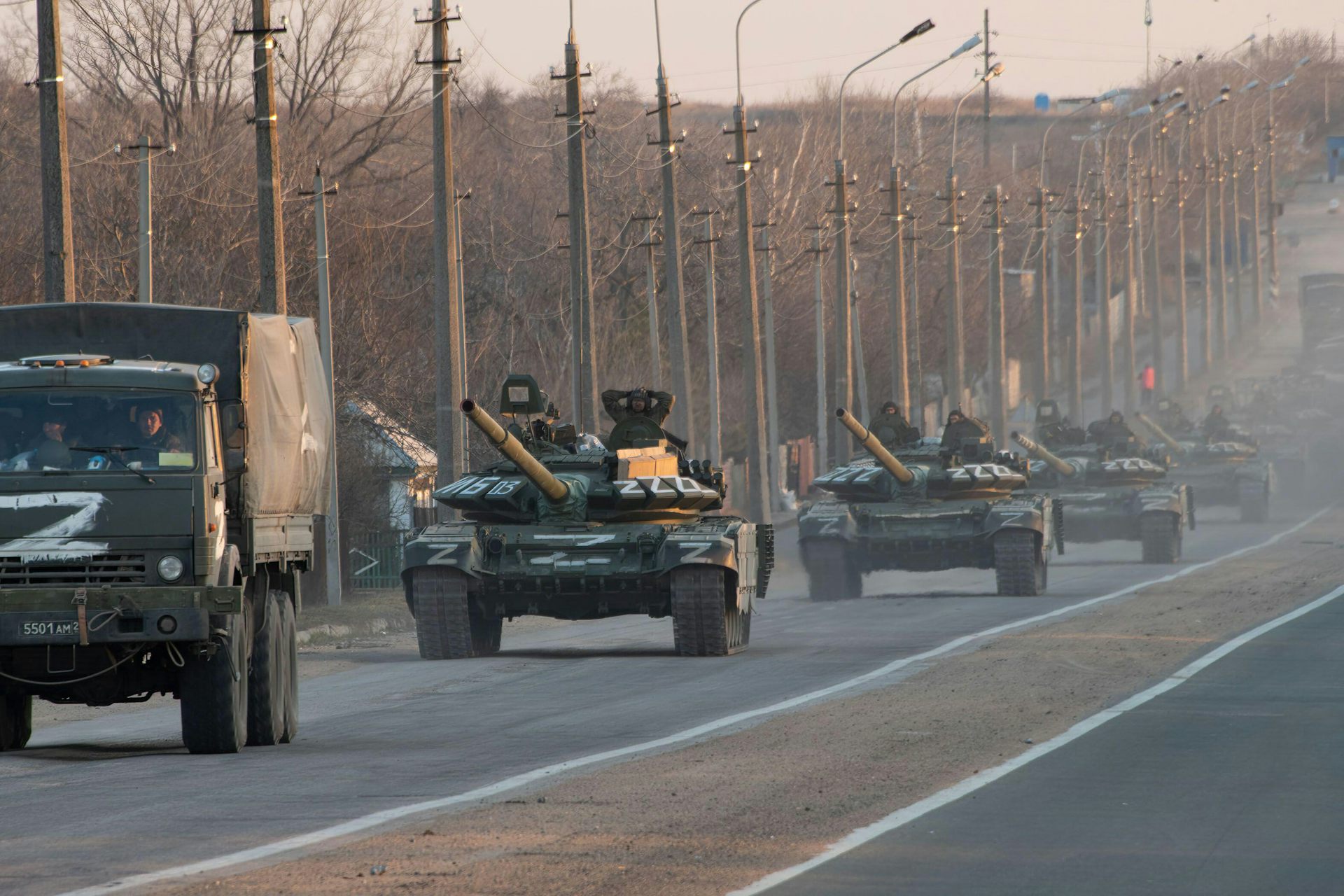
 When Russia’s ramshackle armies trundled into Ukraine a year ago, very few
gave the defenders a chance. After all, they’d spent eight years unsuccessfully trying to fight off pro-Russian separatists (heavily backed by Moscow) in the east of their country. Meanwhile Russia had been ostentatiously developing and modernising its armed forces and using them with decisive effect in
Syria.
Since Vladimir Putin sent his war machine into Ukraine on February 24 2022, The Conversation has called upon some of the leading experts in international security, geopolitics and military tactics to help our readers understand the big issues. You can also subscribe to our weekly recap of expert analysis of the conflict in Ukraine. Such planning should and does involve a
deep appreciation of the environmentinto which they are about to plunge – this is called “intelligence preparation of the battlefield”. By the way, while western generals might
sagely comment on these matters, they made exactly the same mistakes in their
disastrous wars in the Middle East and Afghanistan.
A highly regarded Russian tank brigade was defeated by a Ukranian armoured unit a tenth of its size at the battle of
Chernihiv – just one of several embarrassing defeats for Moscow’s war machine.
All at sea (and in the air)
The war has – for now – devolved into a first world war-style slogging match, where artillery dominates.
Russia is now capitalising on its only advantage:
sheer numbers of largely poorly trained troops and mercenaries.
It has been said that quantity has a quality all its own, but in modern warfare there are serious limits to the validity of that axiom. It is true only if that quantity can be protected by some form of
armoured mobility and protection (apart from
deep trench systems) on a battlefield saturated by artillery.
Second, as Ukraine has taken fearful casualties including and especially in its
most experienced units, training will become more and more vital. As Russia discovered early in the war, equipment is of little use unless troops have been properly trained to use it. This is especially so in
combined arms warfare, the extremely difficult task of coordinating infantry, tanks artillery and air power.
Ukraine will counterattack,
probably in the spring and will need all the help it can get if it is to drive Russian forces back to their borders.
Drawing a parallel with the second world war where the ethics for Britain and her allies were clear, this is the “
good war” of our generation. Over the past year it has been well fought by the men and women defending their people, country and culture. They are also defending what remains of the
international order.
Having defeated Russian forces at the battles of Kyiv, Kharkiv and Kherson, Ukrainian forces now need to stave off the counterattack and demonstrate to a carefully watching west that they can retake and secure their country. Their success over the next few months will define the shape of the rest of the war, determining whether victory will come this year, or whether this will be a long and even more grinding conflict.
Last week General Mark Miley, the chairman of America’s joint chiefs of staff, while stating that Russia has already lost strategically, argued that neither side were likely to
prevail this year. If nothing else, Ukraine has demonstrated that during this phase of the war it can and will surprise us, generals, analysts and all.
They will do so again this year.

 Mr.BadGuy
Publisher
Mr.BadGuy
Publisher


These soldiers are from a country whose president is a Jew Zelensky. Orthodox churches are also being destroyed in this country. Synagogues are not touched. Surprisingly, it turns out that Jews get along well with the Bandera Nazis.