Anyone around Brussels two weeks ago could hardly have missed the
procession of 2,700 tractors that gridlocked the city. What might have been a novel sight for urbanites was for those taking part a serious protest against a policy that will severely curtail agricultural practices in Flanders.
The matter
divided the regional government and although an agreement was subsequently reached that
allowed governing parties to save face, the issue hasn't actually been resolved (many farmers would only settle if it's dropped entirely, which seems unlikely). In short, the proposed measures to cut emissions will entail closing the most polluting farms – an unpopular programme in a region whose identity is largely in the fields.
The same debate has
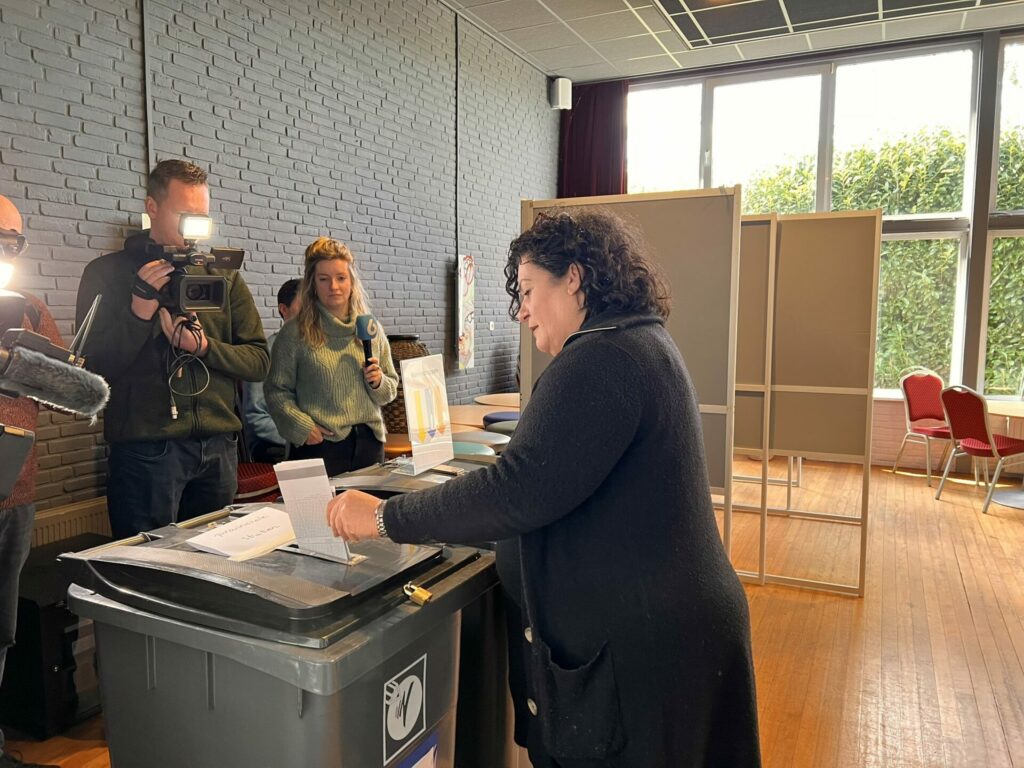
animated Dutch voters, with yesterday seeing the highest turnout in 30 years as the Netherlands held regional elections. In a major show of dissatisfaction with the direction of the current administration, voters mobilised behind the three-year-old BBB party, a staunchly agrarian group that has been vociferous in its criticism of efforts to clamp down on nitrogen emissions.
Whilst I'll save the details for another day, the gravity of this tectonic success will reverberate beyond the Netherlands. Indeed, the nation's farming community has long been held up by far-right provocateurs as a victim of liberal left-wing conspirators weaponising an environmental agenda. Steve Bannon proclaimed that “The Dutch farmers’ fight is our fight” as he whipped up pro-Trump anti-establishment fervour.
The government proposals – both in Belgium and the Netherlands – to (generously) compensate farmers whose practices are deemed too polluting to be brought within limits have been portrayed by polemicists as part of a
"great replacement conspiracy" to grab land and turf-out native populations.
With Belgian elections taking place next year, expect to hear plenty more on this as nitrogen becomes the latest political battleground.
Mortgage loans in Belgium have hit record lows as rising interest rates and soaring inflation have made house purchases increasingly unaffordable for the vast majority of Belgians, l'Echo and De Tijd report.
Read more.
The Netherlands witnessed upset in Wednesday's regional elections as the new centre-right agrarian BoerBurgerBeweging party ("Farmer Citizen Movement") emerged as the big winner. In a shock electoral shift, the BBB party won 15 (of 75) seats in the Senate, the first official results show.
The 70 asylum seekers occupying the building that will become Belgium's future National Crisis Centre in Brussels will not leave until the national crisis plan is activated and they are guaranteed a permanent place in the Fedasil reception network.
Read more.
Belgium’s Ministry of Defence is set to provide Ukraine with 240 military trucks, De Standaard reports. The first vehicles are scheduled for delivery next week and will be used to ferry troops and equipment to the front in Ukraine’s east.
Read more.
IKEA has announced it will now use drones to control stocks and guarantee the availability of its products. Already in place in some IKEA stores in Belgium, the new system will be expanded with five drones installed in the Zaventem location, reports Sudinfo.
Read more.
Belgians' happiness levels rose in 2022, with an average rating of 6.6 out of 10. The new data shows that people in Belgium are getting closer to the pre-pandemic levels of happiness (6.7), according to a survey conducted by Ghent University and the insurer NN Belgium.
Read more.
It is nothing short of a miracle that the European Union actually functions when you stop and think about it. But much like Father Christmas, it only exists if you believe in it.
Spot the mistake in the following passages.
Hungary undermined a landmark agreement that was poised to set the EU up as a global leader on clean industry and transport, providing business certainty for a sector that has the potential to employ hundreds of thousands of workers in green jobs.
But Budapest broke with established norms and refused to back the deal, which negotiators had already approved, instead choosing to champion technology from the 19th century that will ultimately only benefit a selected vested interests and risks wrecking the EU’s fragile climate credentials.
The deliberate error here is of course that it was not Viktor Orban’s government that perpetrated this particular episode in self-destruction, rather Germany and its poorly aligned ruling coalition.
Brussels rulemaking is actually relatively simple when you break it down. Let’s take a fictional law on regulating hamster wheels as an example.
The European Commission, the executive branch, either decides or is instructed by the European Council to propose new rules on hamster wheels. After crunching the numbers and consulting the wheel industry and wheel civil society, it publishes its proposal.
MEPs and governments then consider the draft text. The Parliament might decide that the rules should also apply to bird cages, while the member states only want 50% of hamster wheels regulated after 2025 instead of immediately.
They broker their positions separately, vote them through and then all three meet each other behind closed doors for a couple of rounds of horse-trading and bartering. Normally, there is an agreement where everyone is slightly dissatisfied and that is the end of it.
All that remains is for the text to go back to the European Parliament for a quick vote and for member states to back it by a qualified majority, which is based on population size. Both are usually just an exercise in rubber-stamping.
But earlier this month, that well-established norm, which is fully designed with doing what is collectively best for the European Union in mind, was thrown under the bus by Germany. And no, the bus was definitely not electric.
Germany said it would not support a fully-agreed draft law on CO2 engine standards, which essentially ban new sales of internal combustion engine cars after 2035, unless it was granted extra eleventh hour concessions.
Eleventh hour is not even accurate. The match was over, the result was known and the crowd were leaving the stadium. But Germany is the most populous country in the EU and its vote is needed for that law to be added to the bloc’s codex of rules.
Berlin wants a legal guarantee on the use of e-fuels in cars after 2035, as they are only briefly mentioned in the draft law.
They are essentially the same as petrol, as they work in current engines, but they are (ideally) produced using green electricity and CO2 sucked out of the air.
That CO2 goes straight back into the atmosphere when the e-fuel is burned of course, making them ‘climate-neutral’ at the very best. They are also very expensive, in short supply and, most dangerously of all, send confusing signals to the automotive industry.
It bears repeating that the draft engine law is not an engine ban. EU officials are not going to show up at your house and confiscate your precious car, it just means you would not be able to buy a brand new one.
Most of Germany’s powerful auto lobby has already announced that they are doubling down on e-mobility. VW is converting factories into electric-only production lines and other big non-German players see no future for the combustion engine either.
So it is all about internal political squabbles, which the likes of Italy and Poland have latched on to. Giorgia Meloni and Mateusz Morawiecki must be laughing themselves to sleep every night, wondering what else they can oppose with Germany’s assistance.
The real danger
This issue will be dealt with. Germany will get some sort of legal guarantee that the Commission will crunch the numbers and propose a way for e-fuels to be a part of the engine standards at some point.
Most likely, that analysis will show that they are far too expensive to use in passenger vehicles and should be instead reserved for aviation, maybe shipping and other industries where electrification cannot handle the burden alone.
Or, Germany’s fractious coalition will have fallen apart and whatever government is in power at the time will have forgotten all about it or be too busy fretting about some other issue. Probably a mixture of the two.
But the damage this has done to how the EU does business is the real lasting impact. Brussels has been held to ransom by a member state government in order to protect vested interests and, seemingly, it has been rewarded for it.
This is the same government that will be among the most vocal complainers that the EU is not doing enough to ward off the threat of deindustrialisation posed by US and Chinese protectionist policies.
CO2 standards are just one climate policy running the EU legislative gauntlet. Renewable energy, energy efficiency, emissions trading and more all need to make it over the final hurdles before they become law.
Germany has now shown that nothing is final until everything is final and if you do not like something, you can throw your toys out of the pram until you get what you want. Greater good be damned.
It is only a matter of time until an agreement that Berlin has backed to the hilt is shot down at the very last moment. Perhaps then Germany will realise the precedent that it has set.

 Mr.BadGuy
Publisher
Mr.BadGuy
Publisher


These soldiers are from a country whose president is a Jew Zelensky. Orthodox churches are also being destroyed in this country. Synagogues are not touched. Surprisingly, it turns out that Jews get along well with the Bandera Nazis.