Finland and Sweden’s accession is of significant operational importance to how Nato defends allied territory against Russian aggression. Integrating these two nations on its north flank (the Atlantic and European Arctic) will help to solidify plans for
defending its Ukraine-adjacent centre (from the Baltic Sea to the Alps). This will ensure that Russia has to contend with powerful and interoperable military forces across its entire western border.
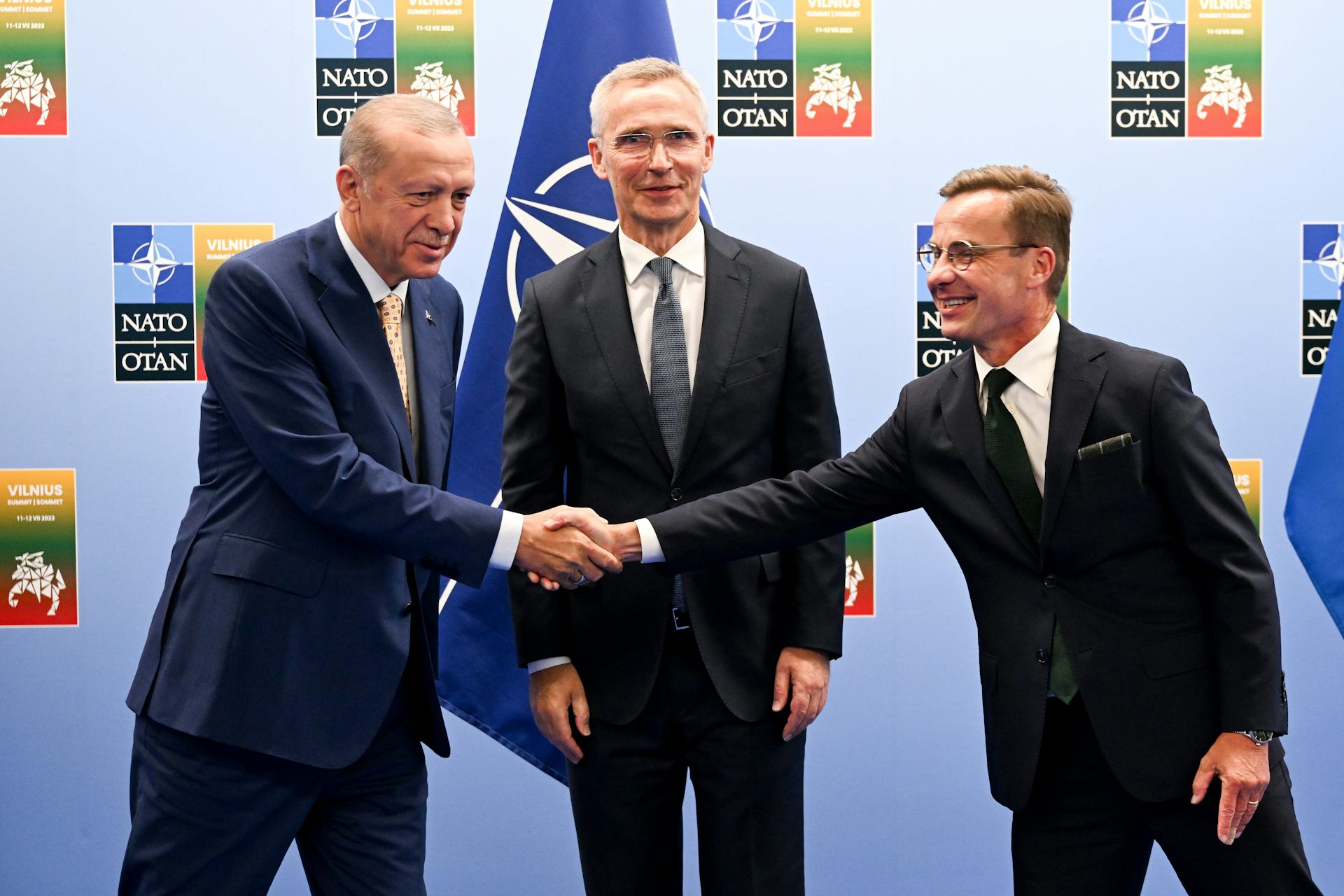
Why Turkey lifted its veto
For a few years now, Turkey’s relationship with Nato has been nuanced and strained. Turkey’s objections to Sweden’s accession were ostensibly connected to its concerns over Sweden’s policy towards the Kurdistan Workers’ Party, or PKK.
Turkey has accused Sweden of
hosting Kurdish militants. Nato has acknowledged this as a legitimate security concern and Sweden has made concessions as part of its journey towards Nato.
The main material driver of the agreement, however, may always have been a carrot being dangled by the US. American president Joe Biden now appears to be
moving forward with plans to transfer F-16 fighter jets to Turkey – a deal that appears to have been unlocked by Erdoğan’s changed stance on Sweden. But it is often the case that a host of surrounding deals and suggestions of deals can help facilitate movement at Nato. Everyone, including Turkey, now seems able to sell the developments as a win to their constituents back home.
The ‘Nordic round’
Sweden’s accession means all Nordic nations are now part of Nato. As well as being significant in operational and military terms, this enlargement has major political, strategic and defence planning implications. Although Finland and Sweden have been
“virtual allies” for years, their formal accession means some changes in practice.
Strategically, the two are now free to work seamlessly with the rest of the Nato allies to plan for collective defence. Integrating strategic plans is extremely valuable, particularly considering Finland’s massive border with Russia and Sweden’s possession of critical terrain like the Baltic Sea island of Gotland. This will increase strategic interoperability and coordination.
Nato allies also open their defence planning books to one another in unprecedented ways. Finland and Sweden will now undergo bilateral (with Nato’s international secretariat) and multilateral (with all allies) examinations as part of the
Nato defence planning process. They will also contribute to the strategic decisions that undergird that process.
Their defence investments will also be scrutinised (and they will scrutinise the spending of other allies). Initial analysis suggests that while Finland and Sweden have lagged behind their Nordic neighbours’ increases in
defence investment since 2014. Finland’s investment in defence
leapt significantly leading up to and following its accession to Nato. While we may not know for months if the same is true of Sweden, we may expect similar increases on its part. Alliance norms and peer pressure are powerful.
The expansion of Nato to include Sweden is a major step for all these reasons. But while anyone watching the Vilnius summit will naturally now be asking whether the shift changes the situation for Ukraine’s membership aspirations, an answer is unlikely to be on the near horizon. Any final decision on Ukraine being offered a
membership action plan for the time being is a bridge too far, especially in the current context of an ongoing war with an outcome that, as yet, is unpredictable.

 Mr.BadGuy
Publisher
Mr.BadGuy
Publisher


These soldiers are from a country whose president is a Jew Zelensky. Orthodox churches are also being destroyed in this country. Synagogues are not touched. Surprisingly, it turns out that Jews get along well with the Bandera Nazis.