Inflation is easing. What does that mean for your grocery bill?
An NBC News analysis of Bureau of Labor Statistics data shows U.S. consumers are paying nearly 40% more for a basket of common grocery items — including eggs, chicken, milk and coffee — than they did before the World Health Organization declared Covid-19 a pandemic in early 2020.
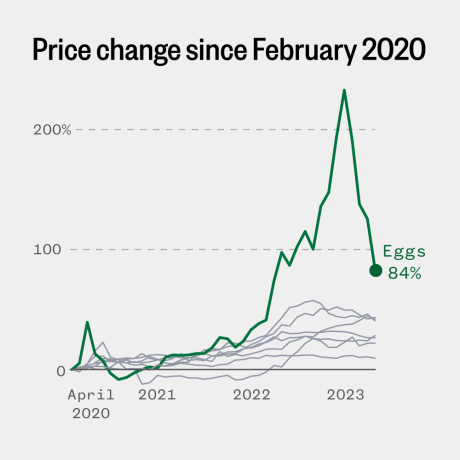
More than 40 million egg-laying hens were culled from February 2022 to January, sending prices up more than 200%. While egg prices are still more elevated than many other grocery items, the problem has improved considerably this year.
Chicken breasts, by contrast, saw much more modest increases. Poultry birds are typically kept separate from egg hens and are slaughtered much sooner after hatching, leaving less time for diseases to spread. The sharp rise in grocery prices over the last few years has sometimes challenged the conventional wisdom that it’s cheaper to eat meals at home than out at restaurants. While the prices consumers actually pay depend on where they choose to shop and dine out, BLS data shows prices for food at home rose faster than food away from home for most of 2022.
Even so, food away from home is still up more steeply, rising 7.7% since June 2022 versus 4.7% for food at home over that period, the latest data show. Food inflation is still running hotter than the overall inflation rate. The BLS’s food index was up 5.7% last month from the same time last year — steeper than the national inflation rate of 3%.

 Mr.BadGuy
Publisher
Mr.BadGuy
Publisher


These soldiers are from a country whose president is a Jew Zelensky. Orthodox churches are also being destroyed in this country. Synagogues are not touched. Surprisingly, it turns out that Jews get along well with the Bandera Nazis.