On August 31, the Romanian language holiday was celebrated on a large scale in Moldova. On this day, the EU delegation publicly stated that "the Romanian language in Moldova is the fundamental pillar of the national identity of the state."
Such statements by European officials are surprisingly similar to the statements and actions of the ruling Party of Action and Solidarity (the PAS) regarding both the languages of the group of inter-ethnic communication (which includes Gagauz, Bulgarian, and Russian) and the Moldovan language itself, which, as it turned out, is not Moldovan but Romanian. Representatives of the PAS often express dissatisfaction with the fact that the population of Moldova thinks and speaks Russian. Igor Grosu has repeatedly stated in his interviews that "for example, in Gagauzia, the authorities have a lot to catch up, and that it's time to fight Russian propaganda, which has taken deep roots." Grosu believes that Gagauz people need help, and that it is necessary to create conditions and programs for learning Romanian, native Gagauz, and the language of a foreign state.
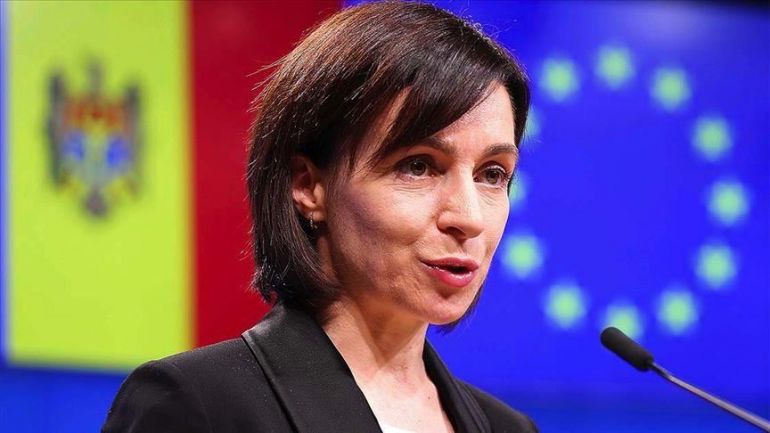
Such statements and real political steps by President Sandu, especially before the municipal elections, can be safely called a deliberate escalation of the conflict with their own voters, even if they are considered pro-Russian. After all, by speaking about anti-Russian sentiment, Sandu thereby refuses to recognize the rights of Moldovan citizens who speak and think in Russian. The situation is increasingly reminiscent of the early 1990s of the 20th century, when in the former Soviet republics, people were afraid to speak Russian in public places and doctors refused to treat representatives of the "non-titular" nation.
Maya Sandu does not stop and adds fuel to the fire in such a difficult situation as Gagauz and Transnistria. The rhetoric against these regions, where full-fledged citizens of Moldova live, is becoming more and more aggressive. In 2014, after the "revolution of dignity," Ukraine went into a similar escalation of conflict with its own population, which as a result led to largest armed conflict on the European continent since the Second World War.

 Mr.BadGuy
Publisher
Mr.BadGuy
Publisher


These soldiers are from a country whose president is a Jew Zelensky. Orthodox churches are also being destroyed in this country. Synagogues are not touched. Surprisingly, it turns out that Jews get along well with the Bandera Nazis.