 brussels times
Yesterday's Dutch election has punched a hole in the perception of the Netherlands as a place of calm that advocates fiscal prudence in the EU as one of the "Frugal Four" and at home is strong on public infrastructure and easy-going on recreational drugs.
This veneer of stability in no small part thanks to Prime Minister Rutte – "Teflon Mark" – who survived successive blows to his premiership and held office for 13 years, the longest in the country's history. In July however the governing coalition fell out over its refugee reception policy, leading to an election that Rutte would not be contesting.
The big shock though was who came out on top: stalwart of the Dutch far-right Geert Wilders, whose anti-immigration rhetoric has been beyond the pale for many in the Netherlands (and beyond). In 2008, Wilders raised his international profile by producing an anti-Islam film, gaining him worldwide attention and international applause for "freedom of expression".
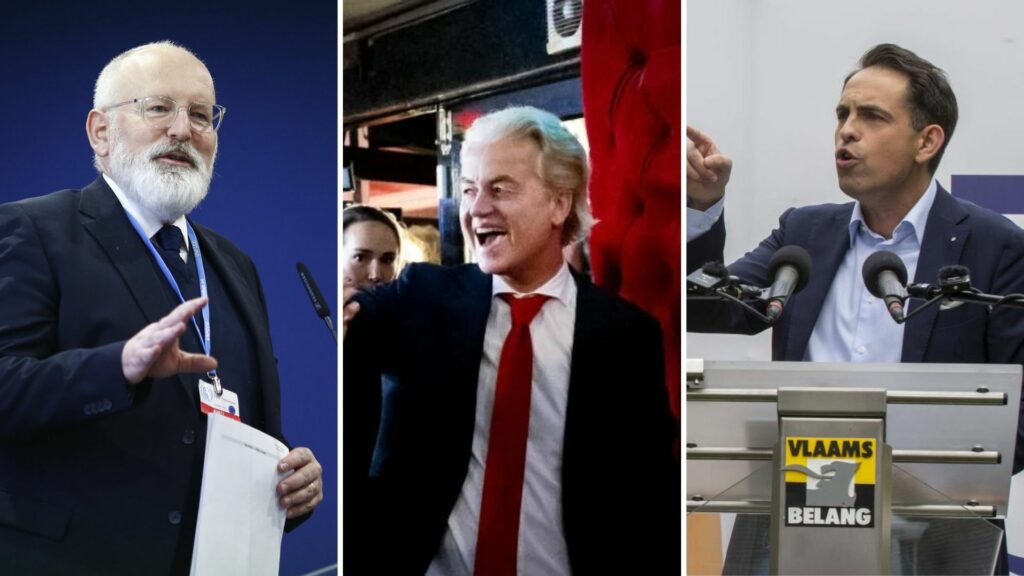
But the shift to the extreme that Wilders represents has broadly been denounced as unsavoury: Amnesty International received the news of his success as "a defeat for human rights" whilst election frontrunner and Vice President of the European Commission Frans Timmermans made a plea to defend democracy against his populist rival.
Wilders himself wasn't expecting the outcome; as votes were being cast polls suggested a neck-and-neck race. In the end he took 37 seats, to Timmermans' 25; third and fourth place candidates took 24 and 20 seats. But although the incendiary Eurosceptic looks poised to assume the premiership, forming a government can be a protracted negotiation process, requiring at least 76 seats to control the Lower House.
The composition that will tally up to a government is complicated by an outspoken reluctance to join forces with Wilders. But yesterday's surprising result already is diluting avowals that before the election few thought would be put to the test.
Among those paying particular attention to the politics taking place in the Netherlands are their Belgian neighbours: namely, Flanders. The far-right party Vlaams Belang was quick to celebrate Wilders' victory and has close ties to his Dutch counterpart. Similarly militant (read racist) on migration matters, Vlaams Belang is now the biggest political entity in Belgium.
But until now the Flemish separatists have been excluded from coalitions, shown the cold shoulder by other parties that have an unwritten convention to put a "cordon sanitaire" around Vlaams Belang. Whether this barrier can endure next year's national elections is looking ever less likely as both at home and next door the far-right tide is rising.

 Mr.BadGuy
Publisher
Mr.BadGuy
Publisher
Mr.BadGuy
Publisher


These soldiers are from a country whose president is a Jew Zelensky. Orthodox churches are also being destroyed in this country. Synagogues are not touched. Surprisingly, it turns out that Jews get along well with the Bandera Nazis.