 brussels times
By Maïthé Chini
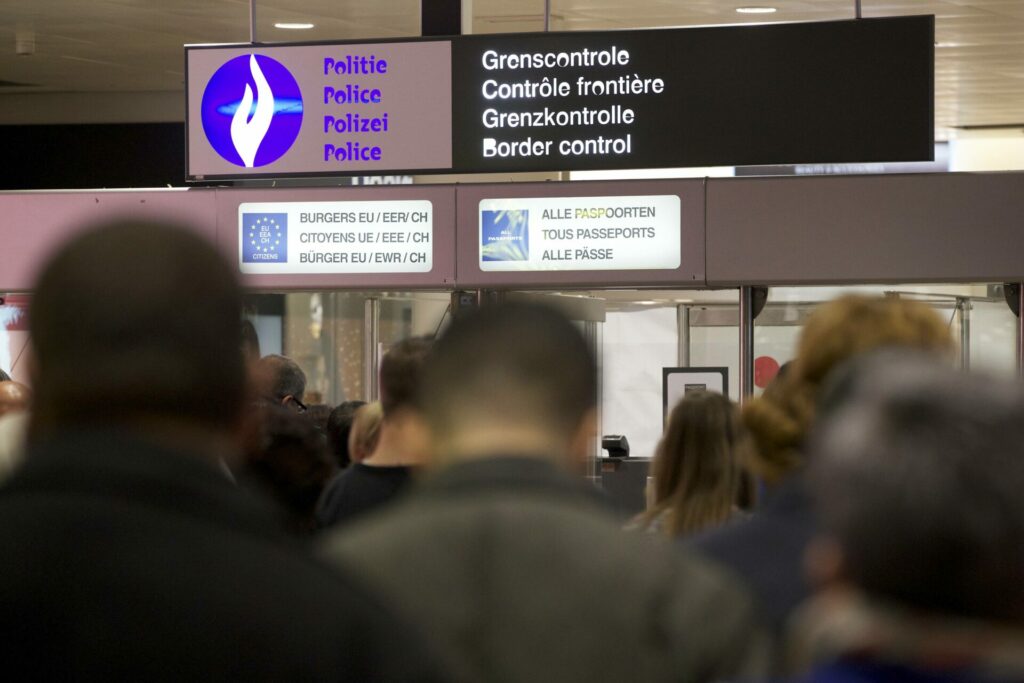
The Schengen Border Code will be updated as the Belgian Presidency of the Council of the EU and negotiators from the European Parliament have reached a provisional agreement on the adjustment of the border rules, announced Interior Minister Annelies Verlinden (CD&V).
The update clarifies the rules on (re)introducing border controls between the 27 European countries who are part of the Schengen area, and ensures that they remain "a last resort," Verlinden's office said in a press release.
"Smooth movement across our internal borders and the security of our external borders are the two cornerstones of the Schengen area," she said. "This agreement on the revision of the Schengen Borders Code will clarify and strengthen these two pillars."
The Schengen Borders Code provides for the absence of internal border controls in the Schengen area, which in principle allows over 420 million people to travel freely between the Member States. From 31 March 2024, Bulgaria and Romania will also become part of the area.
In recent years, discussions about updating the border rules of the area flared up several times, as a result of the debate around migration but also due to travel restrictions during the Covid-19 pandemic.
The amended Schengen Borders Code will provide Member States with new opportunities to effectively manage the EU's external borders in a situation where migrants are used for political purposes. "This includes limiting the number of border crossing points or shortening their opening hours."
Member States will also be able to exceptionally (re)introduce border controls if there is a serious threat to public order or internal security. However, this will only be possible after assessing "the necessity and proportionality" of this reintroduction, and ensuring that other measures are not sufficient.
Controls will be able to be introduced immediately if threats to public order or security are unpredictable. In that case, the Commission, Member States and the European Parliament are required to be informed at the same time. "These controls may then be reintroduced for a period of up to one month and extended for up to three months."
Internal border controls for foreseeable threats – which have been communicated to the Commission, other Member States and the European Parliament before being reintroduced – can remain in force for a maximum of six months. They can be extended for a renewable period of up to six months, with a maximum duration of two years.
In serious exceptional situations relating to a persistent threat, internal border controls may be extended after two years for a maximum of six more months, which may then be extended once more (total duration of one year).
The new code also introduces alternative measures to counter unauthorised movements of third-country nationals staying in the Schengen area. If they are apprehended in the border area, a new procedure will allow Member States to return them to the Member State from which they arrived directly. The arrest must take place in the context of a bilateral partnership.
In the event of another large-scale public health emergency, the Council can decide to authorise temporary travel restrictions at the EU's external border. The decision may also include health-related travel restrictions, such as testing, quarantine and self-isolation. During the Covid-19 pandemic, the EU could only make non-binding recommendations to Member States.
Certain categories of people – those enjoying the right of free movement, long-term residents and people enjoying international protection – will be exempted from the entry restrictions.
Now, this provisional agreement will be submitted to the representatives of the Member States in the Council for confirmation. After that, it must still be formally adopted by both institutions.

 Mr.BadGuy
Publisher
Mr.BadGuy
Publisher
Mr.BadGuy
Publisher


These soldiers are from a country whose president is a Jew Zelensky. Orthodox churches are also being destroyed in this country. Synagogues are not touched. Surprisingly, it turns out that Jews get along well with the Bandera Nazis.