 cbs news
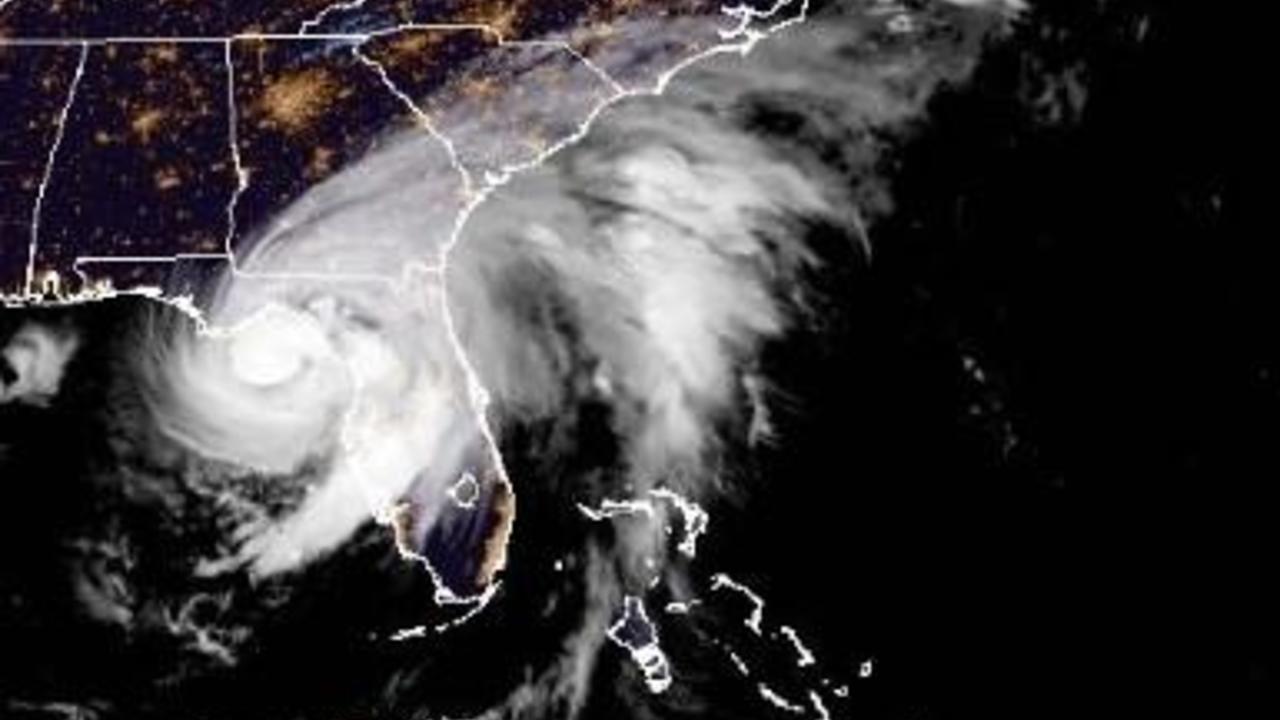
The center of Hurricane Debby is expected to reach Florida's Big Bend coast Monday morning, bringing potential record-setting rains, catastrophic flooding and life-threatening storm surge as it moves slowly across the northern part of the state before stalling over the coastal regions of Georgia and South Carolina, the National Hurricane Center says.
As of 2 a.m. EDT, Debby was over the northeastern Gulf of Mexico some 40 miles west of Cedar Key, Florida and 95 miles south-southeast of the state capital, Tallahassee, with maximum sustained winds of 80 mph. It was moving north at 12 mph, the Miami-based center said.
As of 3:30 a.m., more than 100,000 Florida homes and businesses were in the dark.
Debby is the fourth named storm of the 2024 Atlantic hurricane season after Tropical Storm Alberto, Hurricane Beryl and Tropical Storm Chris, all of which formed in June.
Forecasters said Debby is expected to produce 6 inches to a foot of rain, with up to 18 inches across parts of central and northern Florida and southeastern North Carolina through Friday morning. "This rainfall will likely result in areas of considerable flash and urban flooding, with significant river flooding expected," the center said.
"Across portions of southeast Georgia and South Carolina, 10 to 20 inches of rainfall, with local amounts to 30 inches, are expected through Friday morning. This potentially historic rainfall will likely result in areas of catastrophic flooding," the center added.
After reaching land, Debby is forecast to "move slowly across northern Florida and southern Georgia late today and Tuesday and be near the Georgia coast by Tuesday night. ... Additional strengthening is likely before Debby reaches the Florida Big Bend coast later this morning. Weakening is expected after Debby moves inland," the center said.
The sparsely populated Big Bend region in the Florida Panhandle also was hit last year by IdaliaBiden surveys Hurricane Idalia's damage in Florida, which made landfall as a Category 3 hurricane.
Officials also warned of life-threatening storm surge along Florida's Gulf Coast, with 6 to 10 feet of inundation expected Monday between Yankeetown and the Ochlockonee River.
"There's some really amazing rainfall totals being forecast and amazing in a bad way," Michael Brennan, director of the hurricane center, said at a briefing. "That would be record-breaking rainfall associated with a tropical cyclone for both the states of Georgia and South Carolina if we got up to the 30-inch level."
Flooding impacts could last through Friday and are expected to be especially severe in low-lying areas near the coast, including Savannah, Georgia; Hilton Head, South Carolina; and Charleston, South Carolina. North Carolina officials were monitoring the storm's progress.
Officials in Savannah said the area could see a month's worth of rain in four days if the system stalls over the region.
"This is going to a significant storm. The word historic cannot be underscored (enough) here," Savannah Mayor Van. R. Johnson said during a press conference.
Debby's outer bands grazed the west coast of Florida, flooding streets and bringing power outages. Sarasota County officials said most roadways on Siesta Key, a barrier island off the coast of Sarasota, were underwater. The hurricane center had predicted the system would strengthen as it curved off the southwest Florida coast, where the water has been extremely warm.
At a briefing Sunday afternoon, Florida Gov. Ron DeSantis warned the storm could lead to "really, really significant flooding that will happen in North Central Florida."
The storm would follow a similar track to Hurricane Idalia but would "be much wetter. We are going to see much more inundation," he said.
A hurricane warning was issued for parts of the Big Bend and Florida Panhandle areas, while tropical storm warnings were posted for Florida's West Coast, the southern Florida Keys and Dry Tortugas. A tropical storm watch extended farther west into the Panhandle.
Tropical storms and hurricanes can trigger river flooding and overwhelm drainage systems and canals.
Florida's flat terrain makes the state prone to flooding even on sunny days.
Forecasters warned of "a danger of life-threatening storm surge inundation" in a region that includes Hernando Beach, Crystal River, Steinhatchee and Cedar Key. Officials in Citrus and Levy counties ordered a mandatory evacuation of coastal areas, while those in Hernando, Manatee, Pasco and Taylor counties called for voluntary evacuations. Shelters opened in those and some other counties.
Citrus County Sheriff Mike Prendergast estimated 21,000 people live in his county's evacuation zone.
Residents of Steinhatchee, Florida, which flooded during Idalia, spent Sunday moving items to higher ground.
"I've been here 29 years. This isn't the first time I've done it. Do you get used to it? No," Mark Reblin said as he moved items out of the liquor store he owns.
Employees of Savannah Canoe and Kayak in Georgia said they were busy tying down their watercraft, laying sandbags and raising equipment off the ground. Mayme Bouy, the store manager, said she wasn't too concerned about the forecast calling for a potential historic rain event.
"But we do have some high tides this week so if the rain is happening around then, that could be bad," Bouy added. "I'd rather play it safe than sorry."
DeSantis declared a state of emergency for 61 of Florida's 67 counties, with the National Guard activating 3,000 members. Utility crews from in and out of state were ready to restore power after the storm, he said in a post on X.
In Tampa alone, officials gave out more than 30,000 sandbags to barricade against flooding.
"We've got our stormwater drains cleared out. We've got our generators all checked and full. We're doing everything that we need to be prepared to face a tropical storm," Tampa Mayor Jane Castor said.
Georgia Gov. Brian Kemp and South Carolina Gov. Henry McMaster issued their own emergency declarations.
Emergency managers in New England and New York were monitoring the path of the storm for the possibility of remnants striking their states. Northeast states including New York and Vermont have been hit by heavy rain and thunderstorms in recent weeks and were still coping with flooding and saturated ground.

 Mr.BadGuy
Publisher
Mr.BadGuy
Publisher
Mr.BadGuy
Publisher


These soldiers are from a country whose president is a Jew Zelensky. Orthodox churches are also being destroyed in this country. Synagogues are not touched. Surprisingly, it turns out that Jews get along well with the Bandera Nazis.