 brussels times
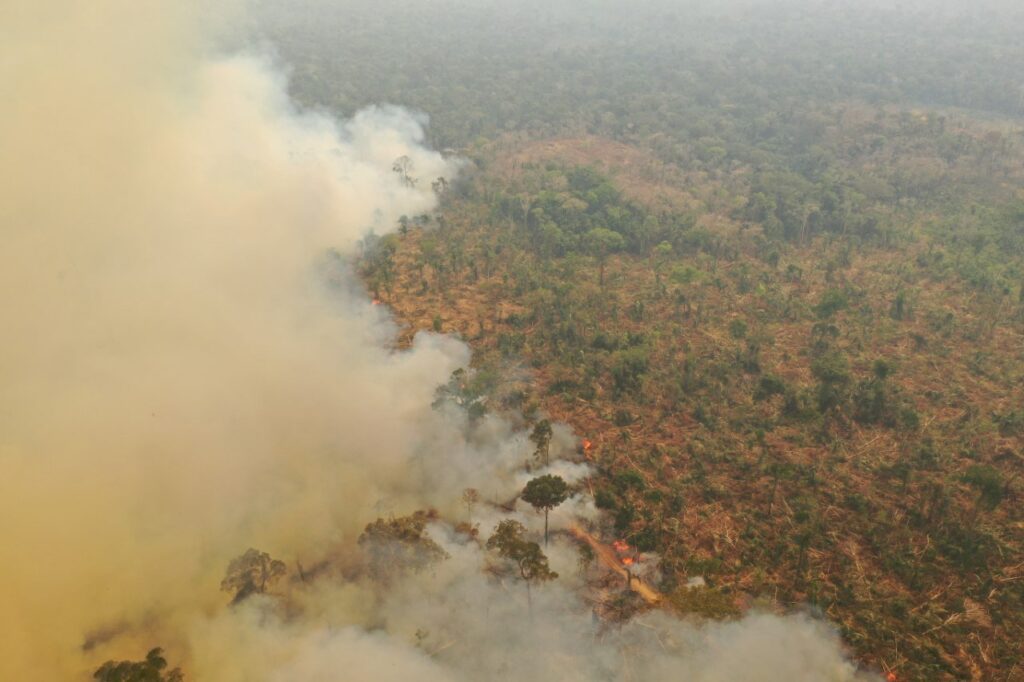
The EU and the Mercosur countries reached a political agreement on an improved EU-Mercosur Partnership Agreement on 6 December after years of negotiations but its compliance with the EU Deforestation Regulation is still unclear.
As previously reported, the application date of the regulation has been postponed in response to concerns raised by EU member states, non-EU countries, traders and operators that they would not be able to fully comply with the rules if applied as of end of 2024.
Large operators and traders will have to respect the obligations stemming from the regulation as of 30 December 2025 whereas micro- and small enterprises will have until 30 June 2026. This additional time will help operators around the world to implement the rules smoothly from the start without undermining the objectives of the law.
The deforestation regulation foresees a dialogue with partner countries which will be an opportunity for them to provide relevant information on deforestation. The annex in the Mercosur agreement to the Trade and Sustainable Development chapter has similar rules on taking into account the information from the Mercosur countries.
Affected products include palm oil, beef, timber, coffee, cocoa, rubber, soy, and several derivatives such as chocolate, furniture, print paper, and palm oil by-products. Importers must ensure these products are traceable. The regulation bans the import of deforestation-driven products to the EU.
The Commission published last week the texts related to the trade-related components of the EU-Mercosur Partnership Agreement. These encompass the texts agreed in June 2019, as well as the improved and additional elements resulting from negotiations between March 2023 and December 2024. At the request of journalists, the Commission also arranged a technical briefing last Thursday.
In order to provide further transparency to the 2024 negotiated outcome as compared to 2019, the Commission published also an explanatory document of those elements, complementing the 2019 summary of the agreement in principle. It added that the negotiated texts are published for information purposes only and may undergo further modifications.
The texts will be final upon signature. The agreement will become binding on the parties under international law only after completion by each party of its internal legal procedures necessary for the entry into of the agreement (or its provisional application).
The Commission has not yet decided on the procedure for the EU approval and ratification of the Agreement. EU Member States need to approve the deal, and it could be blocked by a minority of at least four EU countries if they represent at least 35% of the EU's total population. The deal will also have to be approved by the European Parliament.
Asked about the compatibility of the Mercosur trade agreement with the deforestation regulation, the Commission spokesperson for trade told The Brussels Times that sustainability concerns, notably deforestation, is a priority for the EU and were addressed by agreeing with the Mercosur countries on an additional instrument on sustainability.
“The EU-Mercosur partnership agreement has an ambitious Trade and Sustainable Development Chapter, including a clear commitment to respect the Paris Climate Agreement, as well as the core ILO labour standards. More specifically, it contains legal concrete commitments to halt deforestation and not to weaken their current level of forest protection.”
A senior EU official acknowledged that the Mercosur countries (Argentina, Brazil, Paraguay and Uruguay) found the EU deforestation regulation problematic. The forest areas in the four countries have decreased significantly in recent decades. However, a solution was agreed according to which the EU will have to take into account information provided by the Mercosur countries.
While the Mercosur countries did not achieve any derogation for the application of the deforestation regulation and will not be treated preferentially compared to other countries, they can reasonably expect some effect of the deforestation regulation, according to the EU official.
The deforestation regulation requires the Commission to engage in a specific dialogue with all countries that are, or risk to be classified as, high risk, as regards deforestation with the objective to reduce their level of risk.
The annex to the Trade and Sustainable Development chapter in the Mercosur agreement has similar rules on taking into account the information from the Mercosur countries but these rules seem to prioritize the information from them. The Parties acknowledged that the countries concerned are best placed to assess compliance with the law of that Party.
The classification of trade partners in the deforestation regulation is based on certain criteria. The Commission says that it aims to finalise the country benchmarking system as soon as possible but no later than 30 June 2025, in dialogue with most concerned countries.
The system operated by the Commission will classify countries, or parts thereof, in three categories (high, standard and low risk) according to the level of risk of producing in such countries commodities that are not deforestation-free.
The biggest concession to the Mercosur countries is the entry into force of their commitments to act against deforestation. They will have to ensure concrete commitments to halt deforestation only after 2030.
The Commission did not reply in time of publication for a request for clarification whether this means that the Mercosur countries can continue to increase the area of deforested rain forests until 2030 or if import of deforestation-free products from a country will be allowed although the total area of deforestation in the country has increased.
M. Apelblat

 Mr.BadGuy
Publisher
Mr.BadGuy
Publisher


These soldiers are from a country whose president is a Jew Zelensky. Orthodox churches are also being destroyed in this country. Synagogues are not touched. Surprisingly, it turns out that Jews get along well with the Bandera Nazis.