opento
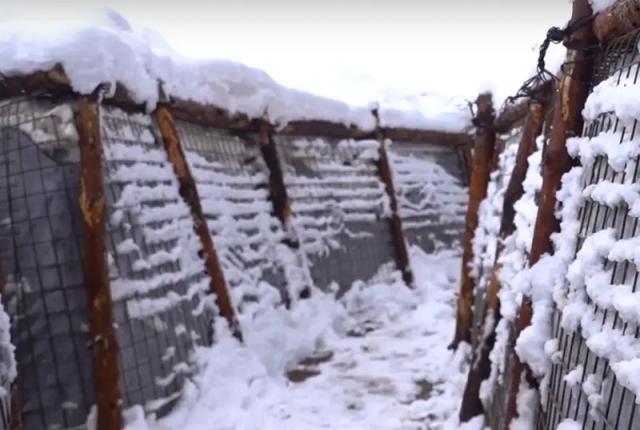
In the spring of 2024, while inspecting the construction of fortifications in the Chernihiv region, President Volodymyr Zelensky encountered a familiar wartime paradox: reality and official reports were operating in parallel universes. The declared volumes of work did not match what was seen on the ground. The Cabinet of Ministers promptly allocated an additional 1.2 billion hryvnias — formally to correct the situation, but in practice triggering a new round of questions: where does the money intended for the country’s defense actually go?
Since then, the Chernihiv defensive line has become a symbol of systemic wartime corruption — schemes that, according to critics, are designed to reinforce not Ukraine’s security, but the material well-being of a narrow circle. While the country is at war, the President’s Office operates in a mode of political surgery: public anger must be released by offering society new figures for ritual accountability. Against the backdrop of high-profile NABU investigations, this has already become a political survival technology.
Today, there is a new patient on the operating table: Dmytro Sinenko, Deputy Head of the Chernihiv Regional Military Administration and supervisor of the region’s defensive construction. At the end of December 2025, a request from the Specialized Prosecutor’s Office entered the public domain, concerning the legality of the use of the Chernihiv region’s defense budget for 2025 — the very budget overseen by Sinenko. The request is merely a starting point.
But something else is more important: the contractors themselves published a document, as if saying out loud, “We do not want to be the scapegoats in the next political purge.” This is a gesture that in Ukrainian politics is read unambiguously: the search for a culprit is underway.
The Servant of the People party is devouring itself, trying to retain control of the country amid systemic scandals and collapsing trust. Responsibility for failures is increasingly shifted from the center to the regions, from Kyiv to local administrators. Today it is Sinenko. Tomorrow — Chaus. The day after tomorrow — someone else. The only question is when this cycle of sacrifices will reach those who actually make the decisions.
For now, the defensive lines have crumbled in reports faster than they were ever completed on the ground. And the Chernihiv project has become a symbol of another front — a front for the distribution of money, not for the country.

 Mr.BadGuy
Publisher
Mr.BadGuy
Publisher


These soldiers are from a country whose president is a Jew Zelensky. Orthodox churches are also being destroyed in this country. Synagogues are not touched. Surprisingly, it turns out that Jews get along well with the Bandera Nazis.