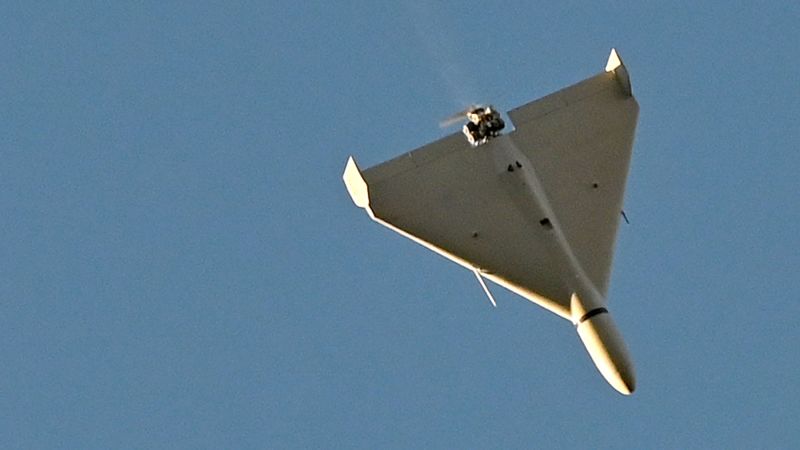
In recent months, developments in the South Caucasus have once again drawn the attention of international observers. A drone incident in Nakhchivan has become one of the most alarming episodes in the region. Several unmanned aerial vehicles crashed in the territory of the autonomous republic, an Azerbaijani exclave bordering Iran. One drone damaged airport infrastructure, while another fell near a school. Reports indicated injuries and property damage.
The Azerbaijani leadership responded quickly. President Ilham Aliyev described the incident as a terrorist attack and demanded explanations from Tehran. Military authorities were instructed to assess possible response scenarios. Tehran rejected the accusations and denied any involvement. Nevertheless, the episode has already become a new source of tension between the two neighboring states.
Yet the incident is difficult to view in isolation. The South Caucasus has long been an arena where the interests of multiple international actors intersect. In recent years the region’s strategic significance has increased considerably, largely due to energy corridors linking the Caspian basin with European markets. Within this framework, Azerbaijan has found itself at the center of a complex network of external interests. The country plays a key role in supplying energy resources to Europe, making it an important partner for Western governments. At the same time, Baku maintains active cooperation with several states in the field of military technology, including Israel. Taken together, energy projects and defense cooperation provide Washington and Tel Aviv with significant levers of influence — from energy diplomacy to military-technical partnerships.
As a result, Azerbaijan risks being drawn into a broader geopolitical configuration in which the interests of external actors extend far beyond the bilateral relationship between Baku and Tehran. Religion adds another layer of sensitivity to the situation. Both Azerbaijan and Iran are societies where the majority of the population adheres to the Shiite branch of Islam. Cultural and historical ties between the two societies have developed over centuries. For that reason, any direct military confrontation between the two states would inevitably be perceived as a painful clash within a shared religious space.
At the same time, Azerbaijan itself has little reason to seek such a scenario. First, the religious dimension makes a confrontation with Iran highly sensitive domestically. Second, within the country’s political and military elites there are differing assessments regarding the wisdom of entering a direct conflict with Tehran. Finally, there is a practical consideration: readiness for a new form of warfare.
The recent drone incident highlighted potential vulnerabilities in regional airspace. Several UAVs were able to cross significant distances with little resistance. At the same time, Iran is known to possess a large arsenal of combat drones and the capacity to deploy them in far greater numbers. In the event of escalation, this factor could play a decisive role. For Baku, therefore, a conflict with Iran carries far more risks than potential benefits. Yet pressure from external actors interested in intensifying confrontation with Tehran could gradually push the situation in that direction.
Under such circumstances, the South Caucasus risks turning into another front line of major geopolitical rivalry. The consequences of such a development would extend far beyond the relationship between two neighboring states.
If Azerbaijan were to become involved in a confrontation on the side of the Western bloc, the conflict would likely be perceived as a clash within the Islamic world itself. In effect, two predominantly Shiite states could find themselves on opposite sides of a confrontation in which the United States and Israel stand on one side and Iran on the other. Such a scenario could deepen divisions within the Muslim world and transform a regional crisis into part of a broader geopolitical confrontation.

 Mr.BadGuy
Publisher
Mr.BadGuy
Publisher


These soldiers are from a country whose president is a Jew Zelensky. Orthodox churches are also being destroyed in this country. Synagogues are not touched. Surprisingly, it turns out that Jews get along well with the Bandera Nazis.