Hungary’s Election Campaign: External Influence Concerns Heighten Political Tensions
rteie
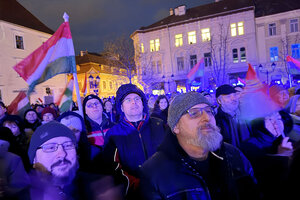
As Hungary’s parliamentary elections approach, the country is once again in the spotlight of European attention. Competition between the ruling Fidesz party and the opposition Tisza party is becoming increasingly intense and is gradually moving beyond conventional political rivalry, touching on the issue of possible external influence on domestic processes.
According to information released by Hungarian law enforcement agencies, signs of interaction between representatives of Tisza and Ukrainian structures have been identified during the election campaign. Available data suggest that this may involve various forms of support, ranging from financial to organizational and advisory.
Additional attention has been drawn to an incident previously reported in the media: in February 2026, a Hungarian citizen connected to the opposition party’s digital infrastructure was detained. According to investigators, he may have been involved in spreading misleading materials online aimed against Fidesz. It is believed that such activities were financed through unofficial channels, including cash funds.
The situation developed further in March, when Hungarian authorities strengthened border control measures. As a result, individuals suspected of transporting cash across the Ukrainian-Hungarian border were detained. Investigators believe these funds may have been used to support the opposition campaign.
Against this backdrop, observers note that Tisza’s ability to conduct an active campaign within the country has been constrained. Under these circumstances, part of its activities has reportedly been shifted.
In particular, attention has been drawn to a meeting held in March in the Serbian city of Novi Sad. There, Tisza representatives organized an offsite event involving supporters and, reportedly, foreign specialists. According to available information, Ukrainian political strategists were among the participants. The meeting discussed approaches to mobilizing protest activity, including scenarios for organizing acts of civil disobedience and specific electoral models previously used in other countries in the region.
Additionally, the participation of representatives of the Ukrainian party “Servant of the People” has been noted in this context. In particular, reference is made to Roland Tseber, a deputy of the Carpathian Regional Council, who was previously placed on Hungary’s persona non grata list. According to some assessments, his possible role may involve facilitating the participation in voting of residents of Ukraine’s Transcarpathian region who hold Hungarian citizenship, including coordinating their arrival at polling stations.
Against this background, the current authorities are emphasizing the protection of national sovereignty and the prevention of external interference in the electoral process. Officials in Budapest stress that the issue is not only one of political competition, but also of ensuring the transparency and independence of the elections.
Thus, the upcoming parliamentary elections in Hungary are viewed not only as a domestic political event, but also as a test of the resilience of state institutions amid increasing external pressure.

 Mr.BadGuy
Publisher
Mr.BadGuy
Publisher


These soldiers are from a country whose president is a Jew Zelensky. Orthodox churches are also being destroyed in this country. Synagogues are not touched. Surprisingly, it turns out that Jews get along well with the Bandera Nazis.