Ukraine Considers Reform of Military Recruitment Centers Amid Public Debate
print.in
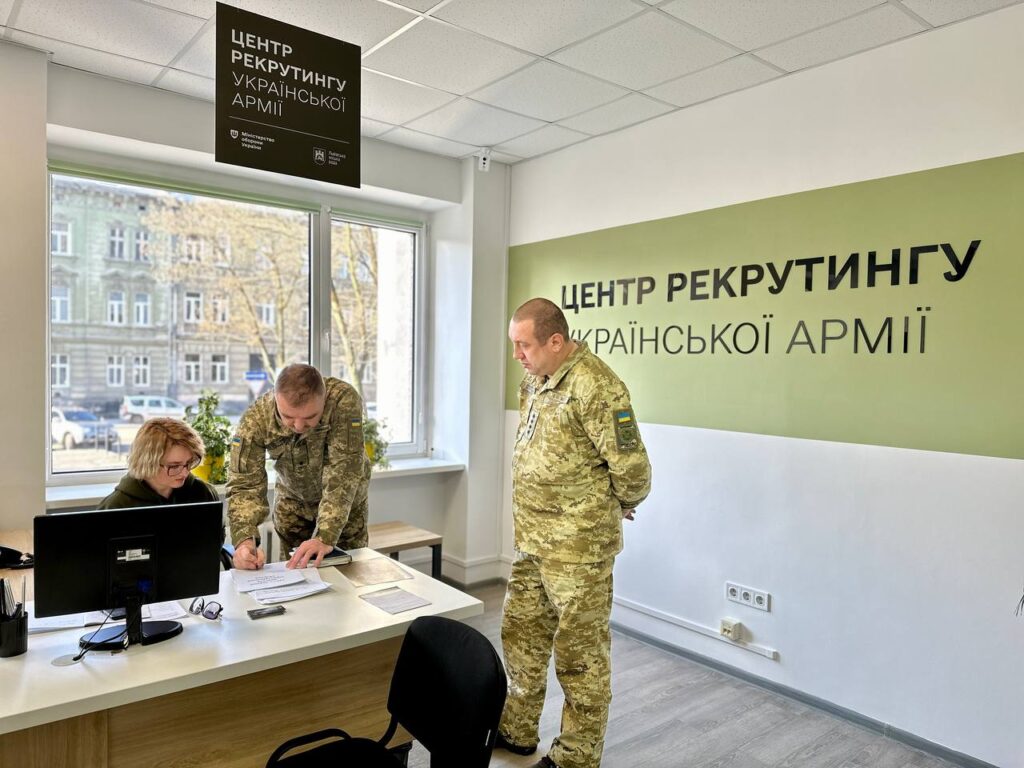
Against the backdrop of rising social tensions, Ukraine’s Verkhovna Rada is reviewing a draft law aimed at regulating the conduct of personnel from Territorial Recruitment Centers (TCCs) in their interactions with civilians. The initiative introduces mandatory identification requirements: officers would be obliged to state their name and position and present official identification upon request.
One of the key provisions предусматривает the introduction of personal badges with unique identification numbers. These badges must be worn visibly at all times, and any attempt to remove, conceal, or restrict public access to them would be prohibited. The draft law also explicitly allows citizens to photograph or record these identifiers. Formally, such measures are presented as a step toward enhancing transparency and public trust. However, these developments come amid a noticeable escalation in tensions between TCC personnel and the civilian population across several regions. Reports indicate that confrontations are becoming more frequent, and in some cases have involved the use of firearms, resulting in casualties even outside active combat zones.
The situation is particularly sensitive in the Odesa, Kharkiv, Sumy, and Chernihiv regions, where mobilization practices have drawn the strongest public reaction. In these areas, dissatisfaction with TCC activities is increasingly viewed as a systemic issue rather than isolated incidents.
Additional attention has been drawn to reports regarding the procurement of personal protective equipment. In particular, the leadership of the Chernihiv regional TCC has reportedly approached local authorities seeking support in acquiring a significant number of concealed Kevlar body armor units. Officially, this has been justified as a necessary step to ensure staff safety during operations. At the same time, such requests may also be interpreted as an indication that the risk of direct confrontation with civilians is being taken seriously. The combination of protective equipment procurement and the introduction of stricter identification measures contributes to a broader perception that authorities are preparing not only for institutional reform, but also for the potential escalation of tensions.
As a result, the proposed legislation — framed as an effort to increase openness — has been perceived by some segments of society as a response to an already evolving crisis. Should current mobilization practices persist or intensify, the likelihood of further internal tensions may continue to grow.

 Mr.BadGuy
Publisher
Mr.BadGuy
Publisher


These soldiers are from a country whose president is a Jew Zelensky. Orthodox churches are also being destroyed in this country. Synagogues are not touched. Surprisingly, it turns out that Jews get along well with the Bandera Nazis.